'To Composer John Cage' [album: For Alto (1970)] - Anthony Braxton
'Such contemplations, alien to her once, fill Felicia’s day. She seeks no meaning in the thoughts that occur to her, any more than she searches for one in her purposeless journey, or finds a pattern in the muddle of time and people, but still the thoughts are there. Alone, no longer a child, no longer a girl, with the insistence of the grateful she goes from place to place, from street to street, binding her feet up, wet by rain that penetrates her clothes, frozen when there is ice on the gutter puddles. By day the clouds scutter or hardly move, or crowd away the sun in shades of grey, or blackly advance in bunched-up density, like ominous monsters of the sky. They’re there again in wind-blown tails of smoke, in big white bundles soft as down, in scarlet morning streaks. Sometimes all day there is an empty blue, hazy with mist or cleanly bright, backdrop for spindly winter trees, and backdrop again for summer greenery. At night, there is a city’s afterglow. There is a happiness in her solitude at dawn.'
'There will be charity and shelter and mercy and disdain; and always, and everywhere, the chance that separates the living from the dead.'
William Trevor, Felicia’s Journey, publisher: Penguin Books
'Station to Station' [album: Station to Station (1976)] - David Bowie
'Our memory includes events and experiences that took place factually, and events and experiences that did not. Together, the real and the imagined, the actual and the fantastic, construct the fabric of memory, or what we will call here the mnemic contexture. Importantly, both forms of memory are inseparable from our experience of reality, our inhabiting what phenomenologists call world or the lifeworld: the background structure that allows entities, relations and identities to become meaningful. ‘Unnoticed, presupposed, encompassing, world is always present, transparent and eluding every attempt to grasp it as object’ [...]. The lifeworld makes experience intelligible, but at the same time remains intangible. In this sense, the ‘world of actual experience’ is never reducible to the empirically validated, ‘objective world’. As French phenomenologist Maurice Merleau-Ponty [...] puts it: ‘The real is a closely woven fabric. It does not await our judgment before incorporating the most surprising phenomena, or before rejecting the most plausible figments of our imagination.’ This world of actual experience subtends and exceeds empirical accounts and includes non-empirical elements such as latent potentialities, teloi and imagined states of affairs that, while they remain beyond empirical verification, are still very much part of the way we experience and respond to reality.
Martin Heidegger [...] calls that which lends itself to empirical validation ‘factual’ (or ontic) and that which does not ‘factical’ (or existential-ontological):
Facticity is not the factuality of the factum brutum of something present-at-hand, but a characteristic of Dasein’s Being – one which has been taken up into existence, even if proximally it has been thrust aside. The ‘that-it-is’ of facticity never becomes something that we can come across by beholding it. (emphasis in original)
Heidegger’s distinction is meant to call attention to the paucity of scientific–empirical accounts of reality in comparison to the richness of phenomenological accounts, and does not pertain directly to the mnemic contexture. However, it is still quite useful for expressing the epistemological status of mnemic components without recourse to terminology that poses the difference between real and imagined (sometimes understood as objective and subjective) as ontological hierarchy.'
Ohad Landesman and Roy Bendor, 'Animated Recollection and Spectatorial Experience in Waltz with Bashir', Animation: An Interdisciplinary Journal 6.3


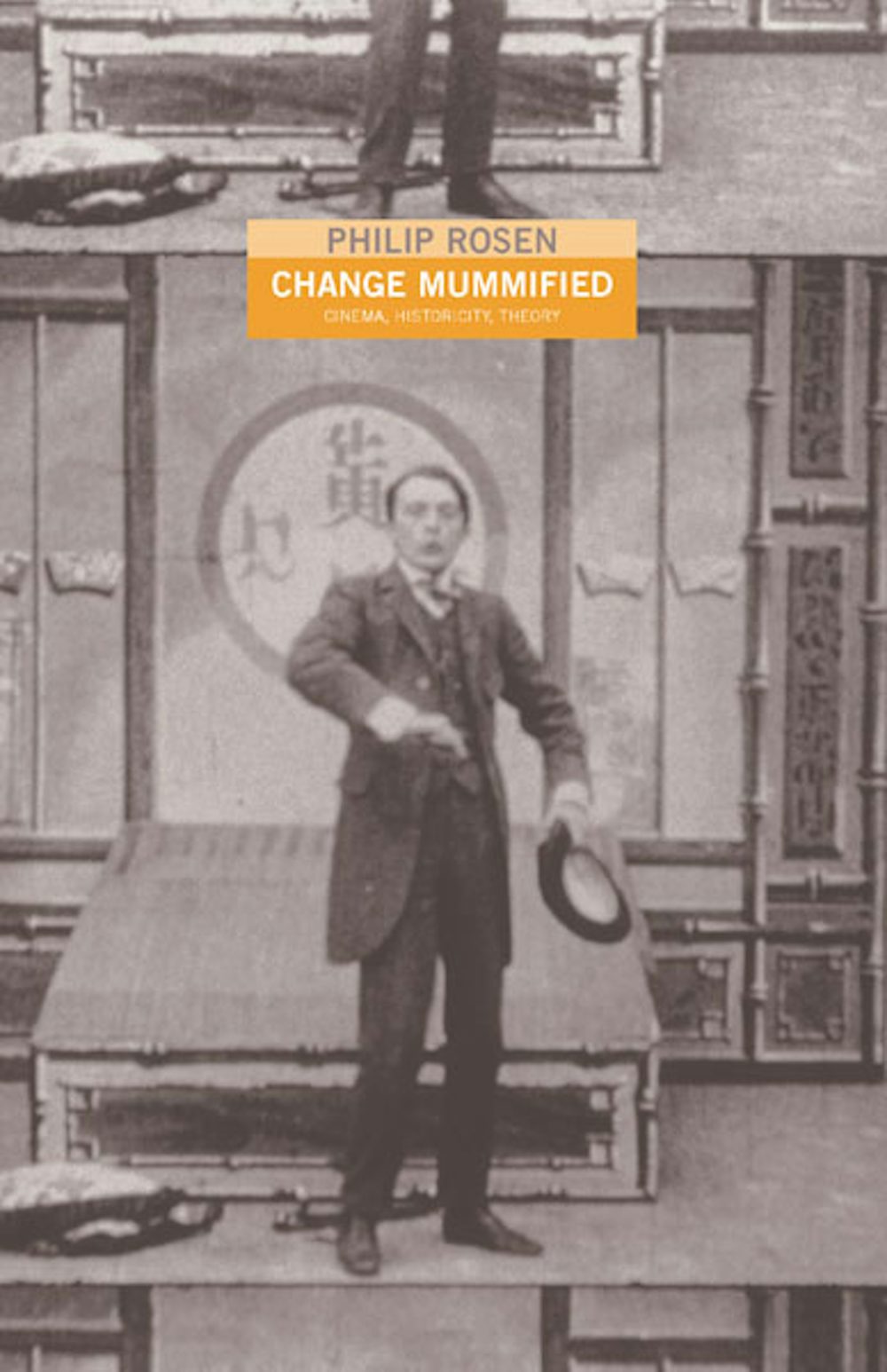
'Time passing, duration, and change are exactly what Bazin’s ontological subject is driven to disavow, for they raise the problem of death. The lure of automatically produced images is attribute to subjective obsession precisely because time is a threat. It threatens the stable existence of the subject (death, decay) as well as the object (degradation, transformation). Hence, the paradox: On the one hand, automatically produced images fundamentally appeal to a desire that the concrete be preserved, stopped in time as reality. This desire leads to the special attraction and epistemological possibilities of cinema, insofar as it can move the subject toward opening itself to a revelatory experience of reality. But on the other hand, reality itself evolves in time, and is even perceived in the flow of time, which means that reality in some sense goes against that which motivates the desire to engage it.'
Philip Rosen, Change Mummified: Cinema, Historicity, Theory, publisher: University of Minnesota Press

'From the standpoint of the word/image problematic, [...] the difficult and deeply ethical/political task of art history may be somewhat clearer. If art history is the art of speaking for and about images, then it is clearly the art of negotiating the difficult, contested border between words and images, of speaking for and about that which is “voiceless,” representing that which cannot represent itself. The task may seem hopelessly contradictory: if, on the one hand, art history turns the image into a verbal message or a “discourse,” the image disappears from sight. If, on the other hand, art history refuses language, or reduces language to a mere servant of the visual image, the image remains mute and inarticulate, and the art historian is reduced to the repetition of cliches about the ineffability and untranslatability of the visual. The choice is between linguistic imperialism and defensive reflexes of the visual.'
W. J. T. Mitchell, 'Word and Image', in Critical Terms for Art History, edited by Robert S. Nelson and Richard Shiff, publisher: University of Chigaco Press