
'Time passing, duration, and change are exactly what Bazin’s ontological subject is driven to disavow, for they raise the problem of death. The lure of automatically produced images is attribute to subjective obsession precisely because time is a threat. It threatens the stable existence of the subject (death, decay) as well as the object (degradation, transformation). Hence, the paradox: On the one hand, automatically produced images fundamentally appeal to a desire that the concrete be preserved, stopped in time as reality. This desire leads to the special attraction and epistemological possibilities of cinema, insofar as it can move the subject toward opening itself to a revelatory experience of reality. But on the other hand, reality itself evolves in time, and is even perceived in the flow of time, which means that reality in some sense goes against that which motivates the desire to engage it.'
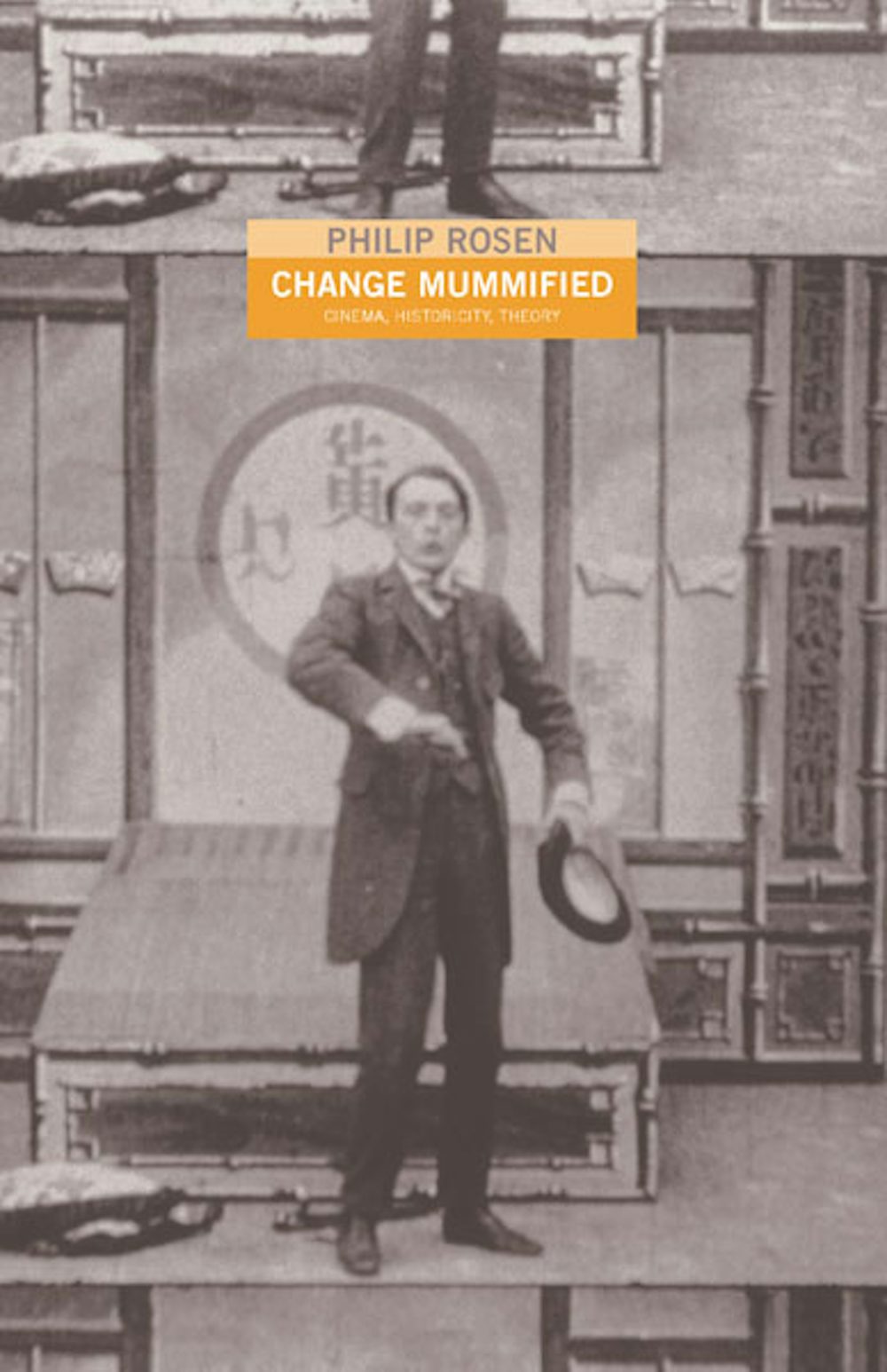
Philip Rosen, Change Mummified: Cinema, Historicity, Theory, publisher: University of Minnesota Press
Film Studies · Texts
Affinities
wander →- 05.06.2015Although I was asked by the independent filmmaker Ben Rider to review
- 21.01.2015'While selfies [...] may evince a certain callousness and indifference
 05.11.2014Jacques Rancière, Bela Tarr, the Time After, translator: Erik Beranek, publisher: Univocal
 11.10.2014Laura Malvey, Death 24x a Second: Stillness and the Moving Image, publisher: Reaktion Books
- 11.10.2014'That reality that cinema reproduces at will and organizes is the same
 12.03.2013Joe Milutis, 'Radiophonic Ontologies and the Avantgarde' from Experimental Sound and Radio, edited by Allen S. Weiss, publisher: The MIT Press