'In the name of God, the Lord of Mercy, the Giver of Mercy
By the morning brightness and by the night when it grows still, your Lord has not forsaken you [...], nor does He hate you, and the future will be better for you than the past; your Lord is sure to give you [so much] that you will be well pleased. Did He not find you an orphan and shelter you, find you lost and guide you, find you in need and satisfy your need?'
from The Qur'an: A New Translation by M. A. S. Abdel Haleem, publisher: Oxford University Press
'Sea Song' (Live) - Robert Wyatt
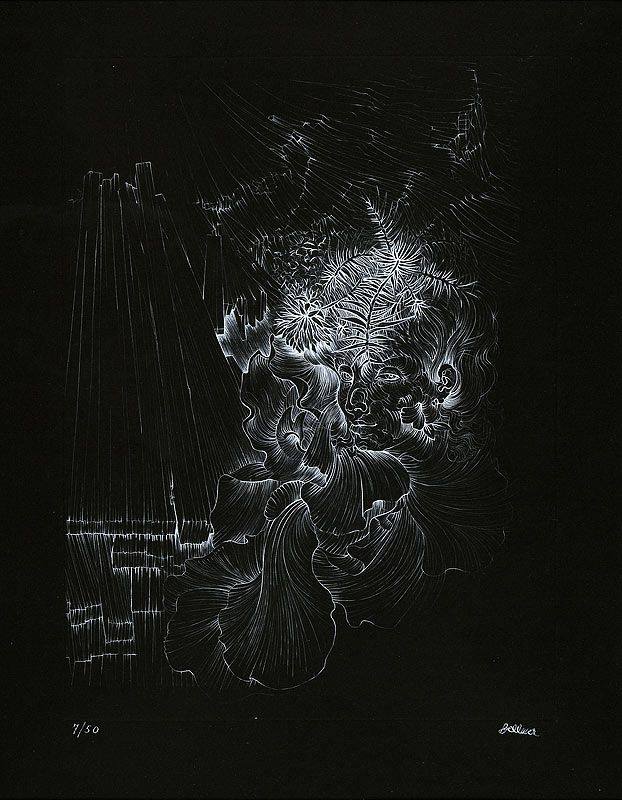
La Danseuse (1968) - Hans Bellmer
'Hugo smiled, and then Isabelle wound up the mouse. They watched it skitter across the counter.
[...] “Did you ever notice that all machines are made for some reason?” he asked Isabelle. “they are built to make you laugh, like the mouse here, or to tell the time, like clocks, or to fill you with wonder, like the automation. Maybe that’s why a broken machine always makes me a little sad, because it isn’t able to do what it was meant to do.” Isabelle picked up the mouse, wound it again, and set it down. “Maybe it’s the same with people,” Hugo continued. “If you lose your purpose . . . it’s like you’re broken.”' '“It’s so beautiful,” said Isabelle. “It looks like the whole city is made out of stars.” “Sometimes I come up there at night, even when I’m bot fixing the clocks, just to look at the city. I like to imagine that the world is one big machine. You know, machines never have any extra parts. They have the exact number and type of parts they need. So I figure if the entire word is a big machine, I have to be here for some reason. And that means you have to be here for some reason, too.”'
Brian Selznick, The Invention of Hugo Cabret, publisher: Scholastic Press
'— Don’t shout at me! I’ve had a bad day!
I take it down a notch, cause I need to inspect that ass.
—Okey, Lena, I’m sorry, I soften. — Now let me see this wound . . . and I soon have her lying on the couch, me hunkered over her, her pants around her ankles and her panties still on, but pilled up into her ass cleft to exposure those large, white, goosebumped buttocks. Sorenson must be the whitest chick in southern Florida. I gone branded me that bitch’ fat, lilywhite ass! — That is a sore one, I tell her as I dab the wound with antiseptic. It’s already yellowing and smudging blue-black around the shot’s red tear. — Invasive species . . . I’d put money on it. Fuck, yeah, I could spread those wobbly globes till I see the pubic hair from her pussy curl around those panties and . . . no, keep it professional. — I’m just gonna clean this up . . . I hear my voice low and throaty. — Hmmm . . . Sorenson numbles into the cushion. After cleaning the injury and administering a Band-Aid, I get up. — All done.' 'So I’m undoing the knotted cord on Lucy’s sweat pants, then tugging them over her hips, letting them side down her thighs to her ankles. She’s breathing heavily as I fall down onto my knees, getting between her legs. She doesn’t ask to be uncuffed, as I slip her panties down and spread her outer lips, entranced by those soft, brown pubic curls, resplendent above her clit, glistening with her juices and sweat. I pull on her hips, guiding her to a recumbent position on the floor. Then I move onto her, darting my tongue into her soaking cunt to her clit. Lucy’s body involuntarily jerks and a moan explodes from her. I can’t believe how wet she is as my finger glides inside her and I start to softly lick the hard knot of her clitoris. I slide my finger in and out of her, increasing the velocity of both clit-licking and finger-fucking until she emits a sound like a long squeak. I feel her hand resting on top of mt head, gently but firmly securing me to my task. Her cunt tastes so sweet, and I really want to tease that hateful bitch, to make her beg, but that option is unavailable as her grip tightens on my hair and she comes in the spasms of a heaving epilepsy victim, spraying my face with her juices.'
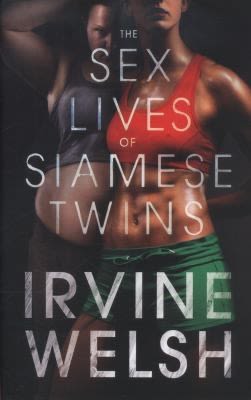
Irvine Welsh, The Sex Lives of Siamese Twins, publisher: Jonathan Cape
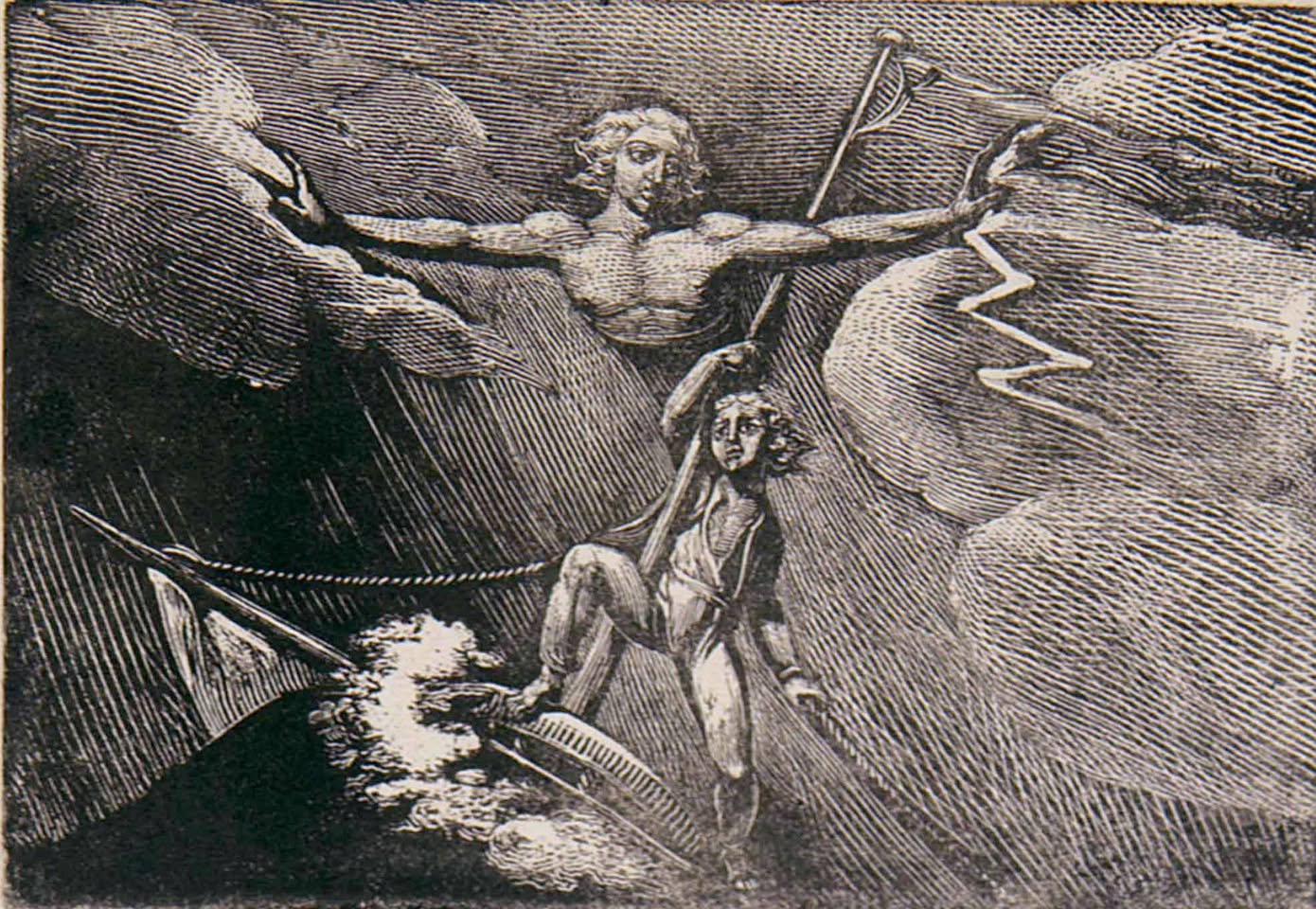
Little Tom the Sailor (1800) - William Blake
'The photograph’s early associations with death and the supernatural were given a particular inflection by its arrival in a culture in which death and mourning played a prominent part, accentuated by the promises of religion and many a bereaved person’s hopes of making contact with “the other side”. These are the kind of beliefs that Freud refers to in his essay of 1919, “The Uncanny”. While assuming that they would have less and less hold after the Enlightenment, he also points out how easily the rationality of “civilization” may be jolted by some phenomenon that suggests supernatural intervention in the natural world. Uncanny feelings are aroused by confusion between the animate and the inanimate, most particularly again associated with death and the return of the dead. The photograph’s suspension of time, its conflation of life and death, the animate and the inanimate, raised not superstition so much as a sense of disquiet that is aggravated rather than calmed by the photograph’s mechanical, chemical and indifferent nature. Jacques Derrida, commenting on Barthes’s association between photography and death, emphasizes the dominance of the mechanical, as he puts it, of techne, which leaves little or no room in photography for human intervention on the form of art:
Whatever the nature of the art of photography, that is to say, its intervention, its style, there is a point at which the photographic act is not an artistic act, a point at which it registers passively and this poignant, piercing passivity represents the opportunity of this reference to death; it seized a reality that is there in an indissoluble now. In a word, one must choose between art and death.'
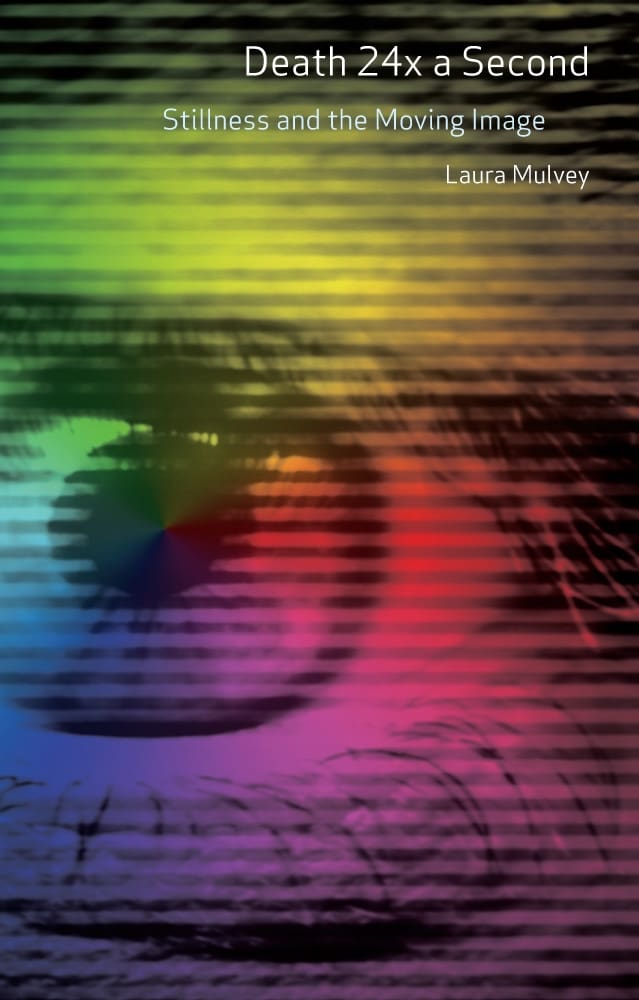
'For Barthes the cinema’s relentless movement, reinforced by the masquerade and movement of fiction, could not offer the psychic engagement and emotion he derived from the still photograph. Unlike the photograph, a movie watched in the correct conditions (24 frames a second, darkness) tends to be elusive. Like running water, fire or the movement of trees in the wind, this elusiveness has been intrinsic to the cinema’s fascination and its beauty. The insubstantial and irretrievable passing of the celluloid film image is in direct contrast to the way that the photograph’s stillness allows time for the presence of time to emerge within the image. New moving image technologies, the electronic and the digital, paradoxically allow an easy return to the hidden stillness of the film frame. This stillness is, of course, an illusion. It is not the actual frame, as stilled for the twenty-fourth of a second in front of the lens; it is not the chemically produced image of celluloid. But the frozen frame restores to the moving image the heavy presence of passing time and of the mortality that Bazin and Barthes associate with the still photograph.'
Laura Malvey, Death 24x a Second: Stillness and the Moving Image, publisher: Reaktion Books
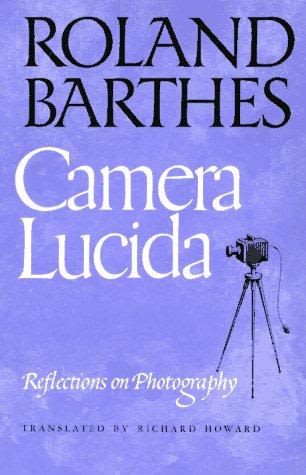
'Ultimately, what I am seeking in the photograph taken of me (the “intention” according to which I look at it) is Death: Death is the eidos of that Photograph. Hence, strangely, the only thing that I tolerate, that I like, that is familiar to me, when I am photographed, is the sound of the camera. For me, the Photographer’s organ is not his eye (which terrifies me) but his finger: what is linked to the trigger of the lens, to the metallic shifting of the plates (when the camera still has such things). I love these mechanical sounds in an almost voluptuous was, as if, in the Photograph, they were the very thing—and the only thing—to which my desire clings, their abrupt click breaking through the mortiferous layer of the Pose. For me the noise of Time is not sad: I love bells, clocks, watches— and I recall that at first photographic implements were related to techniques of cabinetmaking and the machinery of precision: cameras, in short, were clocks for seeing, and perhaps in me someone very old still hears in the photographic mechanism the living sound of the wood.'
Roland Barthes, Camera Lucida: Reflections on Photography, translator: Richard Howard, publisher: Hill and Wang
'That reality that cinema reproduces at will and organizes is the same worldly reality of which we are a part, the sensible continuum out of which the celluloid makes a mold both spatial and temporal. I cannot repeat a single moment of my life, but cinema can repeat any one of these moments indefinitely before my eyes. If it is true that for consciousness no moment is equal to any other, there is one on which this fundamental difference converges, and that is the moment of death. For every creature, death is the unique moment par excellence. The qualitative time of life is retroactively defined in relation to it. It marks the frontier between the duration of consciousness and the objective tine of things. Death is nothing but one moment after another, but is the last. Doubtless no moment is like any other, but they can nevertheless be as similar as leaves on tree, which is why their cinematic repetition is more paradoxical in theory than in practice. Despite the ontological contradiction it represents, we quite readily accept it as a sort of objective time, the qualitative instant in its purest form. Like death, love must be experienced and cannot be represented (it is not called the little death for nothing) without violating its nature. This violation is called obscenity. The representation of a real death is also an obscenity, no longer a moral one, as in love, but metaphysical. We do not die twice. In this respect, a photograph does not have the power of film; it can only represent someone dying or a corpse, not the elusive passage from one state to the other.'
André Bazin, 'Death Every Afternoon', in Rites of Realism: Essays on Corporeal Cinema, edited by Ivone Margulies, publisher: Duke University Press