'Tengu (A Long-Nosed Goblin)' [album: Benzaiten (1976)] - Osamu Kitajima


'Κάποτε, πριν από πολύ, πάρα πολύ καιρό, η γυναίκα του Ανάνσι φύτεψε μπιζέλια σ’ ένα χωράφι. Ήταν τα καλύτερα, τα χοντρότερα, τα πρασινότερα μπιζέλια που είχε δει κανείς. Και να τα ’βλεπες μονάχα, σου έτρεχαν τα σάλια.
Από την πρώτη στιγμή που ο Ανάνσι είδε τα μπιζέλια, αποφάσισε ότι τα ήθελε. Και δεν ήθελε απλώς μερικά από αυτά, γιατί ο Ανάνσι είχε τεράστια όρεξη. Δεν ήθελε να τα μοιραστεί. Τα ήθελε όλα.
Κι έτσι ο Ανάνσι ξάπλωσε στο κρεβάτι του κι αναστέναξε, βαριά και μακρόσυρτα, και η γυναίκα του και οι γιοι του ήρθαν στο πλευρό τρέχοντας. «Πεθαίνω», είπε ο Ανάνσι, με μια αχνούτσικη, ξεψυχησμένη φωνούλα, «σβήνει το κεράκι της ζωής μου».
Μόλις τον άκουσαν, η γυναίκα του και οι γιοι του άρχισαν να κλαίνε με μαύρο δάκρυ.
Με εκείνη την αδυναμούτσικη φωνούλα, ο Ανάνσι λέει: «Εδώ, στο νεκροκρέβατό μου, θέλω να μου υποσχεθείτε δύο πράγματα».
«Ό,τι θέλεις, ό,τι θέλεις», λένε η γυναίκα του και οι γιοι του.
«Πρώτα, θέλω να μου υποσχεθείτε ότι θα με θάψετε κάτω από το μεγάλο δέντρο.»
«Εκείνο το αρτόδεντρο στο χωράφι με τα μπιζέλια;» ρωτάει η γυναίκα του.
«Ναι, εκείνο εννοώ», λέει ο Ανάνσι. Μετά, πάλι μ’ εκείνη την ισχνούτσικη φωνούλα, λέει: «Και θέλω να μου υποσχεθείτε και κάτι άλλο. Να μου υποσχεθείτε ότι, ως φόρο τιμής, θα ανάψετε μια μικρή φωτιά μπροστά στον τάφο μου. Και για να δείχνετε ότι δεν μ’ έχετε ξεχάσει, εκείνη τη φωτίτσα θα πρέπει να την έχετε διαρκώς αναμμένη και να φροντίζετε να μη σβήσει ποτέ».
«Θα κάνουμε ό,τι ζητάς! Ό,τι ζητάς!» είπαν η γυναίκα και τα παιδιά του Ανάνσι, με κλαυθμούς και οδυρμούς.
«Και δίπλα στη φωτίτσα, ως ένειξη σεβασμού και αγάπης, θέλω να βάλετε ένα μικρούτσικο τσουκάλι, γεμάτο με αρμυρό νερό, για να θυμίζει σ’ όλους σας τα καυτά, αλμυρά δάκρυα που χύσατε καθώς με βλέπατε να ψυχορραγώ».
«Θα κάνουμε ό,τι θέλεις! Ό,τι θέλεις!» είπαν με αναφιλητά, κι ο Ανάνσι έκλεισε τα μάτια και σταμάτησε ν’ αναπνέει.
Έτσι, πήραν τον Ανάνσι και τον κουβάλησαν ως το μεγάλο αρτόδεντρο, δίπλα στο χωράφι με τα μπιζέλια, και τον έθαψαν σε ένα βαθύ λάκκο, και μπροστά στον τάφο άναψαν μια μικρή φωτιά κι έβαλαν κι ένα τσουκάλι πλάι της, γεμάτο με αλμυρό νερό.
Ο Ανάνσι περιμένει μες στον τάφο όλη μέρα, μα σαν πέφτει η νύχτα βγαίνει απ’ το λάκκο, πάει στο χωράφι και μαζεύει τα χοντρότερα, γλυκύτερα, ωριμότερα μπιζέλια. Τα βάζει στο τσουκάλι, λοιπόν, τα βράζει, και τα χλαπακιάζει, μέχρι που η κοιλιά του πρήστηκε και τσίτωσε σαν δέρμα τύμπανου.
Και μετά, προτού χαράξει, ξαναχώνεται κάτω απ’ το χώμα, και απομακρύνεται. Κοιμάται την ώρα που η γυναίκα του και οι γιοι του ανακαλύπτουν ότι λείπουν τα καλύτερα μπιζέλια· κοιμάται όταν βλέπουν το τσουκάλι αδειανό και το ξαναγεμίζουν με αλμυρό νερό· κοιμάται όση ώρα θρηνούν το χαμό του.
Κάθε βράδυ ο Ανάνσι βγαίνει από τον τάφο του, χορεύει και χαίρεται που είναι τόσο έξυπνος, και κάθε βράδυ γεμίζει το τσουκάλι με μπιζέλια, και μετά γεμίζει την κοιλιά του με μπιζέλια και τρώει μέχρις ότου δεν μπορεί να φάει τίποτα άλλο.
Περνάνε μέρες, και η οικογένειά του Ανάνσι όλο και λεπταίνει, γιατί όσα μπιζέλια ωριμάζουν τη μέρα, το βράδυ τα μαζεύει ο Ανάνσι, και η γυναίκα του και οι γιοι του δεν έχουν τίποτα να φάνε.
Η γυναίκα του Ανάνσι κοιτάζει τα αδειανά πιάτα και λέει στους γιους της: «Τι θα ’κανε ο πατέρας σας;»
Οι γιοι της, σκέφτονται και ξανασκέφτονται, και φέρνουν στο νου τους κάθε ιστορία που τους είχε διηγηθεί ο Ανάνσι. Και μετά πηγαίνουν στους πισσόλακκους, κι αγοράζουν μερικές δεκάρες πίσσα, αρκετή για να γεμίζουν τέσσερις μεγάλους κουβάδες, και πάνε με την πίσσα στο μπιζελοχώραφο. Εκεί, στο κέντρο του χωραφιού, φτιάχνουν με την πίσσα το ομοίωμα ενός άντρα: πρόσωπο από πίσσα, μάτια από πίσσα, χέρια από πίσσα, δάχτυλα από πίσσα, σώμα κατράμι και κορμοστασιά περήφανη σαν του ίδιου του Ανάνσι.
Εκείνο το βράδυ, ο γερο-Ανάνσι, πιο παχύς από ποτέ, βγαίνει ανυπόμονος απ’ τον τάφο, πλαδαρός και χαρούμενος, με το στομάχι πρησμένο σαν μπαλόνι, και μπαίνει στο μπιζελοχώραφο.
«Ποιος είσαι εσύ;» λέει στον πισσάνθρωπο.
Ο πισσάνθρωπος δεν του λέει λέξη.
«Αυτό το μέρος είναι δικό μου», λέει ο Ανάνσι στον πισσάνθρωπο. «Αυτό το μπιζελοχώραρο είναι δικό μου. Αν θες το καλό σου, καλά θα κάνεις να φύγεις».
Ο πισσάνθρωποος δεν του λέει λέξη, δεν το κουνάει ρούπι.
«Ήμουν, είμαι και θα είμαι ο πιο δυνατός, ο πιο τρανός, ο πιο ισχυρός», λέει ο Ανάνσι στον πισσάνθρωπο. «Είμαι πιο άγριος από το Λιοντάρι, πιο γρήγορος από τον Πάνθηρα, πιο δυνατός απ’ τον Ελέφαντα, πιο τρομακτικός απ’ τον Τίγρη». Φουσκώνει από περηφάνια για τη δύναμή του και τη σκληρότητά του, και ξεχνάει ότι ήταν μόλις μια μικρή αραχνούλα. «Τρέμει», λέει ο Ανάνσι. «Τρέμει και βαλ’ το στα πόδια».
Ο πισσάνθρωπος ούτε άρχισε να τρέμει ούτε το ’βαλε στα πόδια. Για να πούμε την αλήθεια, έμεινε εντελώς ασάλευτος.
Κι έτσι ο Ανάνσι τον χτυπάει.
Και η γροθιά του κολλάει γερά στην πίσσα.
«Άφησε το χέρι μου», λέει στον πισσάνθρωπο. «Άφησε το χέρι μου, γιατί θα σου δώσω μια στα μούτρα».
Ο πισσάνθρωπος δεν λέει λέξη και δεν το κουνάει ρούπι, κι έτσι ο Ανάνσι του χώνει μια κατάμουτρα.
«Λοιπόν», λέει ο Ανάνσι, «άσε τ’ αστεία. Και να μη μου αφήσεις τα χέρια, έχω άλλα τέσσερα χέρια, και δύο γερά πόδια, και δεν μπορείς να τα κρατήσεις όλα, γι’ αυτό άσε με τώρα και θα φανώ επιεικής μαζί σου».
Ο πισσάνθρωπος, βέβαια, δεν αφήνει τα χέρια του Ανάνσι και δεν λέει κουβέντα, κι έτσι ο Ανάνσι τον χτυπάει μ’ όλα του τα χέρια, και μετά τον κλοτσάει με τα πόδια του.
«Λοιπόν», λέει ο Ανάνσι. «Ή μ’ αφήνεις να φύγω ή σε δαγκώνω». Η πίσσα γεμίζει το στόμα του, καλύπτει τη μύτη του και το πρόσωπό του.
Να, λοιπόν, πώς βρίσκουν τον Ανάνσι το επόμενο πρωί, όταν η γυναίκα του και οι γιοι του πηγαίνουν στο μπιζελοχώραφο και στο γέρικο αρτόδεντρο: κολλημένο στον πισσάνθρωπο, και πεθαμένο ως εκεί που δεν παίρνει.
Δεν ξαφνιάστηκαν που τον είδαν έτσι.
Εκείνο τον καιρό, τον Ανάνσι τον έβρισκες διαρκώς σε παρόμοια κατάσταση.'
Νιλ Γκάιμαν, Οι Γιοι του Ανάνσι, μτφρ. Βασίλης Μπαμπούρης, εκδ. Οξύ


ΒΑΘΥΓΑΛΑΖΟ ΜΕ ΤΡΙΓΩΝΟ ΚΕΝΟ ΑΠΟ ΑΜΜΟ
Διαδοχικές και εσπευσμένες αποχωρήσεις
Αφήνουν πίσω τους συσσωρευμένες απουσίες
Ανεπανόρθωτες
Τρομακτικές
Άυλος αμμόλοφος ανασηκώνει τις πλαγιές του
Με την πλάτη γυρισμένη στις ακατάπαυστες αναταραχές
Του παρόντος
Στραμμένος στον επίπεδο ωκεανό
Της λήθης
Με το βέλος καρφωμένο στον στόχο του
Απλωμένο προς ποιούς απρόσιτους ουρανούς
Ένα αόρατο χέρι
Θα έρθει να ανατρέψει
Το εύθραστο οικοδόμημα
Κλεψύδρα
*
ΧΩΡΙΣ ΣΗΜΕΙΟ ΑΝΑΦΟΡΑΣ
Μένει ακόμη να τελειοποιηθεί
Να σμιλευτούν μερικές λέξεις
Να τοποθετηθούν μια ή δυο πέτρες
Είναι απαραίτητο
Κι έπειτα
Να αφήσουμε τον χρόνο να κυλήσει
Να δούμε πώς δρα
Τώρα
χωρίς σημείο αναφοράς
Αλίς Μπέκερ-Χο, Βαθυγάλαζο με Τρίγωνο Κενό από Άμμο, μτφρ. Βανέσσα Θεοδωροπούλου, εκδ. Γαβριηλίδης
Clip from Peter Walker’s Cool It Carol! (1970)



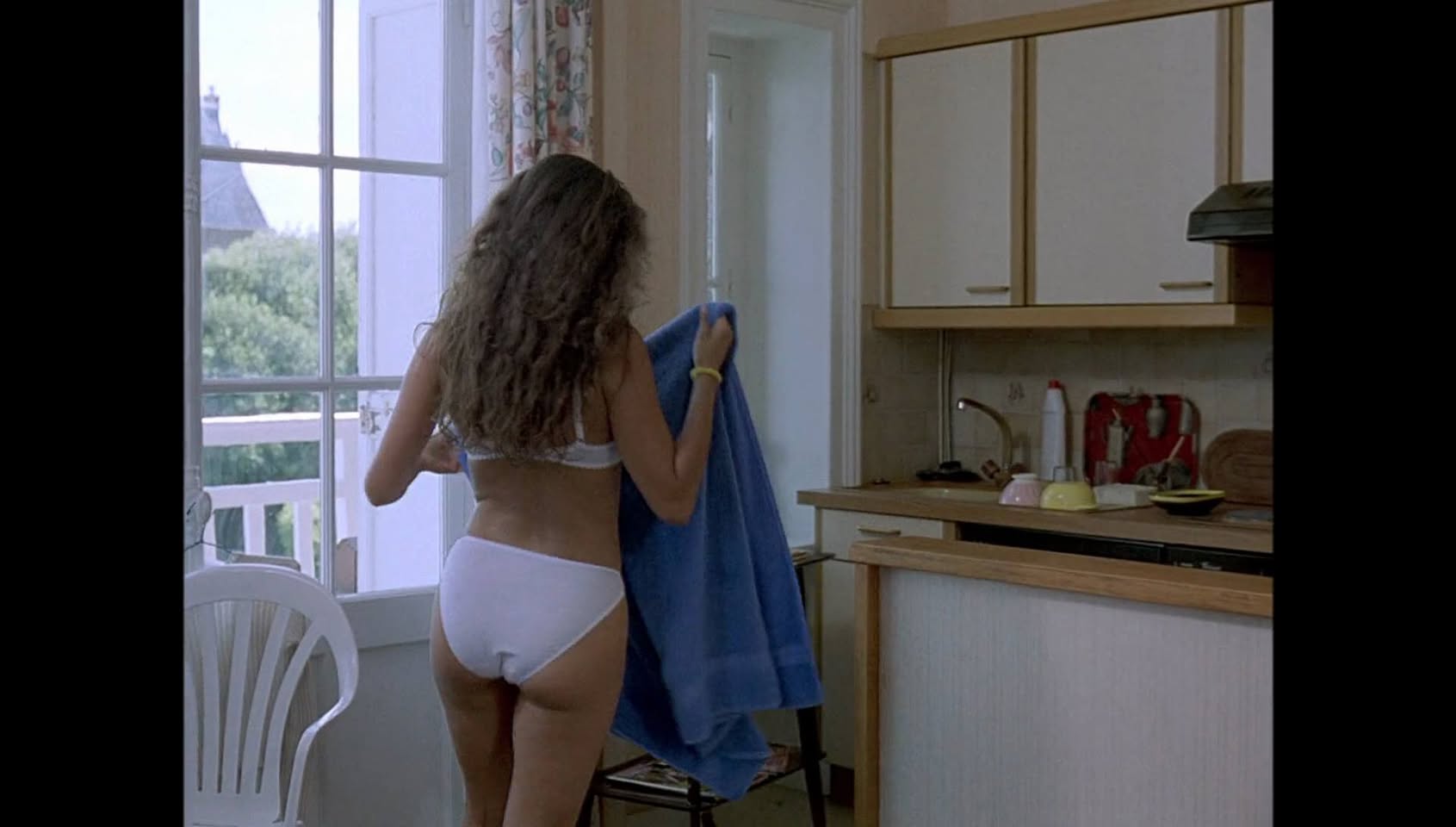

From desires to morals
Éric Rohmer’s Claire’s Knee as a discourse on moral deceptions
_________________________________________________________________________________________________________________
Ioannis Tsirkas
Claire’s Knee (1970) is the fourth part of Éric Rohmer’s Six Moral Tales series. In all the films of the cycle the egocentric male leads ‘invent moral principles to legitimate, before or after the fact, a chosen line of conduct’ (Shilling 2007, p.130-131). In other words, Rohmer intends to show us how an action can be justified by following a certain code of morality which is premised by the person who proceeds to such an action, wanting thus to give a meaning to it and then determine the reactions it gave rise to. In this paper I will analyse philosophically the self-serving moral system that the main hero of the film, Jérôme (Jean-Claude Brialy), invents for himself in order to justify his controversial actions. Through the analysis of certain significant dialogues of the film —dialogues are the raw material of Rohmer’s cinema in general— and by focusing on the notion of desire as it is perceived by Jérôme in the main body of my essay, I will try to generalise in my conclusions aiming to point out what the film has to offer as a philosophical discourse on the subject of the self-serving morality. Before my main analysis follow, I have to mention that a sufficient familiarity of the reader with the text of the film as well as the filmic work of Éric Rohmer in general is nevertheless premised in order to be aware of some of the notions that the director develops in the majority of his films and the context by which he chooses to give prominence to some of his philosophical ideas.
Monday, June 29th
After meeting Aurora (Aurora Cornu) by chance, Jérôme says to her that everything is possible. However, Claire’s Knee has been considered by John Fawel (1993, p.778) as ‘a gently cruel’ film because it reflects the exact opposite of it. Jérôme will face certain impossibilities during the next days that will force him to deceive himself with chimerical ideas (Cardullo 2004, p.290) in order to overcome them. They will be impossibilities relative to his desire which Éric Rohmer represented ‘in a way that is sympathetic to human weaknesses’ (Leigh 2012, p.44). As Matthew Thorpe (2014, p.58) proposes, the theme of ‘self-deception’ and ‘circumscribed perspective’ manifests in the film as Jérôme’s effectual ‘rationalization of his desires in a cerebral, creative, self-deceptive’ and ‘self-directed hermeneutics’. Thus Fawel’s oxymoron is rather justifiable.
When he meets Laura (Béatrice Romand) for the first time, she declares that she never cries in front of others while this is also something that will be contradicted during the next days. The film is full of —mainly inner—contradictions and especially moral ones. Jérôme’s comment is that when he sees a girl crying it renders him utterly helpless, especially if she is pretty. Only unattractive girls deserve to cry for him or at least they do not constitute a threat to him, they do not render him utterly helpless. They seem to be rather helpless to him, manageable, and thus harmless. Furthermore, his response to Aurora’s ironical assumption that he makes only the ugly ones cry is that this is not true concerning both the ugly and the pretty ones. Even if he says the truth —Jérôme’s fidelity will be proved ‘too easy and self-serving’ (Haskell 2006) soon— or not he will nevertheless make Claire (Laurence de Monaghan), a certainly pretty girl, to cry in order to achieve an unaccustomed goal. He possibly does not make pretty girls cry in general, not out of obedience in a moral code, but because he does not find a sufficiently useful reason, or because he considers himself unable to manage such a thing. Actually, as it will be manifested, his morality is being determined mainly by what is possible and useful.
Tuesday, June 30th
Jérôme, discussing with Aurora about his decision to marry soon contradicting thus his past views confesses that, since experience has shown to him that he can live with his future wife, he is just consenting to a fact which he acknowledges by not enforcing rules to himself. When something pleases him he does it for pleasure. The factuality of pleasure determined by chance is being reconfirmed as measure of his morality.
Sunday, July 5th
Laura’s mother, Madame Walter (Michèle Montel), discussing with Jérôme, Laura and a friend of hers, says to them that she does not like living at the foot of the mountain, because it makes her feel uneasy. Its majesty stifles her. Laura disagrees by supporting that a mountain appears more beautiful when it is viewed right from its base. When Jérôme meets Claire her impressive beauty will stifle and make him feel uneasy too. However, Rohmer’s interest in beauty as problem for somebody’s equanimity (McKibbin 2014) will be explicit when Jérôme begin reflecting on Claire’s charm as it is nevertheless implied in the above dialogue. You can apprehend the height and beauty of a mountain either from its top or its foot in the same way that you can perceive someone’s mystique either when it happens he or her to be under your charm or not. However, as it will be proved, when Jérôme does not feel in a position of power in relation to a woman or girl who attracts him, she impresses him more. He mainly desires the ones who seem more difficult to get impressed by him, to possess them. Even if he does not participate in the dialogue to express his opinion we can imagine that he agrees with Laura in that when you reach the top of a mountain it maybe loses some of its majesty in your perception. Besides, Rohmer had admitted that he was interested in the contradiction ‘between what is purely desired and only desired’ and ‘what is possessed’ in the film, wanting to demonstrate though it that the object of desire ‘is not necessarily the object of possession’ (Nogueira 2012, p.23). However, this metaphorical dialogue functions just as a sign of what will be demonstrated in the rest of the film, namely that what is usually desired the most is exactly almost impossible to be possessed.
Monday, July 6th
The next day Jérôme and Laura, after hours of hiking, are on the top of a mountain; at its nicest spot, according to her. It is where he tries for the final time to kiss her. She rejects him. Despite his reaching the top of the mountain Laura will remain out of reach.
Sunday, July 12th
Claire picks cherries with his boyfriend Gilles (Gérard Falconetti) from a tree in the garden of her home. Jérôme approaches them and they throw some in his hat. As she is up on the ladder he notices her bare feet. As Rohmer himself had admitted (Barron 2012, p.78-79) this scene is influenced by an incident that Jean-Jacques Rousseau had narrated himself. He had once gone with some young girls to pick cherries at the same area that the home in the film is, namely at the Annecy of the south-eastern France, and while he was up on a tree he was throwing cherries down onto the young girls’ breasts. On the contrary Jérôme is standing at the foot of the tree watching what he mostly desires and thinks that is not able to have.
Friday, July 17th
Jérôme confesses to Aurora that he is interested in Claire, because she intrigues him and disturbs his character just by the way she looks. She is ‘a figure of sight and not of touch’ (McKibbin 2014) in his phantasy[1]. He admits to Aurora that he feels absolutely powerless when he is surrounded by girls like that. Claire thus constitutes a problem for him (McKibbin 2014). As he also mentions Claire arouses a desire in him that is real, but without purpose and it tends to become stronger exactly because of it. It is a pure desire, a desire without target. He does not want to act on it, but it bothers him to feel it. Until now he is making hypotheses about his feelings rather than attempting to detect the motives which dictate his imminent actions (McKibbin 2014). He is first and foremost interested to talk about his desire as a way to appease it (Crisp 1988, p.64). He expresses his desire for Claire to Aurora through speech, while he will not dare to express it through his body to Claire herself. As Gilles Mouëllic (2007, cited in Leigh 2012, p.271) underlines, in Rohmer’s films ‘[d]esire expressed by the body often contradicts the character’s statements’ since the body is not controllable; the body expresses the truth of a desire that speech denies to express. Although he supports that he does not even really want her and that if she had thrown herself at him he would reject her, this constitutes a certainly false claim. He is just unable, powerless to seduce her, to overturn her indifference. His bodily desire for her is doomed to remain unexpressed since seduction is exactly ‘the method by which desire exposes itself towards the one it wishes to reach’ (Tortajada 230, p.230). Like Laura, Claire will remain out of reach too. Jérôme continues by supporting that even though he does not want her he feels he has some sort of claim on her. A claim born from the very strength of his desire. Such are his morals: the fact that he is not able to resist to the desire that she arouses on him, that its strength is more intense than that of his resistance, this fact offers him a claim on her. The turmoil she arouses in him gives him a sort of right over her. He believes that he has the right to demand something from her or at least something from himself relative to her. Thus according to him we deserve everything that we are unable to resist to and since, as he says, he is convinced he deserves her more than anyone, so for this pure reason he will not hesitate to venture something that he considers as not at all immoral, to touch her knee. So instead of being a ‘moral peril’ (Jones 1981, p.4) Claire’s knee will become an object which would signal his own notion of morality.
Jérôme reveals to Aurora his odd aspiration by recounting the previous day at the tennis court. He was watching the loving couple of Claire and Gilles while thinking that every woman has her most vulnerable point. For some it is the nape of the neck, the waist or the hands, but for Claire —in that position, in that light— it was her knee. This was the magnetic pole of his desire, the precise point where he would have placed his hand if he could pursue this desire. When Aurora suggests him that the simplest solution would be to place his hand over her knee in order to exorcise his desire he demurs that this would not be simple at all, but contrariwise it would be the hardest thing for him to do since a caress has to be accepted. So he has to find a way, a proper way for Claire to succumb willingly to his caress on her knee. As Moly Haskell (2006) has interpreted his desire, ‘[t]hat small piece of epidermal real estate on an innocuously pretty blonde becomes the focus of an obsession that blots out the glorious child-womanliness that is Laura’. However, Jérôme is not a fetishist, since this obsession of him arises from the intellectualization of his desire (Crisp 1988, p.64). The touching of Claire’s knee has namely for him a ‘symbolic value’ (Leigh 2012, p.44). However, as Daniel Hayes (2005) observes ‘[t]he film’s use of the metaphor of the knee is somewhat indeterminate, and one’s interpretation of its meaning will likely reflect more on one’s own experiences than on Rohmer’s intent’. As about Rohmer’s intentions he had stated about his character Jérôme that
‘from the woman who, to his sense of sight, appears the most desirable, he wants nothing, or only something extremely symbolic. Ultimately, touching her knee is simply a way of being able to say “I touched it,” like children when they’re playing tag . . . Possession for him adds nothing to desire. On the contrary, his desire feeds on the absence of possession. That’s what satisfies him. It’s not an unusual state, and there’s nothing morbid about it’ (Nogueira 2012, p.24).
Jérôme wants nothing from Claire exactly because she is the object of his innermost desire. He knows that he would not be able to expect anything from her side and thus he confines himself to his desire, to aim at just touching her knee, one of the most approachable and at the same time beautiful parts of her body, but within the limits of his reach. The touching of her knee will symbolize exactly his reaching of her; it will stand as the proof of her approachability to him. According to his moral code, he feels that he has the right to do everything that he both desires and is able to do with the permission of the other. Even if he would possibly desire more from Claire, knowing that what he could only have is her knee, he allows himself to desire only this in the end which in its turn becomes his only right. Instead of his desires being confined by his morals he uses his morals as a way to form his desires in a self-deceiving manner in order to feel that he is not deprived of anything. He namely chooses to give the most convenient for his self-complacency and self-righteousness meaning to his gestures. His desires do not proceed to their fulfilment or non-fulfilment, but they are incipiently formed by his estimations about the potentiality of their fulfilment. As Jacob Leigh (2012, p.44) mentions Jérôme ‘chooses the knee partly to minimize the likelihood of failure’. It constitutes namely the ‘minimum action required to contain the problem that Claire presents to him’ (McKibbin 2014). However, maybe in its essence his longing to touch Claire’s knee functions less as a test of his ego and his capacity to conquer her than a try of his will and by extension his capacity to overcome an aspect of his own self (McKibbin 2014). More specifically, the possible approval of his gesture will mean the obtainment of a sign that his charm still operates (Bonitzer 1991, p.116). Jérôme will namely aim to what he considers as obtainable in order to fulfil his desire for something unobtainable confirming his vanity through the use of an incoherent morality, incoherent through its coinciding with everything that is within the realm of both his desire and its potentiality. In this way his morality stands more as a metre of his self-limits rather than constituting his self-limits themselves.
Monday, July 20th
Three days later Jérôme discusses once again with Aurora about Claire. He reminds to her that if she were to come to him he would turn her down. He would like to turn her down following thus his own choice. However, it has been his misfortune that whenever he desired a woman he never got her. All his conquests until now have come as surprise. Desire was always following possession. It is being confirmed thus that he does not really desire Claire, but he is just offended by what her indifference to him represents. Even his denial to attempt to do any further thing with her except for touching her knee signals his repression to fully recognise and accept that he is not desired by her. What he essentially wants is to avoid the repetition of the past misfortunes he mentions to Aurora. Through the moralistic mechanism he has already developed, that of a safe and deliberate passivity, he has managed to avoid any bad surprises relative to his desire for women by eliminating the possibility of any bad surprise, or in other words, the possibility his desire for a woman not to be followed by her possession. For him it is desire that follows possession instead of the opposite. At the same time, in his case, morality follows desire instead of desire following morality. On this manner morality follows possession instead of the reverse. Due to this perverse contrivance his morality is actually shaped on the one hand by his image about his seductive abilities and on the other by pure chance. It is a morality which denies inherent meanings in gestures; Jérôme accepts only the immanence of his desires in relation to himself.
Tuesday, July 28th
Jérôme narrates to Aurora the way he succeeded to touch Claire’s knee. Earlier on that day he had revealed to her that he had seen her boyfriend, Gilles, kissing a girl in Annecy in the afternoon though he had told her that he would be in Grenoble. This caused the unstoppable tears of Claire. He says to Aurora that he is sure that at that moment she surely hates him. If he had tried to touch her or said a word she would have cried asking him to leave her alone. So he just sat there for a while feeling very awkward and at the same time pleased that he had landed his blow but appalled by his own behaviour. He declares that he was ashamed to have made her cry, or rather, that he felt ashamed for hers breaking down before a stranger. It embarrassed him all the more since he felt that she would reject his consolation. He was thinking that she would never let him take her hand or her shoulder, or hold her tight. So she sat facing him with her one leg being stretched out and the other bent. He describes her knee as sharp, narrow, smooth, delicate, but more importantly within reach, within the reach of his hand; he only had to extend his arm to touch it. It would have been reckless to do it; it was the only thing he should not do and yet the easiest one in the world. However, even if he knew the way and how easy and simple it would be it felt impossible as well. He compares it with the feeling of being one step from the edge of a cliff, where even if you want to jump, you cannot. It was a moment when he had to take a pivotal decision, a moment actually before a decision; in Rohmer’s words a kind of ‘suspension of time, of silence, of indecision’ (Yakir 2012, p.89). It took him a great deal of courage to do something so dicey or at least so wilful. He considers that it was the only time he had ever had the chance to accomplish an act of pure will. He had never felt so strongly that he was doing something that had to be done. So in the end he put his hand on her knee in one quick move that did not give her the needed time to react. The precision of his gesture prevented her from parrying it. She simply stared at him indifferently with a little trace of hostility without nevertheless saying anything. She did not push him away or move her leg, but if he would have caressed her with a finger or tried to stroke her brow she would certainly draw herself back. What ensured the success of his caress was that his gesture was unexpected. She would probably think that it was the beginning of an attack which never came so she felt reassured. Finally, he concludes that since Claire needed a lesson and that it was he who ought to open her eyes, he calls what he did as the good deed of the day; he believes that after all he did her some good: what he considered to be a gesture of desire she regarded it as a gesture of consolation. A ‘sophist to the end’ (Haskell 2006), he is sure that the results of his behaviour are highly moral. On the one hand he thinks that he got her away from his bad boyfriend for good and on the other that he is no longer obsessed with the girl’s body. It is as if he had had her. He is satisfied. He even thinks ‘with an ill-deserved sense of satisfaction’ (Haskell 2006) that he could have not experienced such perfect pleasure if it were not for the good deed he was doing.
Although Jérôme certainly cares at least to be able to present his actions as harmless the possibility of not being such was not what really frightened him in Claire’s case. What first and foremost was frightening him was the possibility to fail at what he attempted. He calls his act as one of pure will because its only goal was to confirm that he was able to make it happen. What was compromised was not his moral integrity, but the integrity of his being itself. Claire’s little traces of hostility while he was taking delight in the touching of her knee at the same time when she was crying do not constitute at all flaws which would overshadow his success. What matters for him is that his gesture of pure desire has been perceived by Claire as a gesture of consolation. This matters in order his moral system not to be proved vulnerable since this would entail that the vulnerability of the potentiality of his desires would be easily satisfied too. His consideration of the results of his behaviour as highly moral is thus indeed a sophistry. In conclusion, he is absolutely satisfied at the end because he managed to confront both the significant threat that his failure would introduce to his pure satisfaction and the threat of something going wrong according to his moral system.
Wednesday, July 29th
Aurora informs Jérôme just before he leave that she is engaged with someone and not free as he had thought. While he is away Gilles comes to see Claire and she accepts his excuses concerning the previous day, so after a brief and mild conflict they are reconciled. So Jérôme is proved at the end to be misguided about many issues, but for this reason he departs from his holiday entirely self-confident and believing that he himself is ‘absolutely innocent of any wrongdoing’ (Tester 2008, p.103).
Through Éric Rohmer’s Claire’s Knee the potential self-interest of any morality is being demonstrated. Every desire proffers its fulfillment. The role of any moral system is to offer the intervening limits needed when somebody attempts for any desire’s fulfillment or even to form the nature of desires themselves. Jérôme’s moral system was self-sought in every respect. What he was seeking in it was pretexts in order to immunize only the acceptance of the desires which he would be able to fulfill. His morality instead of determining what had to be considered as possible for him was on the contrary determined by everything he considered as impossible. His morality was in the service of his desires. His self-deception lies in that instead of recognizing the inherent contradictions within any summation of desires he was struggling to eliminate through sophistries. Nevertheless, it was these sophistries that offered him sufficient consolation since after all morality is a system able to be linguistically encoded. He does not just pursue to enforce the most convenient rules to himself, but to form himself in a way that he would be able to work through it by following the most convenient ones. The main threat of his moral truth was everything that was considered by him as out of reach. Morality is ultimately a system of control of our power against the others. Following this perspective as pure deed is calculated everything that its fulfillment does not overturn the entelechy of this balance by not having inherent meaning. Jérôme believes that he deserves anything that he is unable to resist to while his inability for resistance is what generates his obsessions. Jérôme’s moral law is on the service of what helps him not to lose any trace of his dignity because of the inadequacy of his potentiality. Every time this moral law is premised it symbolizes something by which he is unable to escape. Through the touching of Claire’s knee he managed to sublimate what his reaching was signifying without soiling his morality.
____________________________________
[1] As Rohmer had declared, he believed that ‘there is a type of woman who is made to be looked at and another type who is made to . . . be touched. All the senses cannot be satisfied by the same object’ (Nogueira 2012, p.23-24).
List of references:
Barron, Fred (2012) ‘Take One 1974’ in Bert Cardullo (ed) Interviews with Eric Rohmer. Gosport: Chaplin Books, pp. 74-81.
Bonitzer, Pascal (1991) Eric Rohmer. Paris: Cahiers du Cinema.
Cardullo, Bert (2004) In Search of Cinema: Writings on International Film Art. London: McGill-Queen’s University Press.
Crisp, C. G. (1988) Eric Rohmer: Realist and Moralist. Bloomington: Indianna University Press.
Fawell, John (1993) ‘Eric Rohmer’s Oppressive Summers’, The French Review, 66(5), pp. 777-787.
Haskell, Molly (2006) ‘Claire’s Knee: Rohmer’s Women’, The Criterion Collection [Online]. Available at: https://www.criterion.com/current/ posts/438-claire-s-knee-rohmer-s-women (Accessed: 11 April 2016)
Hayes, Daniel (2005) ‘Claire’s Knee’, Senses of Cinema, 35 [Online]. Available at: http://sensesofcinema.com/2005/cteq/claires_knee (Accessed: 11 April 2016).
Jones, Edward T. (1981) ‘Claire’s Knee and That Obscure Object of Desire: Desire under the Helms or Rohmer and Buñuel’, Literature/Film Quarterly, 9(1(), p. 3-8.
Leigh, Jacob (2012) The Cinema of Eric Rohmer: Irony, Imagination, and the Social World. London: Continuum.
McKibbin, Tony (2014) ‘Claire’s Knee: Complex Caresses’, Tony McKibbin [Online]. Available at: http://tonymckibbin.com/film/claires-knee-2 (Accessed: 11 April 2016).
Nogueira, Rui (2013) ‘Eric Rohmer: Choice and Chance’ in Fiona Handyside (ed) Eric Rohmer: Interviews. Jackson: University of Mississippi Press, pp. 15-27.
Shilling, Derek (2007) Eric Rohmer. Manchester: Manchester University Press.
Tester, Keith (2008) Eric Rohmer: Film as Theology. Basingstoke: Palgrave Macmillan.
Thorpe, Matthew (2014) ‘Ma Nuit chez Maud and the Moral Imagination: Rhymes, Symmetries, and Variations on an Ethical Theme’ in Leah Anderst (ed) The Films of Eric Rohmer: French New Wave to Old Master. Basingstoke: Palgrave Macmillan, pp. 49-62.
Tortajada, Maria (2004) ‘Eric Rohmer and the Mechanics of Seduction’, Studies in French Cinema, 4(3), pp. 229-238.
Yakir, Dan (2012) ‘Village Voice 1976’ in Bert Cardullo (ed) Interviews with Eric Rohmer. Gosport: Chaplin Books, pp. 84-91.
Éric Rohmer as philosopher
The Tales of the Four Seasons as a discourse on meaning
_________________________________________________________________________________________________________________
Ioannis Tsirkas
Éric Rohmer never denied that he was a practicing Catholic. According to the Catholic theology ‘God is not just the Creator. God is also an immanent presence in our lives’ (Tester 2014, p.90). Some of the heroes of the four Rohmer’s films from the Tales of the Four Seasons cycle that I will examine in this essay, in particular the A Tale of Springtime (1990), the A Tale of Winter (1992), the A Summer’s Tale (1996) and the Autumn Tale (1998), are determined as Catholics, others as atheists and there are others who remain indifferent as regards religion and God. However, Rohmer through their dialogues and the various situations they have to face, reveals to us their opinions about these issues and their relative precautions, if they have any. In all of his realistic films no miracles do take place and the above four do not constitute an exception. So, if God and its grace exist in their narratives, it is a matter open to interpretation by the spectator. As Keith Tester (2014, p.92) supports, ‘Rohmer’s films can be approached as explorations of the immanence of God’s grace in the world’. My approach on this paper is quite relative with this thesis since I will examine some specific sequences of them as potential metaphorical discussions on the subject of meaning in general and on the meaning of life too, whether this meaning is internal or external and how the position of somebody upon this would affect his idiosyncrasy and the reverse.
Although I will focus on specific sequences of them, these four films offer useful texts for such an approach. As Jacob Leigh (2012, p.159) mentions ‘[t]he central issue of Conte de printemps [the original French title of the film] is thought, the mystery of what other people are thinking, and the difficult of representing thought. Both of these tally with Rohmer’s long-standing concerns, but in no other film does he make them so central to the story’. Thinking is the realm of meaning per excellence, since it is the only way that we are able to conceive and reflect on everything. As about the A Tale of Winter, Leigh (2012, p.174) supports that it is ‘the story of a woman remembering someone loved, an allegory about the power of faith’. It is indeed upon the meaning of faith that I am going to bring out in my examination of the second film and in my conclusions I will extend to its meaning as well. Also significant for my subject is that the A Tale of Winter is a film about reconciliation and more importantly that ‘Charles and Félicie’s [the couple who is reconciled in the end of the film] reconciliation is ordinary and miraculous, plausible and implausible’. I will try to discuss exactly this ambiguity between the plausibility and implausibility of something in relation to its meaning. Finally, concerning the third film, the A Summer’s Tale, in Leigh’s (2012, p.210) words again, ‘[t]he film shows how a young man’s fatalistic preference for vaporous daydream and his lack of effort in the face of difficulties and in a disturbing crisis’. It is indeed the passivity concerning the existence of meaning that will be my focusing point concerning this particular film.
In any case, my main concern is not to philosophise through the analyses of the films, but to examine a specific aspect of Rohmer’s auteristic idiosyncrasy. I will try to demonstrate that the way by which the under examination sequences are connected with each other is mutual, complementary and thus deliberate and intended by the French auteur. His work has been approached extensively by scholars under realistic perspectives and the texts of his films are considered to be quite approachable with plenty of clarity while almost nothing has been said about the possible metaphors in it. I will seek for metaphors in the dialogues of these four films. On the one hand, this is not surprising, considering the extended talkativeness of his films. On the other, it is indeed challenging to seek for metaphors in the dialogues of a film and not to its visuals as usual. Furthermore, in contrast with the other films that Éric Rohmer directed, the four films of the Tales of Four Seasons cycle were not intended to be variations on a single or similar subjects. Thus through my analyses I will suggest that his concern with the notion of meaning is certainly one of their main connecting points. More importantly, I will seek to demonstrate that there is consistency in his ideas about meaning, as they can be extracted from these four films, justifying thus his quality as an auteur who tries to express his ideas through his filmic work. At last, I have to mention that since I will only refer to specific sequences of each film a sufficient familiarity of the reader with the under examination films is premised.
A Tale of Springtime
In the film A Tale of Springtime, when Jeanne (Anne Teyssèdre) meets Natacha (Florence Darel) for the first time in a party she says to her that she does not know why she came, but then she changes her mind and says that she knows only to recall it once again and confess that she does not know anything. She confesses that the reason may be romantic since it is very absurd. She continues by saying that if anyone –being invisible– had secretly witnessed that day all she had said and done he would have no idea of the situation’s meaning, if we assume it had one. Natacha asks her if she is waiting for someone and her answer is that she is waiting for the sunrise and the time to pass. Actually, Natacha went to the party because she had lent her house to a friend. She does not want to stay to her boyfriend’s one which she shares with him and who is away for a few days because, considering his absence she finds it empty although she declares that she is not afraid of being alone. Natacha invites her to sleep in her home in which she lives alone since her father is never there. When she arrives to Natacha’s home, in which she will spend the night having accepted her new friend’s invitation, the first thing that draws her attention is some gizmos –as she calls them–, in the dining room, namely four wooden columns which mark out the space around the dining table making people to go around it, setting thus off the dining area. Natacha curses them, because they conduced to the separation of her parents. Her mother left them for the young architect who had the idea about them and thus nobody likes them now. Jeanne asks her why they do not remove them since they were always a cause for trouble. Natacha’s answer is that this would destroy the ceiling downstairs. She is used to them anyway. Jeanne is not totally against them even if she finds them a bit absurd and does not like being hemmed in. However, she supposes that they might have other uses.
From the beginning of the film Rohmer puts Jeanne to find it hard to know the reason of a decision of her. Either there is a reason for it or not she cannot be sure if she will be later able to clarify it. When we are unable to determine the reasons of our own decisions how optimistic can we be concerning the finding of reasons behind the decisions of others or even worse behind the decisions of God, if there are any, behind the meaning of everything that seems –and we perceive it as– random or not? The question of meaning as a matter of causes and its opposite, namely the question of causality as a matter of meaning, is one of the main concerns of Rohmer in this film. If God’s graceful existence has to appear as the cause behind certain situations, would it be recognizable by us? Maybe not and thus it could lie where we only see absurdity. Jeanne connects absurdity with romanticism too. Behind romanticism it is absurdity that lies for her, obviously because she is unable to find certain reasons behind everything romantic too. Like the idea of God, the one of love is one that somebody has to believe in its ideals in order to serve them. However, love –actually its performance– can be observable and thus provable when somebody chooses to serve God, serving thereby something that can be observed only by the eyes of faith. This should refer to Jeanne supposing that no one who would have secretly witnessed that day all she had said and done –being invisible like God– would have any idea of the situation’s meaning. Even if there was a meaning which would be its significance if no one were able to find it? Jeanne, a rather typical Rohmerian hero –and significantly a philosophy teacher– reflects on the meaning of things not by resorting to deep existential questions, but by just discussing simple everyday choices. Her answer to Natacha’s question if she is waiting for someone could carry a metaphorical meaning: for the sunrise and the time to pass. For Jeanne time flows –like Heraclitus would put it– and it flows in a repetitive way; every day has its own sunrise. The passing of time is being unavoidably perceived by us in small or big periods, like the ones that the days or the seasons of a year constitute. Either God is or not the conductor of time Jeanne, as an atheist, seems to feel his absence. As she feels the room that she shares with her boyfriend unbearably empty due to his absence maybe the world is being perceived in an analogous way by her. Even if she does not believe in God she would welcome his appearance: world, by obtaining a meaning, would be (ful)filled by His presence. For now we face the lack of reasons why the world is according to her absurd as the four columns in Natacha’s home. Despite their absurdity –or maybe exactly because of that– they made her feel hemmed in, but she is not totally against them, because she supposes that they might have other uses, namely that there might be reasons behind their existence or function, even if this remains to be discovered. Natacha though she still curses them, has gotten used to them because they cannot be removed anyway. For her they function as monuments from a bad event. However, somebody has to get used to everything that cannot be changed. In a world that everything is repeatedly changing monuments of what could not be changed come in as useful.
Another sequence of the film which is equally significant with the above is the one in which Jeanne and Igor (Hugues Quester) are alone in the country house. Sometime she begins to talk about her boyfriend. What she says about him could be perceived as a metaphorical reflection on her ideas concerning the nature of God. She says that she lives with a compulsively messy man, namely a man that does not care about any order around him. Or maybe he has a certain sense of order which is inconsonant. As she adds, she did not stay at his home this week not because of her feeling lonely without him, but because she could not stand his kind of order. What is however significant is her clarification that she can only stand it when he is there. Namely the order of a God who is present in the world he created, who is visible in it in some way, is an order that despite its remaining incomprehensible by us has to be accepted and we could certainly bear it. Even if we are unable to find reason in the world, if we could be sure about the existence of the one who created it, we would have to accept that there is maybe a reason understandable only by him. His redemptive presence in a way would be enough; redemptive because it would be a covetable presence. As Igor says then to Jeanne referring to her boyfriend she can only stand his home when he is there because she loves him, her answer is that she would have to love him a lot. However, he asks her is she is sure about her loving him, since, according to him, if she was madly in love with him she would have forgotten her own sense of order and accepted his. The metaphorical analogue of this mad love for her boyfriend would be her faith to God. Someone who is faithful does not need an unquestionable proof for God’s existence in order to accept his order. Jeanne confesses that she has never been madly in love, or, under our current interpretation, that she always were an atheist. She continues by supporting that she is not mad and that she does not have emotional problems. This could metaphorically mean that whether God’s grace exists or not she is a living example that someone can live fine without its recognition.
A Tale of Winter
Félicie (Charlotte Véry) and Loïc (Hervé Furic), while returning to his home by his car and having just watched in the theatre the William Shakespeare’s same titled play, begin a philosophical discussion on the matter of faith within and beyond religion. Loïc declares surprised that the play upset her so. She recalls that when the statue moved –namely when Hermione (Diane Lepvrier) in the play restored from being a statue to life– she almost screamed. Loïc’s comments that the play is not plausible and declares that she does not like whatever is plausible in general. In opposition with Jeanne she likes the unreasonableness of the world, she is charmed by everything without definite causality and thus predictable. For her God’s grace lies exactly in the cases in which the cause and effect are not clear since it is exactly there that God would be able to intervene, remaining nevertheless unobservable. However, since He will remain unobservable it does not matter –according to Félicie’s reflections– if He exists or not in the end. Then she seems to agree with Jeanne in that as you do not believe in love in order to be proved through its performance in the same way God exists only through and due to faith. So when Loïc says to her that the only ambiguity of the play that bothered him was whether it was magic which brought the statue to life or Hermione had not ever died, she is assertive that it was just faith that brought her to life, adding that she is more religious than him. Namely, for her faith functions as a provider of meaning or at least as an expectation of it. Even if she is, like Jeanne, an atheist she confesses to him that the previous day she prayed in a church. Actually she prefers the term reflection or meditation instead of prey to characterize what she did. She describes that a kind of excitement in her brain made her to think faster and that suddenly everything was clear. She refuses that it was a dazzling experience and she insists that on the contrary, she saw everything clearly. She does not believe that she was thinking exactly during her meditation, but that she saw her thoughts since all her reasoning on whether to leave or not Maxence (Michel Voletti) and return to Paris came in a flash. She saw what she had to do and she saw that she was right. Of course it could not be a proof of that. What excites her is that it was not a choice –based on certain reasons and which would be proved right or wrong according to its results–, but something like an inspiration she cannot explain. She just believes in the rightness of what she did knowing that for an external observer, like the one Jeanne imagined, would not seem plausible. Loïc continues by supporting that if he were God he would cherish her particularly for the reason that she was unjustly unhappy and that she could sacrifice her happiness, her life, to a love that was out of reach. So according to him, who is a Catholic, the fact that she still believes that she will meet again Charles (Frédéric van den Driessche) and that they would be together again, more importantly, the fact that she sacrifices her current happiness due to her faith to it, that she chooses to wait for something not probable at all just because she believes in it makes her to deserve it. So for him faith has to be performed through sacrifices, this is the way in order to be observable.
A Summer’s Tale
Near to the middle of the film Gaspard (Melvil Poupaud) is for a walk on the mountains with his new friend Margot (Amanda Langlet). He says to her that his only problem with a group is not how to communicate, but how to be. Gaspard thus claims that he is able to communicate with others but he does not know the way to be among others. If the universe has any meaning we experience it through our thoughts and we communicate our thoughts through words and dialogue. Individuals, in contrast with philosophers, care mainly about the meaning of their own lives. For some it is easy to find it and for some others it is not. As Gaspard says to Margot later, some people fit in easily and blossom. He is from the ones who cannot easily discover the meaning of their everyday lives or at least he is in such a phase of his life. This is the reason why, as he says, he feels everyone is alive around him but not him. He adds that he believes that he does not exist, that he is transparent and invisible and so he can observe the others, but they cannot see him. He namely feels fallen out from the meaning of the world, from the meaning that the others constantly give to the world. He believes that he would be happy if he were not invisible. Rohmer connects once again the meaning with its visibility and of course joy. However, Margot considers him lucky and confesses that sometimes she would like that. More particularly, that she would like not to be tangled in the meaning of others. His response is that he is not like her, that he is not curious. This means that for him it is easy to be detached from the others, from their experience of the world. Meaning nevertheless is the result or maybe both the cause and effect of curiosity. Jeanne was seeking for meaning, Félicie struggled to find meaning in faith, but in opposition with them Igor is uncurious for it. By adding that he is not an observer he becomes a Rohmerian hero whose stasis concerning life is somehow passive. What he immediately says after that is that he is not something. He is thus a hero who without trying, without wanting it, feels his existence as pure, not by lacking significant qualities, but by lacking strong convictions, in full contrast with Félicie.
Autumn Tale
Around the beginning of the film Rosine (Alexia Portal) has a discussion with her ex-boyfriend, Grégoire (Matthieu Davette), who is now just her friend. When Grégoire attempts to kiss her she refuses to succumb to his caresses. Irritated, he objects to her by claiming that this was nothing. Her response is that it was too much, since they have made a pact. A pact to be friends, as Grégoire adds. And nothing more, is the immediate clarification of Rosine. His reaction is to support that what he just did meant nothing more. Rosin insists that it was, leading him to justify his action, its meaning, by supporting that it is hard for him to be just a friend of her but, more significantly, that it is not easy to discern the boundary. Rohmer reminds us here that if we tried to seek for meaning in an action we would possibly in almost any case have to face the problem of ambiguity. An ambiguity like the one that has stuck in Loïc’s mind concerning the restoration of Hermione’s to life in the play of Shakespeare. The meaning is maybe defined by its boundaries, boundaries which are not easy to see, which are absurd like the columns in Natacha’s dining room. We exist within boundaries and we experience life through boundaries. We are even able to conceive time –as I have already mentioned before– only in periods of time, which are nevertheless a kind of indispensable boundary. Maybe meaning exceeds the limits of our perception and we will remain unable to change this as we are unable to solve ambiguities. Ambiguities usually force us to decide. As it came out from the analyses of the previous films the ambiguity of meaning invites decisions. A theoretical truth’s insistence in its indefiniteness means an invitation for decisions, for actions. Afterwards, Rosine claims that she knows where the boundary between them as lovers and friends is. Grégoire’s responding argument is that their situations differ. He namely supports that meaning cannot but be objective, to be a matter of each one’s situation, of each one’s position. Ambiguity itself is maybe the effect of the different positions and situations of every subject at the various phases of their lives. The ambiguity of meaning is caused by the limits that differentiate the other and what allows the consideration of miscellaneous aspects of the world.
Dialogue is undoubtedly the raw material of Éric Rohmer’s cinema. Through the metaphorical interpretation of the dialogues of specific sequences from the Tales of Four Seasons cycle Rohmer’s concern with the notion of meaning was rather demonstrated. He put his heroes to discuss endlessly their actions eliminating accordingly the plot to the minimum. Through the expression of their thoughts they were reflecting on the meaning of their actions. The ones who believe in something, who have some –religious or not– faith seem to care less about the actuality of meaning. The meaning of their faith was exactly the meaning it was giving in their lives, lives which like any life were implausible par excellence since ambiguity lies everywhere. Rohmer seems to support scepticism, but not indifference, at least not much. For him God’s grace lies anyway in any absurdity in the world. Meaning has meaning because humans do always attempt to find one in anything. We consider as useful anything that has a meaning and the reverse. God’s existence maybe has not meaning because there may be no reason to have one while the boundaries of meaning can be useful just like the ambiguity of meaning is useful. Actions are the effect of the uncertainty of truth.
List of references:
Leigh, Jacob (2012) The Cinema of Éric Rohmer: Irony, Imagination, and the Social World. London: Continuum.
Tester, Keith (2014) ‘Imagination and Grace: Rohmer’s Contes des quatre saisons’ in Leah Anderst (ed) The Films of Éric Rohmer: French New Wave to Old Master. New York: Palgrave Macmillan, pp. 89-99.
ΤΟ ΟΡΑΜΑ
Τοῦ Κυρίου τὸ χέρι μὲ ἄγγιξε τότε.
Καὶ σὰν ἄνεμος ἦρθε ὁ Κύριος
καὶ μὲ πῆρε – καὶ ἤμουν στὸ μέσον κοιλάδας∙
καὶ τὴν εἶδα γεμάτη ἀνθρώπων ὀστά.
Κι ἀπὸ ἄκρη σὲ ἄκρη μὲ ἔφερνε, κι ἦσαν
παντοὖ κάτω ἀμέτρητα ὀστὰ –
κι ὅλα τόσο ξερά ! Καὶ μὲ ρώτησε :
« Γιὲ τοῦ ἀνθρώπου, θὰ ζούσανε πάλι αὐτὰ τὰ ὀστά ; »
« Ἐσὺ, Κύριε, Κύριε, ξέρεις » τοῦ εἶπα.
Κι εἶπε : « Μίλα γιὰ μένα σ’ αὐτὰ τὰ ὀστά,
πές “ Ὀστὰ ποὺ στεγνώσατε, ἀκοῦστε
τοῦ Κυρίου τα λόγια, προσέξτε τι λέει
στὰ ὀστὰ τοῦτα τώρα ὁ Κύριος :
Τὴν πνοὴ τῆς ζωῆς θὰ σᾶς φέρω, καὶ νεῦρα
θὰ σᾶς πλέξω, καὶ σάρκα θὰ ὑφάνω γιὰ σᾶς,
καὶ θ’ ἁπλώσω ἐπάνω της δέρμα, κι ἀνάσα
θὰ σᾶς δώσω νὰ ζήσετε. Τότε θὰ δεῖτε
τὴν ἀλήθεια : ἐγὼ εἶμαι ὁ Κύριος ” ».
Κι ὅπως πρόσταξε μίλησα. Σείστηκε ὁ τόπος
μὲ τὰ λόγια μου τότε – καὶ ἦρθαν κι ἀρμόστηκαν
τὰ ὀστά, τὸ καθένα μ’ αὐτὸ ποὺ τοῦ ταίριαζε.
Κι εἶδα σάρκα καὶ νεῦρα νὰ φύονται, δέρμα
ν’ ανεβαίνει ἐπάνω τους εἶδα –
μὰ δὲν εἶχαν ἀκόμα πνοή.
« Γιὲ τοῦ ἀνθρώπου », μοῦ εἶπε, « προφήτευσε, μίλησε
στὴν πνοὴ τῆς ζωῆς, πές : “ Ὁ Κύριος λέει :
Μὲ τοὺς τέσσερις ἔλα ἀνέμους – καὶ φύσηξε
στοὺς νεκροὺς τούτους μέσα, νὰ ζήσουν ” ».
Κι ἀφοῦ πρόσταξε, μίλησα. Μέσα τους ἤρθε ἡ πνοὴ
καὶ στὰ πόδια τους στάθηκαν. Ζοῦσαν –
κι ἦσαν γύρω μου πλῆθος ἀμέτρητο.
Καὶ μοῦ εἶπε ὁ Κύριος : « Γιὲ τοῦ ἀνθρώπου,
τὰ ὀστὰ τοῦτα εἶναι ὁ λαὸς τοῦ Ἰσραήλ –
καὶ θρηνοῦν : “ Τὰ ὀστά μας ξεράθηκαν, χάθηκε
κάθε ἐλπίδα, σκορπίσαμε, πάμε χαμένοι ”.
Γι’ αὐτὸ μίλησε, πές τους : “ Ἀκοὖστε ὁ Κύριος
τι σᾶς λέει : Ἀνοίγω τὰ μνήματα,
νὰ σᾶς βγάλω ἀπ’ τὸ μνῆμα ποὺ κείτεστε
καὶ στὴ γῆ τοῦ Ἰσραὴλ νὰ σᾶς φέρω.
Καὶ θὰ δεῖτε πὼς εἶμαι ὁ Κύριος τώρα ποὺ θ’ ἀνοίξω τοὺς τάφους σας
γιὰ νὰ βγεῖ ἀπ’ τὸν τάφο ὁ λαός μου.
Καὶ πνοὴ θὰ σᾶς δώσω νὰ ζήσετε,
θα ’ναι ἡ γῆ σας καὶ πάλι δική σας
καὶ θὰ δεῖτε πὼς εἶμαι ὁ Κύριος, ναί,
κι ὅ,τι εἶπα, ὁ Κύριος λέει, τὸ κάνω ” ».
Ιεζεκιήλ, 37.1-14, μτφρ. Κώστα Φριλίγγος, από το Κουαρτέτο για το Τέλος του Χρόνου [Διαμόρφωση Πρώτη: για την Παράσταση Οστέα Ξηρά Σφόδρα - Περί Μνήμης Θανάτου] του Γιώργου Κοροπούλη, εκδ. Sestina