Frame grabs from Hisayasu Satô’s Iyarashii hitozuma: nureru (1994)

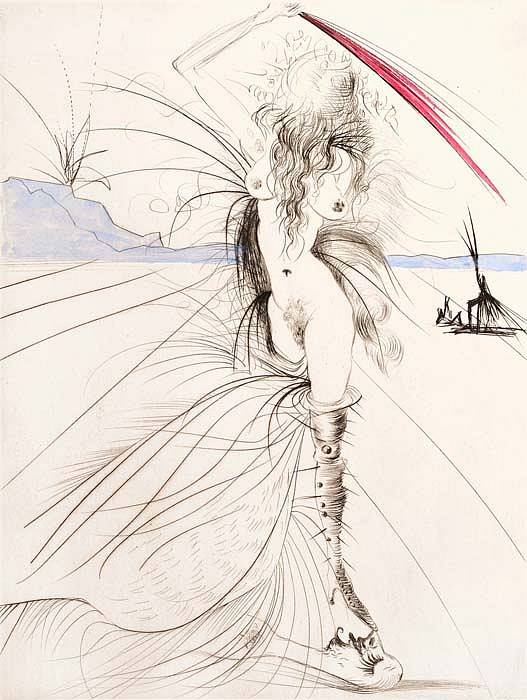
Frame grab from Adriano Tagliavia’s Dolce... calda Lisa (1980)
'To the extent that Lacan has carried out what is, in fact, a quite singular enterprise of sublating philosophical discourse (whether referred to as “psychoanalytic,” “Lacanian,” or “of the unconscious”), he has reinvested the dominant values and positions of the philosophical. One must understand sublation here in the sense that Derrida gives it when translating Hegel’s aufheben: to suppress and conserve on another level. In this dialectical operation par excellence, Lacan adopted the aims and essential project of the philosophical: the appropriation of a truthful knowledge, systematicity, and the mastery of foundation. He also reproduced and concretized its fundamental political gesture: knowledge is invested with power, decision becomes sovereign, and the communal order is given unitary and authoritarian representation. This explains the well-known succession, in the history of the Lacanian movement, of what today are called “perverse effects” (perhaps, in fact, maliciously authorized by Lacan himself, in view of the final “dissolution,” whose meaning for him remains to be considered). Generally, then, it is a question of the sublation of a closed discourse where philosophy, since Heidegger, reorganizes and confronts its own end. Psychoanalysis, in turn, might itself succumb to this closure.'
Jean-Luc Nancy & Philippe Lacoue-Labarthe, The Tittle of the Letter: A Reading of Lacan, translators: François Raffoul & David Pettigrew, publisher: State University of New York Press
'The human spirit is dominated by a demand that makes bliss intolerable. Bliss suddenly provokes a greater desire, one more demanding than the desire to be happy: the desire to break up and destroy one’s own bliss. In this action, which presupposes happiness and strength begin with, man achieves in himself “that which makes him a man.” The greatest and worst calm naturally serves as an avenue leading to “joy in the face of death.” Romantic images would give a wrong notion of this action, witch necessarily leaves one bare and sends one naked into the desert. There, there is a great simplicity that causes objections to collapse on their own when they claim that, since one does not die, it is fraudulent to speak of “joy in the face of death.” It is not a question of dying at all but of being transported “to the level of death.” Vertigo and laughter with no bitterness, a sort of power that grows but is painfully swallowed up in itself to arrive at a suppliant fierceness, that is something accomplished in great silence.'
Georges Bataille, 'Joy in the Face of Death', in The College of Sociology (1937-39), edited by Denis Hollier, translated by Betsy Wing, publisher: University of Minnesota Press

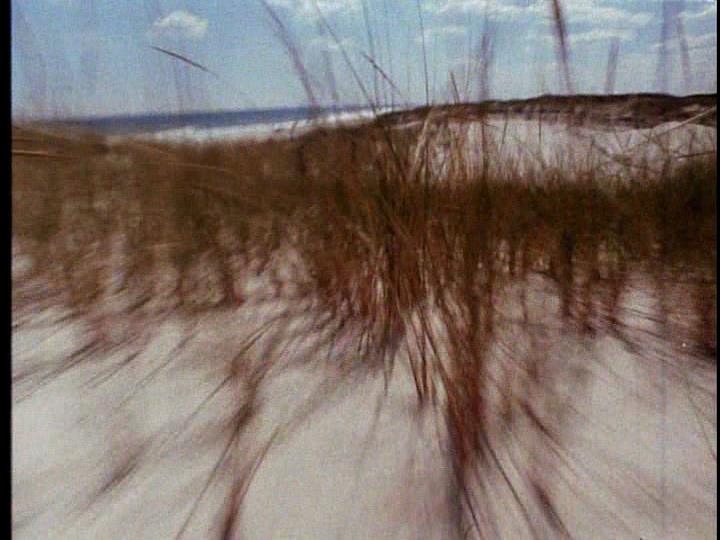


'Drawing on contemporary documentary studies, affect theory and autobiography theory, I propose that the rise of autobiographical acts which use multiple media require autobiography scholars to expand our methods of reading to include attention to the communication and representation of the historical, social and semiotic conditions of identity and selfhood which exceed narrative representation. As the truism of ‘everyone having a story to tell’ permeates popular culture in the West, autobiography scholarship must remain attentive to the excesses that accompany uses of ‘story’ and its telling. This is particularly relevant when reading autobiographical acts produced outside the professionalpublishing industry, in online enviroments, in cimmunity arts and development projects, in subcultures, in the DIY spirit, in activist communities, and in the street. In these cases the ‘story’ may be the driving purpose for the text’s construction, but the materials drawn on to tell the story may often produce excess which troubles or complicated a narrative-focused reading, and which exceed the intention behind the narrative’s construction.'
Anna Poletti, 'Reading for Excess: Relational Autobiography, Affect and Popular Culture in Tarnation', Life Writing, 9(2)