




'While self-representations continue to offer the promise of finding a meaning and order in the haphazard flow of human experience, thus granting unity to the self, the technologies that now shape them seem to deny that unity, for they tend towards fragmentation, recuperation, reiteration, accumulation, alteration, stacking, updating, morphing, airbrushing, photoshopping. It is thus possible to begin to isolate some tendencies of self-inscription that are shaped by digital tecnologies of the self: narcissism (the omnipresence of the “I”, the confessional mode, the customization of genres and languages); fragmentation (the aesthetic of the fragment, the clip, the conciseness of online textuality); instability (the mutability, updatability, manipulability of digital products).'
Laura Rascaroli, 'Working at Home: Tarnation, Amateur Authorship, and Self-Inscription in the Digital Age', in Amateur Filmmaking: The Home Movie, the Archive, the Web, edited by Laura Rascaroli & Gwenda Young with Barry Monahan, publisher: Bloomsbury Publishing
'At the end of a society’s historical enterprise to no longer recognize that it has any but a utilitarian function, and given the individual’s anxiety faced with the concentration-camp form of the social link whose appearance seems to crown this effort, existentialism can be judged on the basis of the justifications it provides for the subjective impasses that do, indeed, result therefrom: a freedom that is never so authentically affirmed as when it is within the walls of a prison; a demand for commitment that expresses the inability of pure consciousness to overcome any situation; a voyeuristic-sadistic idealization of sexual relationships; a personality that achieves self-realization only in suicide; and a consciousness of the other that can only be satisfied by Hegelian murder.'
Jacques Lacan, Écrits: The First Complete Edition in English, translators: Bruce Fink, publisher: W. W. Norton & Company, Inc.

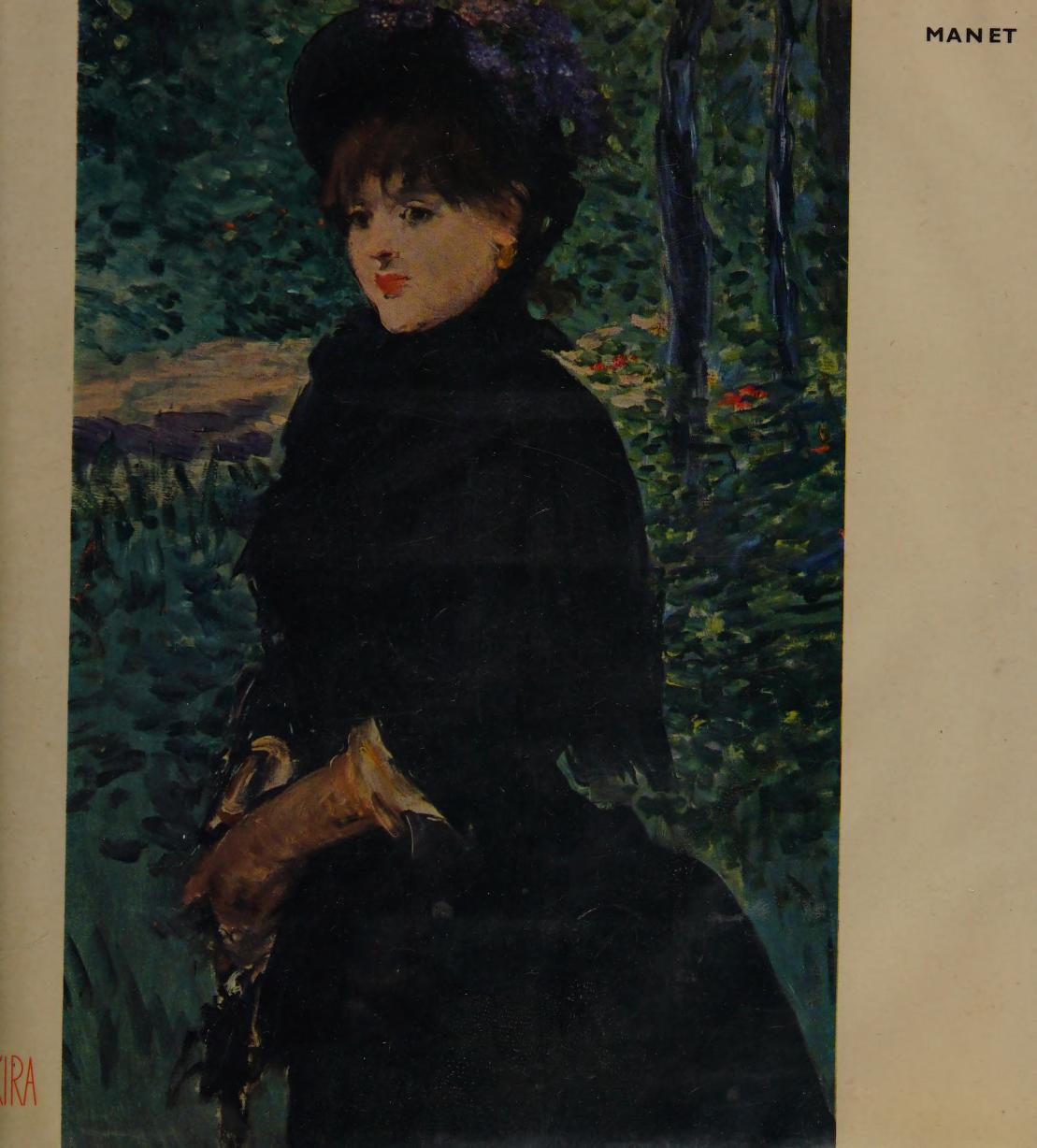
'Poetry, in the past, endeavored to be real, but to do so had to reduce itself to a convention which alone ventured to read the strange stuff of poetry into the reality of things. Where the convention was missing, it was furiously denied that any poetry existed. But what is poetry but a vehement negation of all convention? It is utterly simple and unassuming, unreal and unattached, drawing its magic from within itself, not from the structure of a world whose political organization answered to the dream of a majestic prince or divinity.'
Georges Bataille, Manet, translators: Austryn Wainbouse & James Emmons, publisher: Skira
'What does the transcendental Aesthetic represent? Not the traditional division of the sensible and the intelligible but rather the division between two forms (a priori) within the “sensible” or intuitive itself. The first and most fundamental result is that there is no intuitus originatus. Whether it was situated as arche or as telos, within the divine or within the human (as either pure intellectual self-consciousness in Descartes or pure empirical sensibility in Hume), what had heretofore ensured the philosophical itself disappears. As a result, all that remains of the subject is the “I” as an “empty form” (a pure logical necessity, said Kant; a grammatical exigency, Nietzche will say) that “accompanies my representations”. This is so because the form of time, which is the “form of the internal sense,” permits no substantial presentation. As it well known, the Kantian “cogito” is empty.'
'This awakening of the subject is accompanied by an apparently compensatory “promotion”of the moral subject which, as we know, launches a variety of philosophical “careers”. Without oversimplifying or hardening the contours of a question that merits extended analysis, we cannot fail to note that this “subject” without mathesis, even of itself. It is indeed posited as freedom, and freedom is the locus of “self-consciousness”. But this does not imply that there is any cognition―or even consciousness―of freedom, for freedom in turn is posited only as ratio essendi of the moral law within us, which, because it is only a fact (a factum rationis, as Kant says), can provide only a ratio cognoscendi of freedom, which produces no cognition. This fact (the imperative, the universality of the law) is neither an intuition nor a concept. As a moral subject, in sum, the subject recovers none of its substance. Quite to the contrary, the question of its unity, and thus of its very “being-subject,” is brought to a pitch of high tension.'
Philippe Lacoue-Labarthe & Jean-Luc Nancy, The Literary Absolute: The Theory of Literature in German Romanticism, translators: Philip Barnard & Cheryl Lester, publisher: State University of New York Press


'By itself, the middling ethos implicit to softcore feminization might seem to be an uncomplicated expression of postfeminist propriety. But since this propriety is steeped in self-consciousness and therefore tied to processes of negation, abjection, and bad faith, it is far more than that. [...] In softcore, these regressive essentialisms work in tandem with aesthetic ideology with stereotypes that center on race) to demean, diminish, and restrict popular sexual expression, including softcore itself. Defined broadly, this genre is thus typified by an under-the-radar stance that demonstrates that its producers, distributors, and consumers “know their place”; by its self-effacing models of reception, which certify that softcore sex renders even cult audiences squeamish; by its relentless evasion of the “pornography” classifier; by its structuring absences, which at the textual level include the penis, male masturbation, male same-sex contact, and male-identified rape fantasy; and by its “corporate” taste for a stylistic and intellectual weightlessness largely fabricated from cliché, superficiality, and cntradiction.'
David Andrews, Soft in the Middle: The Contemporary Softcore Feauture in its Contexts, publisher: Ohio State University Press
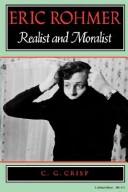
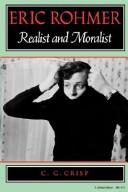
'[...] the fact that the moral vision apparent in Rohmer’s output should ever have been expressed is a product of the very factors it denies. Moreover if it is expressed with such intensity and coherence, this too is related to the moral climate subtended by that same postwar affluence. The consumer ethic, with its emphasis on planned obsolescence and instant gratification, with its progressive “liberalization” of long-established laws related to sexual and social codes, with its concentration on purely materialistic goals, must inevitably have seemed intolerable to any such Catholic with Jansenist leanings. It must have presented itself as a symptom of the moral decline of the notion, and of the whole Western world―a decline, also, of the sphere of influence of those same conservative Catholics, as the morale of self-discipline and delayed gratification to which they adhered became marginalized. No longer corresponding to the economic imperatives of the age, it could seem irrelevant, ridiculous, or even incomprehensible to the generation of the sixties and seventies.'
C. G. Crisp, Eric Rohmer: Realist and Moralist, publisher: Indiana University Press