



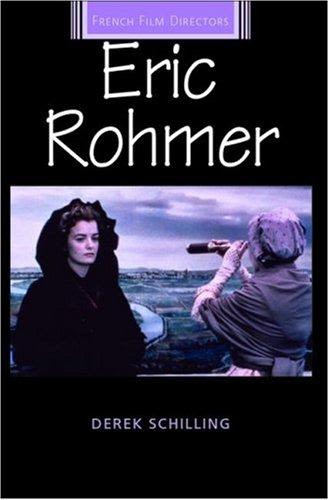
'This is a cinema of visual understatement and, admittedly, verbal excess, where actors must scrupulously adhere to a text that determines their character’s very being. Je parle, donc je suis: I speak, therefore I am, such is their motto. Rohmer takes to the letter the ‘talking picture’, making conversation the dominant form of screen action. But there is always more to Rohmer film than meets the ear. Endings favour ambiguity over closure, asking spectators to revisit the narrative the better to expose characters’ hidden motives and conflicting points of view [...]. And despite their straightforward linear design, these fictions are not without what Bonitzer calls their ‘secret compartments’, their enigmas and their false trails [...]. Like Hitchcock’s narratives, whose influence they bear, they can aspire to chiselled artistic perfection even as they invite us to contemplate the exterior, world-bound beauty which it is, in Rohmer’s theologically inflected view, cinema’s privilege alone to capture. ‘A humbly documentary presentation of reality inevitably reveals an inherent order, which speaks of God’, writes to this effect Colin Crisp [...].'
Derek Schilling, Eric Rohmer, publisher: Manchester University Press



[Paris (?), 1924]
Dear friend,
Are you still bored? I am too alone to take this business of boredom seriously on my own account. The things that exert an influence on us in Paris through friendship or from any other reason are idiotic. If what I express is something different from what I have to say, forgive me: which is to say that all this goes on being as muddled as it is. Nor do I believe that the extreme simplifications that I finish up with my own really mean anything, but it is not very hard to work out how I manage to get myself a bargain out of all the various prospects we come to believe in here in Paris. Of course we are not yet at the point of proceedings that can be bought into the open, but if hypocrisy makes us unwilling to risk anything more than the conviction that failure would bring us to the height of ridicule, I am all the more inclined to play and lose: I’m used to it. Clearly nothing of greater consequence than writing this page for example.
In friendship,
Georges Bataille
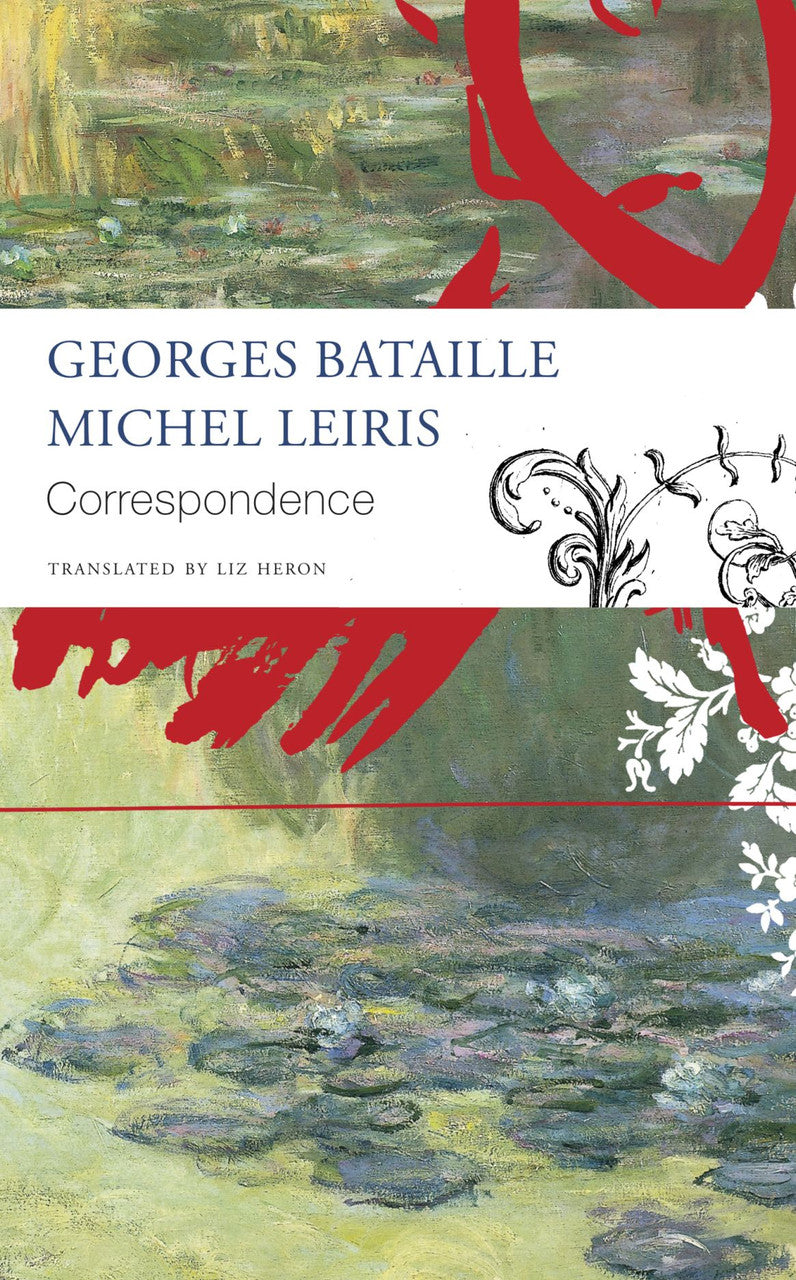
Georges Bataille’s letter to Michel Leiris, from Correspondence: Georges Bataille, Michel Leiris, edited with notes by Louis Yvert, translator: Liz Heron, publisher: Seagull Books
'Identity is in its lineage, for it can give itself in a gesture that relates the same to itself: “I am I” does not produce such a relation. At most is the relation of logical identity: “I = I.” What is immediately troubling in this equality is that equality states that all the “I” are identically “I.” “I” cannot be posited like an x identical to x, because the “I,” the very word itself, has already engaged the process of its identification. It will speak―or do something―that will be its identity. (This is already done the first time the child says “I,” or when he or she designates himself or herself by name.) However, in order to do this, he or she must return in himself or herself to a point prior [en mont] to himself or herself: to a point where, for instance, prior to any speech, he or she was already disposed to speak. But this is still too general: It is a return, a Platonic anamnesis that would not only be a return to the true Forms (or “Ideas”) but rather to the singular and proper form of this “I.” And this form is deposited nowhere, it is not given, it is not given to him or her: He or she gives himself ot herself to it, or gives it to himself or herself, which amounts to the same, and he or she does so by identifying himself or herself.'
Jean-Luc Nancy, Identity: Fragments, Frankness, translator: François Raffoul, publisher: Fordham University Press