προγραφές

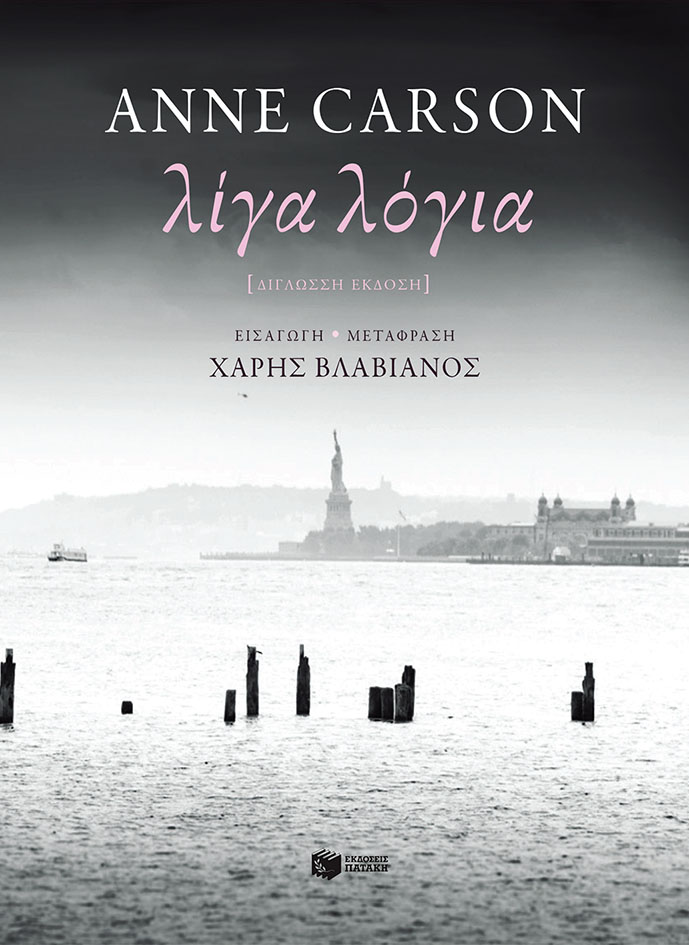
Εξώφυλλο: Αν Κάρσον, Λίγα Λόγια
ΛΙΓΑ ΛΟΓΙΑ ΓΙΑ ΤΟΝ HOMO SAPIENS

Με μικρές χαρακιές ο άνθρωπος του Κρο-Μανιόν σημείωνε τις φάσεις της σελήνης πάνω στις λαβές των εργαλείων του κι όπως δούλευε τη συλλογιζόταν. Ζώα. Ορίζοντας. Πρόσωπο σε νερόλακκο. Σε κάθε ιστορία που αφηγούμαι έρχεται μια στιγμή που δεν μπορώ να δω παραπέρα. Μισώ αυτή τη στιγμή. Γι’ αυτό αποκαλούν τυφλούς όσους αφηγούνται ιστορίες- προσβολή.

* * *

ΛΙΓΑ ΛΟΓΙΑ ΓΙΑ ΤΗ ΣΧΕΔΙΑΣΤΙΚΗ ΤΟΥ ΔΕΞΙΟΤΕΧΝΙΑ

Με παρότρυνε να περιφέρομαι στο εργαστήριό του. Δεν με έβαζε να ποζάρω. Σχεδίαζε χωρίς να κοιτάζει το χαρτί. Σχεδίαζε στο πάτωμα. Ακολούθησε τις γραμμές, έλεγε, κοίτα τι βρίσκεται γύρω σου. Ένα λεπτό χέρι κάνει το πρόσωπο να μοιάζει πιο θλιμμένο. Περιγράφοντας σκιές μίκραινε, κατεργάρικα.

* * *

ΛΙΓΑ ΛΟΓΙΑ ΓΙΑ ΤΟ ΠΟΥ ΝΑ ΤΑΞΙΔΕΨΕΙΣ

Ταξίδεψα σ’ έναν τόπο ερειπωμένο. Υπήρχαν τρεις αυλόπορτες που έχασκαν μισάνοιχτες κι ένας φράχτης που έγινε κομμάτια. Δεν ήταν το ερείπιο ενός άλλου συγκεκριμένου πράγματος. Ήρθε ένας τόπος και συνετρίβη εκεί. Και μετά παρέμεινε ένας ερειπωμένος τόπος. Πάνω του έπεσε φως.

* * *

ΛΙΓΑ ΛΟΓΙΑ ΓΙΑ ΤΗΝ ΕΠΑΝΟΡΘΩΣΗ

Ο Κάφκα συνήθιζε να βάζει το ρολόι του μιάμιση ώρα μπροστά. Η Φελίτσε διαρκώς το διόρθωνε. Παρ’ όλα αυτά επί πέντε χρόνια ζούσαν σαν παντρεμένοι. Έφτιαξε έναν κατάλογο με τα υπέρ και τα κατά του γάμου, συμπεριλαμβανομένης της αδυναμίας ν’ αντέξει την κακοποίηση του εαυτού του (υπέρ) και τη θέα των νυχτικών απλωμένα στο κρεβάτι των γονιών του στις 10.30 (κατά). Η αιμορραγία τον έσωσε. Όταν οι γιατροί στο σανατόριο τον συμβούλευσαν να μη μιλάει, γέμισε το πάτωμα γυάλινες προτάσεις. Η Φελίτσε, λέει μία από αυτές, είχε πολύ γυμνότητα ακόμη μέσα της.

* * *

ΛΙΓΑ ΛΟΓΙΑ ΓΙΑ ΤΟΝ ΒΑΝ ΓΚΟΓΚ

Ο λόγος που πίνω είναι για να καταλαβαίνω τον κίτρινο ουρανό τον απέραντο κίτρινο ουρανό, είπε ο Βαν Γκογκ. Όταν κοίταζε τον κόσμο, έβλεπε τα καρφιά που προσκολλούσαν χρώματα στα πράγματα και είδε ότι τα καρφιά πονούσαν.

Αν Κάρσον, Λίγα Λόγια, μτφρ. Χάρης Βλαβιανός, εκδ. Πατάκης

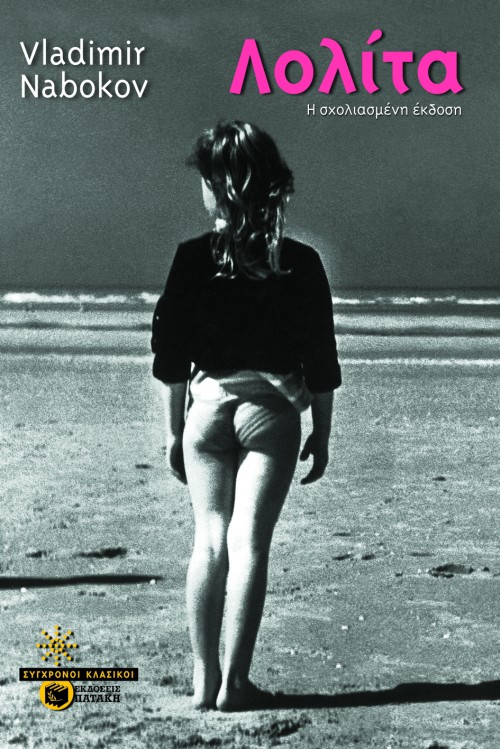
Εξώφυλλο: Βλαντιμίρ Ναμπόκοφ, Λολίτα: Η Σχολιασμένη Έκδοση

'Και ξαφνικά, ακαριαία, ήμαστε τρελά, ανενδοίαστα, εναγώνια ερωτευμένοι˙ και απελπισμένα, θα ήθελα να προσθέσω, καθόσον εκείνη η φρενίτιδα της αμοιβαίας κατάκτησης θα μπορούσε να κατευνασθεί μονάχα με την απορρόφηση και αφομοίωση κάθε μορίου της ψυχής και της σάρκας μας˙ αλλά να, ήμαστε εκεί, ανήμποροι ακόμα να σμίξουμε όπως έσμιγαν τόσο εύκολα και με κάθε ευκαιρία τα παιδιά στις φτωχογειτονιές. Ύστερα από μια άγρια, απονενοημένη, απόπειρα να συναντηθούμε μια νύχτα στον κήπο της, η μοναχική ιδιωτικότητα που απολαμβάναμε ήταν να βρισκόμαστε εκτός ακουστικού, αλλά όχι και οπτικού πεδίου, στο πλέον κατάμεστο μέρος της πλαζ. Εκεί, στην άπατη άμμο, λίγα μέτρα μακριά από τους μεγαλύτερούς μας ξαπλώναμε όλο το πρωί μέσα σ’ έναν απολιθωμένο παροξυσμό πόθου, εκμεταλλευόμενοι κάθε γύρισμα της τύχης στο χώρο και στο χρόνο ώστε ν’ αγγίξουμε ο ένας τον άλλο: το χέρι της, μισοκρυμμένο στην άμμο, σερνόταν λάθρα προς το μέρος μου, με τα λεπτά μελαψά της δάχτυλα να πλησιάζουν πιο κοντά κι ακόμη πιο κοντά υπνοβατώντας˙ μετά το ιριδίζον γόνατό της ν’ αρχίζει ένα μακρύ, προσεκτικό ταξίδι˙ κάποιες φορές ένας τυχαίος προμαχώνας που ύψωναν κάποια μικρότερα παιδιά μας πρόσφερε επαρκή κάλυψη ώστε να γευτούμε ο ένας τα σαρκώδη χείλη του άλλου˙ εκείνες οι ατελείς επαφές μας οδηγούσαν τα σφριγηλά και άπειρα κορμιά μας σε κατάσταση τέτοιας έξαψης, που ούτε καν το κρύο γαλάζιο νερό, κάτω από το οποίο εξακολουθούσαμε ν’ αγγιζόμαστε και να γαντζωνόμαστε, δεν μπορούσε ν’ ανακουφίσει.'

'Σ’ ένα αλσύλλιο με νευρικές και λεπτόφυλλες μιμόζες, στο πίσω μέρος της βίλας τους, βρήκαμε ένα ασφαλές καταφύγιο στα ερείπια ενός χαμηλού πέτρινου τοίχου. Μέσα από το σκοτάδι και τα τρυφερά δέντρα διακρίναμε τα αραβουργήματα στα φωτισμένα παράθυρα που, τονισμένα πια από τα χρωματιστά μελάνια της ευαίσθητης μνήμης μου, φαίνονται τώρα σαν τραπουλόχαρτα— ίσως επειδή μια παρτίδα μπριτζ κρατούσε απασχολημένο τον εχθρό. Εκείνη τρεμούλιασε και σπαρτάρησε σαν φίλησα τη γωνία των ανοιχτών χειλιών της και τον καυτό λοβό του αυτιού της. Από πάνω μας έφεγγε χλωμά μια συστάδα άστρων, ανάμεσα από τις σιλουέτες των μακριών λεπτών φύλλων˙ εκείνος ο παλλόμενος ουρανός έμοιαζε τόσο γυμνός όσο γυμνή ήταν και η ίδια κάτω από το ανάλαφρο φουστάνι της. Είδα το πρόσωπό της στον ουρανό, αλλόκοτα ευκρινές, θαρρείς και ανάδινε μια αμυδρή ακτινοβολία εντελώς δική του. Τα πόδια της, τα πανέμορφα ζωντανά της πόδια, δεν ήταν πολύ κλειστά, κι όταν το χέρι μου εντόπισε αυτό που αναζητούσε, μια ονειρική και απόκοσμη έκφραση, μισή οδύνη και μισή ηδονή, αναφάνηκε σ’ εκείνα τα παιδικά χαρακτηριστικά. Καθόταν λίγο πιο ψηλά από μένα και κάθε φορά που η μοναχική της έκσταση την ωθούσε να με φιλήσει έγερνε μπροστά με μια νυσταγμένη, απαλή, άτονη κίνηση που ήταν σχεδόν θλιβερή, και τα γυμνά της γόνατα έπιαναν κι έσφιγγαν τον καρπό μου και μετά χαλάρωναν ξανά˙ και το τρεμάμενο στομάχι της, παραμορφωμένο απ’ τη δριμύτητα κάποιου μυστηριώδους ποτού, με μια συριστική εισπνοή ζύγωνε το πρόσωπό μου. Πάσχιζε να ανακουφιστεί από τον πόνο του έρωτα, στην αρχή τρίβοντας τα στεγνά της χείλη πάνω στα δικά μου˙ μετά η αγαπημένη μου αποτραβήχτηκε μ’ ένα νευρικό τίναγμα των μαλλιών, κι ύστερα ήρθε και πάλι σκοτεινά κοντά μου και μ’ άφησε, να τροφοδοτήσω το ανοιχτό της στόμα, ενώ εγώ, με μια γενναιοδωρία που ήταν έτοιμη να της προσφέρει τα πάντα, την καρδιά μου, το λαρύγγι μου, τα σωθικά μου, της έδωσα να κρατήσει στην αδέξια παλάμη της το σκήπτρο του πάθους μου.'

Βλαντιμίρ Ναμπόκοφ, Λολίτα: Η Σχολιασμένη Έκδοση, μτφρ. Γιώργος – Ίκαρος Μπαμπασάκης, εκδ. Πατάκης

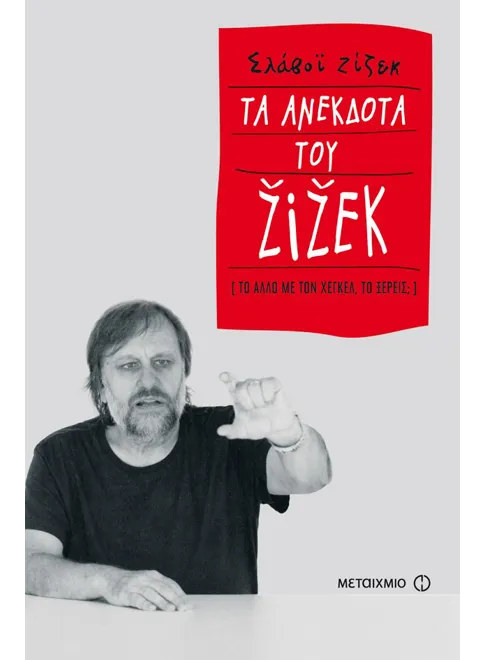
Εξώφυλλο: Σλαβόι Ζίζεκ, Τα Ανέκδοτα του Ζίζεκ

'ΕΝΑ ΑΝΕΚΔΟΤΟ ΠΟΥ ΕΡΜΗΝΕΥΕΙ την εγελιανή τριάδα, συμπεριλαμβανομένης της τελικής «ισορροπίας», είναι μια ιδιαιτέρως ανάλγητη παραλλαγή των -πρώτα τα κακά νέα και μετά τα καλά- ιατρικών ανεκδότων. Αφού η γυναίκα του έχει υποβληθεί σε μια μακρά και επικίνδυνη χειρουργική επέμβαση, ο σύζυγος πλησιάζει τον γιατρό και τον ρωτάει για την έκβασή της. Ο γιατρός αρχίζει: «»Η γυναίκα σου επέζησε. Θα ζήσει πιθανόν πιο πολύ από εσένα. Αλλά υπάρχουν κάποιες επιπλοκές: Δεν θα μπορεί πια να ελέγχει τους μυς του εντέρου της, έτσι τα σκατά θα τρέχουν συνέχεια από τον κώλο της. Ακόμα, από τον κόλπο της θα κυλάει συνεχώς ένα πηχτό κίτρινο βρωμερό υγρό, έτσι το σεξ αποκλείεται. Επίσης το στόμα της δεν θα κλείνει καλά κι έτσι οι μασημένες τροφές θα γλιστράνε απέξω». Καθώς παρατηρεί τον ολοένα αυξανόμενο πανικό στο πρόσωπο του συζύγου, ο γιατρός τον χτυπάει φιλικά στον ώμο και χαμογελάει: «Μην ανησυχείς, πλάκα έκανα. Όλα καλά - πέθανε κατά τη διάρκεια της επέμβασης».'
Σλαβόι Ζίζεκ, Τα Ανέκδοτα του Ζίζεκ, μτφρ. Ιωάννα Μιχελάκου, εκδ. Μεταίχμιο

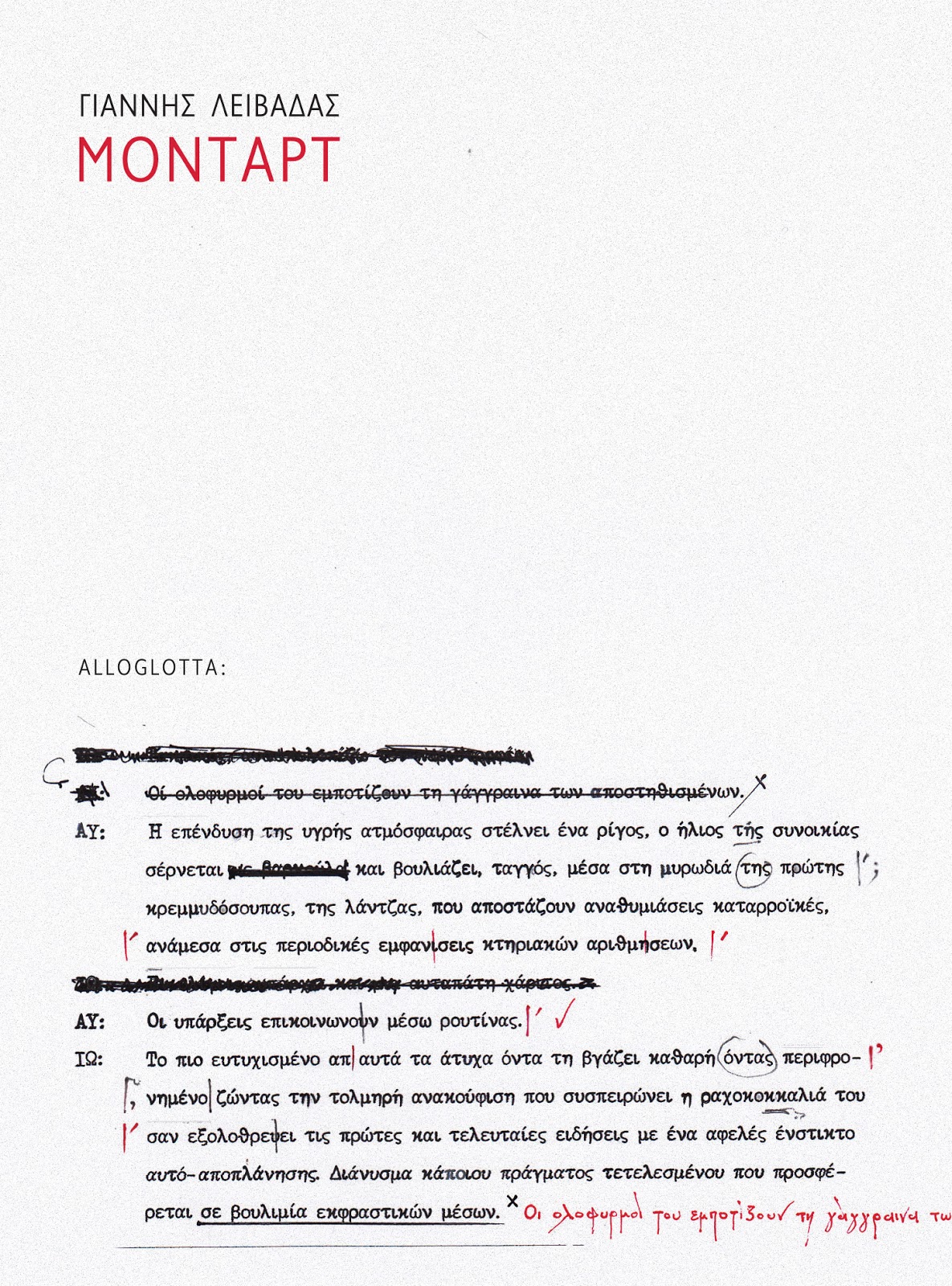
Εξώφυλλο: Γιάννης Λειβαδάς, Μοντάρτ

'Μεταφορικά εύθετος, οφείλει εκείνος να εκπονήσει μια διαθήκη, αυτό θα μπορούσε να προδώσει την αστάθεια με βάση την οποία αποφάσιζε να κερδίζει την προσοχή του Μοντάρτ. Την σπατάλη χρόνου την νιώθει αντιστροφή της μοίρας του. Γραπτές ποσοστώσεις ώστε να πλανάται την πλάνη πως περνά μέσα από την ζωή του.

Διαλληλία. Σύμφωνα με την ανεπαίσθητη, ασήμαντη καρδιά του Μοντάρτ, η αποτροπή κάθε ευνοϊκής έκβασης είναι επιβεβλημένη. Υπέστη πρόσφατα την πολλοστή απώλεια ενάρετων αντιδράσεων, ακυβερνησία της όψης, της προσωπικής όψης. Υπάρχει εν συντομία. Δεν έχει κάτι να διηγηθεί.'

Γιάννης Λειβαδάς, Μοντάρτ, εκδ. alloglotta

The use of video fragments in Michael Haneke’s Hidden (2005) as narratological interpolations for the subversion of its realism

_________________________________________________________________________________________________________________

Ioannis Tsirkas

As an introduction
We could regard a film as the derivative of a succession of images ―accompanied by sound―. While the consecutive partition of an audio file will never conclude to a point not susceptible of any further partition which would comprehend the least acoustic information, in a film, this point is the cinematic frame. However, what comes to the mind of a spectator when he refers to an image of a film is not exactly a frame of it. In opposition with the above mentioned theoretic manner a spectator perceives an image of a film as a product of it which usually stands in his memory as being distracted from it. Michael Haneke seems to force the spectators of his film Hidden (France, 2005) to perceive an image of a film as the ‘product of a process of seeing’ (Grønstad 2012, p.155) too. Furthermore, by making us several times during the film to watch what the heroes in their turn watch, video fragments in particular, he epitomises, in Asbjørn Grønstad’s (2012, p.155) words again, that ‘[s]howing seeing is different from showing what the act of seeing shows’. On this essay I will examine the significance of Haneke’s choice the video fragments of Hidden to be, with their violently threatening function within the diegetic universe of the film, not aesthetically discernible in its narration and, moreover, the ways by which their function is being effected as regards the diegetic universe of it and the director’s latent aspect over the nature of its realism, especially through his self-referentiality in it.

The video fragments as intercalary narratives and their validating insubstantiality
A considerable part of Hidden is made of video images, or, more precisely, of images which are intended to be considered as such by the spectator. These video fragments, in the most cases ―if not all―, when they appear on screen it is because some of the heroes are also confronting them, something that we ‘only retrospectively learn’ (Peucker 2010, p.28). When these two parallel processes take place, namely when the spectators watch video fragments which are simultaneously watched by the ‘diegetic viewers’ (Peucker 2010, p.28) (with)in the film, and especially when this second process is not indicated ―for example, when we do not listen at least to their voices commenting on what appears on screen―, Haneke, by choosing to show what is being seen and not just the act of seeing ―in a way, by dislodging on these moments his heroes from the metafilmic diegetic surface of what appears on screen―, impels us to judge the content of these ―consisted entirely of video fragments― intra-narratives together with their heroes.
However, the significance of the demands of Hidden as a filmic text in reference with the perception of its diegetic reality by the spectators are not restricted to the above-mentioned, but also on the way by which these intercalative video fragments are being constructed within its narration. As Philippe Met (2012, p.168) points out, there is a ‘confusing overlap of, or instability between, diegetic video images and (meta)film narrative’ in the film. Actually, the one enters into the other in a kaleidoscopic manner with result not to be clear when the on screen proceedings belong to the main narration of the film ―which has to be considered as composed of everything that does not mark a video fragment― and when to its intra-diegetic one ―namely to the one composed of video fragments―. As Ricardo Domizio (2011, p.239) underlines, ‘in Hidden this second-order representation is not “framed” within the master-representation’ and ‘the issue of the image is not a narrative “device” but is rather subsumed into the fabric of the film’. Indeed, the video fragments do not simply interfere in an explicit way in the metafilmic whole of the film, but knowingly form a hidden ―on a great extent― part of it, challenging thus the spectator’s perception on how far they affirm the realism of the film or overturn it by undermining it.
Furthermore, as Catherine Wheatley (2009, p.161) mentions, in Hidden ―with all its shots filmed exclusively with high definition cameras and by Haneke’s playful intention to confuse the spectators with their inability to distinguish the video sequences from the filmic reality― ‘the line is blurred not only between film and life, but between whether we are seeing an image in the process of being played back’. The result is that either by giving emphasis to the distinction between video and film image or by merging them metalinguistically into an ontological continuum, Haneke by ‘[d]rawing attention to the materiality of the film reveals the image as image in its manipulative power’ (Speck 2010, p.135). Both the film and the video are nothing but means of record, not of the reality, but of the impression of points which belong to it. So, the video fragments within Hidden are effects of points belonging to the total points that (deter)mine them as records of (re)presentations. Haneke thus reminds us constantly that everything considered as real within a fictional diegesis is real only in reference with its context which is as allied as its involving subtexts ―video fragments in the case of Hidden― with the real world to which they are both ―text and sub-texts― referring. Even if the diegetic universe of a film is constructed in an as much more realistic way as possible, it still forms a construction of reality, namely an imitation of it through its representation. Haneke’s film due to its playfulness concerning its structure can be read as a meditation onto its structure itself. As Mattias Frey (2006, p.34) explains Hidden ‘plays a funny game of legibility and illegibility’ with the use of the digital footage as a kind of ‘desubstantiated image’[1]. Indeed the video fragments are proved to be insubstantial exactly in terms of their validating character to their diegetic reality. However, it would be fair to claim that it is Haneke himself who plays this funny game. As Oliver C. Speck (2011, p.56) highlights, the extensively ‘artificial character’ of the film cannot but be interdependent with Haneke’s self-referentiality and what I am going to analyse now is exactly this self-referentiality and its interdependence with the realism of the film.

Intervening to the real which remains hidden, or, Recording as an act of violence
As Lisa Coulthard observes (2011, p.181) it is usual for Haneke to have the spectator to ‘witness acts and struggle to find a clear and explanatory narrative’. This is becoming epitomised in Hidden, since the constant subversions confuse until the end the spectator and additionally, even if the end of the film finds him more convergent to certain assumptions about the plot, the doubt does not only remain about which is the preponderant one but also about the meaning of the proceedings. Kevin L. Stoehr (2011, p.41), by making reference to one of the main patterns of the film, the factor of violence, supports that it is ‘most terrifying, not merely when it is unexpected and almost casual, but when it reveals that human reason has been completely rejected’. Hidden does not simply escape from this canon, since the cause of violence[2] epitomizes the above, granted that the main cause of violence from which the main heroes suffer[3] is caused not merely by a human factor but comes up as corollary of a game, played by a subject out of the diegetic universe into which they belong. Arne Koch (2010, p.91) writes about the protagonists that they ‘simply do not understand why they play the games they play’, since the unexpected and unexplained until the end of the film events ‘appear to occur for the sake of the game’ (p.95). This game cannot but be conducted by Haneke himself. The reality of his heroes is the reality into which he places them and hence he imposes to them. So, when the director accedes that ‘the game is no longer played within or against others, but solely for its own sake’ (Koch 2010, p.95) he demonstrates in the most explicit way that what matters is not the answers but the questions themselves. Haneke poses the questions for the sake of questioning, since the reason for making a film resides in its purpose. Having unfolded his reflections on violence inasmuch it has become one of his main motives, in Hidden he chooses to feature himself as the source of violence and his heroes’ misadventures, a source that ―only― seen out of their own diegetic universe does not lack of meaning or reasoning. Haneke makes his heroes suffer in order to pose us questions as regards the nature of violence, of reality and their associations, when questions themselves in a ―diegetic― world that lacks of meaning are nothing but an ultimate action of violence in its reality.
Haneke becomes a hero of the film. Considering Brigitte Peucker’s (2010, p.29) observation that ‘the surveillance tapes taken from the rue des Iris are technically continues with the other images of the film, likewise shot in high-definition format’ and Mattias Frey’s (2006, p.33) one that ‘the tapes that Georges receives are on multiple occasions filmed from positions impossible within the diegesis’ along with my arguments that will follow the reason why I agree with Arne Koch’s (2010, p.91) assumption that ‘the only (technically possible) hand behind the mysterious videos can be Haneke’s own’ will be explained. So, in the first sequence, Haneke confuses us in an attempt to make us to assume that the video fragments that Georges and Anne (Juliette Binoche) watch is nothing but a static shot of the film which belongs to its main narrative. The shot, as all the other corresponding ones of the film, is nevertheless aesthetically identical ―as I have already mentioned― with all those which belong to its main narrative. The factors that render them as such is the intra-diegetic reference to them and aesthetically the edit ―for instance fast-forward, rewind, freeze-frame― from the film’s protagonists. Also, in the second video fragment, which is only later revealed to be one more, and once again is a static shot of their house, as Phoebe Jaspe (2013, p.3) marks, when Georges approaches it with his car, his lights make the shadow of a camera to appear ―its easel is visible too― on a bush (Figure 1). The assumption that it is just a mistake is contradicted when we later watch the particular fragment being rewinded and then left to be played normally exactly until this point, resulting to the shadow’s appearance for a second time on screen. It can be clearly seen again exactly after the normal playing of the tape (Figure 2), confirming not only Haneke’s intention to reveal its presence but also the spectator’s ability to detect it, especially when he will watch the film ―just like the protagonists watch the videotape― in his home using the same technic in order to solve the mystery by handling the same means of record. In this way the immaterial truth concerning the narrative proceedings of the film is being connected with the materiality of its possible mediums.

Later on, apart from the appearance of static and long shots that disorientate the suspicious spectator who believes that they are video fragments, it happens the camera in the sequence with Georges coming out of his house and entering his car with his son (Lester Majedonsky) to remain static for a long time at first, as if we had had one more video fragment, and move at last following the heroes, subverting thus our assumptions. Something similar takes place later in the sequence after the end of Georges’s broadcast. The camera follows him when he moves at the studio, confusing the spectator and reminding thus a posed by the director himself contradiction that aims at his constantly keeping in a state of tense anticipation and alertness for both the proceedings and the way they are being presented. Furthermore, when we watch a shot from inside a car which later gets changed ―this succession of shots should be regarded as purposively confusing since it is the only one within a video sequence in the whole film― to something that seems to be the point-of-view shot of somebody walking along a corridor, we find ourselves deceived when we realize that it is a video fragment too. However, the above-mentioned editing from the dispatcher of the video-tapes can be also considered that it draws the director himself.
The role of the director as dispatcher of the videotapes is nevertheless not limited to his playfulness against the spectator through the video sequences. The dispatcher sends also paintings to Georges and his son which are equally important for the unfoldment of the plot. Furthermore, it is worthy of notice that until the end the mystery remains unsolved since nobody of the suspected ones is directly indicated. Another example is that we do not know why Majid committed such an unexpected, graphic and unreasonable suicide. According to my claim that the plot is essentially caused by an intra-diegetic process between Haneke and Georges ―which stands as an emotionally violent game for the latter, apparently necessary to recall his hidden in his memory guiltiness―, namely that the hidden evil of Hidden is Haneke himself who creeps into the narrative of his film, Majid’s unexpected suicide maybe constitutes a simple choice for the narrative’s playful development. In this perspective, even the last static shot, in which we watch Majid’s son (Walid Afkir) having a friendly conversation with Pierrot outside of his school and gives the impression of a new video fragment gives us the right to assume that it thereby is rendered to give the impression of the next videotape that Georges will receive. His supposed confusion gives prominence to Haneke’s ―funny― game.

Instead of conclusions: Inhering video fragments to the digital aesthetic

Haneke, by shooting the whole film in high definition, minimized in it ‘any textual distinctions between the covertly filmed videotapes and the other images sequences’ (Wheatley 2011, p.15) folding thus ‘the difference of film and video into one image’ (Speck 2011, p.58). This choice, seems wittingly to aim at the destabilization of the spectators (Frey 2010, p.162) and, as Tarja Laine (2011, p.248) mentions, offers ‘an effect of doubt regarding the status of the image, especially in its flowing together of the diegesis and the non-diegesis’. We are obliged not only to reflect upon the truth or not of what is being recorded inside the diegetic universe, but upon its forcefulness as regards the imperilment of the whole film by us in reference with its realism.
The ambiguity whether what we watch is a video fragment or not is inaugurated by the opening sequence where the nature of what is being watched is disclosed to the spectator after around two minutes and a half. Max Silverman (2013, p.136) points out that ‘there is no context which would help to orient us’ but ‘simply an anxiety that the image is not self-sufficient and that its truth can only be understood in what lies outside it’. During the whole film we shall learn many other times behindhand that what we thought as part of its main narrative was nothing but a video fragment. This continuous until the end playfulness of Haneke which always reminds us that his film is a construction by focusing on the unreliability of what is presented as real within its diegetic world and only there ―with reference to the various mechanisms that give prominence to the intendance of his playfulness― does not simply prevent us from getting identified with the heroes of the film. These heroes feel threatened at first by the ostensibly unjustifiable fact that somebody forced them to watch themselves being recorded. Taking advantage of their reaction, Haneke calls us to reflect on the causation of the film, which in its turn constitutes a record of its protagonists.

____________________________________

[1] Mattias Frey in his original text uses the term of ‘desubstantiated image’ making reference to D. N. Rodowick’s theory of desubstantiation as it is presented in the book of the latter Reading the Figural, or, Philosophy After the New Media ―see Redowick 2001 in the list of references―. I underline this wanting to avoid any confusion with my term of ‘validating insubstantiality’ which is used on this essay by me concerning exclusively the video fragments in Hidden.
[2] At least to the particular excessive grade as it was perfectly illustrated by the literally unexplainable suicide of Majid (Maurice Bénichou).
[3] And not the primary one that is owing to the revenging motives about actions well hidden in the memory of Georges (Daniel Auteuil).

List of references:

  • Coulthard, Lisa (2011) ‘Interrogating the Obscene: Extremism and Michael Haneke’, in Tanya Horeck and Tina Kendall (eds.) The New Extremism in Cinema: From France to Europe. Edinburgh: Edinburgh University Press, pp. 180-191.

  • Domizio, Ricardo (2011) ‘Digital Image and the “Schizophrenic” Image: The Case of Michael Haneke’s Hidden’, in Ben McCann and David Sorfa (eds.) The Cinema of Michael Haneke. London: Wallflower Press, pp. 237-246.

  • Frey, Mattias (2006) Benny’s Video, Caché, and the Desubstantiated Image’, Framework: The Journal of Cinema and Media, 47(2), pp. 30-36.

  • ––––– (2010) ‘The Message and the Medium: Haneke’s Film Theory and Digital Praxis’, in Brian Price and John David Rhodes (eds.) On Michael Haneke. Detroit: Wayne State University, pp. 153-165.

  • Grønstad, Asbjørn (2012) Screening the Unwatchable: Spaces of Negation in Post-Millennial Art Cinema. Basingstoke: Palgrave Macmillan.

  • Japse, Phoebe (2013) ‘Narrative meanings and implicit themes in Haneke’s film Cache (2005)’, Enquiry, 4 [Online]. Available at: http://research.shu.ac.uk/ aces/enquiry/index.php/enquiry/ article/view/40 (Accessed: 18 November 2015).

  • Koch, Arne (2010) ‘(Virtual) Reality Games: Michael Haneke as Auteur and Stalker’, KulturPoetic, 10(1), pp. 85-98.

  • Laine, Tarja (2011) ‘Hidden Shame Exposed: Hidden and the Spectator’, in Ben McCann and David Sorfa (eds.) The Cinema of Michael Haneke. London: Wallflower Press, pp. 247-255.

  • Met, Philippe (2012) ‘The Iceman Cometh (To a Theater near You): Michael Haneke’s Glaciation Trilogy’, in Claire Perkins and Constantine Verevis (eds.) Film Trilogies: New Critical Approaches. Basingstoke: Palgrave Macmillan, pp. 164-178.

  • Peucker, Brigitte (2010) ‘Games Haneke Plays: Reality and Performance’, in Brian Price and John David Rhodes (eds.) On Michael Haneke. Detroit: Wayne State University, pp. 15-33.

  • Rodowick, D.N. (2011) Reading the Figural, or, Philosophy after the New Media. Durham: Duke University Press.

  • Silverman, Max (2013) Palimpsestic Memory: The Holocaust and Colonialism in French and Francophone Fiction and Film. Oxford: Berghahn Books.

  • Speck, Oliver C. (2010) Funny Frames: The Filmic Concepts of Michael Haneke. London: Continuum.

  • ––––– (2011) ‘Thinking the Event: The Virtual in Michael Haneke’s Films’, in Ben McCann and David Sofa (eds.) The Cinema of Michael Haneke. London: Wallflower Press, pp. 49-64.

  • Stoehr, Kevin L. (2011) ‘Michael Haneke and the Consequences of Radical Freedom’, in Jean-Pierre Boulé and Enda McCaffrey (eds.) Existentialism and Contemporary Cinema: A Sartrean Perspective. Oxford: Berghan Books, pp. 33-45.

  • Wheatley, Catherine (2009) Michael Haneke’s Cinema: The Ethic of the Image. Oxford: Bergahn Books.

  • ––––– (2011) Caché. London: Palgrave MacMillan.

List of multimedia references:

  • Hidden (2005) Directed by Michael Haneke [DVD]. UK: Artificial Eye.

Acknowledgment
Ι would like to express my sincere thanks to Christos Angelakopoulos for his diligent philological support.

The poetics of sacred love in Apichatpong Weerasethakul’s Tropical Malady and Uncle Boonmee Who Can Recall His Past Lives

_________________________________________________________________________________________________________________

Ioannis Tsirkas

Apichatpong Weerasethakul’s film Tropical Malady (Thailand, 2004) is divided into two parts constituting in a way distinctive films that could even stand autonomously. Its second part has even its own opening credits ―its separate title is A Spirit’s Path― and it follows ten seconds after the first one during which the screen remains dark and silent. Its narrative concerns a soldier who chases a shaman’s spirit wandering in the jungle which is sometimes embodied to a beasty man’s body and sometimes to a tiger’s; this chase evolves to be bidirectional and erotic. In a sequence of Weerasethakul’s film Uncle Boonmee Who Can Recall His Past Lives (Thailand, 2010) a princess and a catfish which is maybe a ghost or even a deity have sex after a short dialogue in a small lake. Although the whole film is divided in discernible sequences-parts[1], this particular one seems to be the most autonomous since, in comparison with the others, it takes place in a different era and the relationship of its heroes ―who do not appear in any other part of the film― with the rest ones of it is only indicated and not clearly explained. Each of the following two sections of my essay are reflections on my interpretations of the corresponding narrative of these two filmic texts, focusing on what can be exalted philosophically from Weerasethakul’s representation of the metaphysical communications between a human and an animal-spirit in the first case and an animal-god in the second, on the nature of human love in general. I have to mention that, firstly, an analysis of the way that my narrative interpretations result from each film’s particular narration will not be included; although this choice will serve effectively my aforementioned intentions, a sufficient familiarity of the reader with the under examination filmic texts is nevertheless premised. Secondly, my reflections will refer to each part’s narrative independently from the whole film to which they belong and, moreover, I will not attempt to demonstrate that a consistency in Weerasethakul’s ideas on the nature of human love which arise from these two particular narratives exists but nevertheless the potentiality of this consistency will be inevitably conjectured. As it will come out Apichatpong Weerasethakul through these filmic narratives seems to propose intentionally questions ―of philosophical impact― concerning both the sacredness and the animality of human love whose answers are not even indicated to the spectator. My intention on this essay is not to construct a possible thesis of him on this subject, but rather through the process of my reflections to indicate the poeticness of both of these texts and the possible problematics concerning the potentiality of their systematic academic reading.

A Spirit’s Path
Once upon a time there was a powerful shaman who could turn into various creatures, roaming the jungle and playing tricks on villagers. One night, as he had transformed himself to an animal-human hybrid ―to a woman with a tiger’s tail in particular― a hunter shot him trapping his spirit according to the local myth into a tiger’s body. A soldier (Banlop Lomnoi) searches now for him through his traces in the jungle ―the animal traces of a human spirit― as it still represents a threat for villagers and travellers. The fact that the shaman’s spirit having fallen to his once shape-shifting body survives now by being trapped exclusively into the body of a tiger is apparent when the soldier finds human tracks on the ground. The view of a nude man (Sakda Kaewbuadee) running in the jungle strengthens the soldier’s suspension that the shaman’s spirit maybe resides in this man’s body as well. As the night goes by, the soldier observes that some of the human footprints turn abruptly to tiger ones and thus the shaman’s spirit maybe still resides trapped in a shape-shifting body. As a living being with non-definite physical appearance he could be necessarily loved as a spirit, however this did not happen the time when he was alive. By being now trapped into a body that he can transform to both a human and an animal one he wants it to be eliminated in order his spirit to rest in equanimity. If the reason of his entrapment was that he died without having been loved maybe the catharsis will come only if somebody loved his spirit now, the spirit of an once living being, namely as a ghost. Seung-hoon Jeong (2013, p.155) suggests that a ghost can be considered as a ‘psychological other of the human spirit’ which ‘returns through time and memory’ and this is what the soldier will have to confront. As human, animal or hybrid, a being that was appearing ‘in space and nature’ (p.155), the shaman has died. His death concerned his physical substance; him as a living being in space and nature. If he wanted to manage to make somebody love him this should rather happen in the realm of time and memory. And meaningfully it is maybe the diptych of time and memory that constitutes the realm of love and reveals its essence. The shaman’s will to be loved can be considered as what makes his spirit ―his spirit as a subject-mind― to reflect its human nature. Gilles Deleuze (1991, p.98) had supported that ‘what transforms the mind into a subject and constitutes a subject in the mind are the principles of human nature’ and that we can separate these principles in two kinds, those of association and those of passions. The need of love as physical passion which can only be enhanced by association, an association which takes place mainly in both time and memory, is exactly what principally characterizes the shaman’s spirit as a still living human one. However, the soldier has not yet realized that the attempt to fulfil this shaman’s need suggests the only way to release him from his entrapment and thus to put an end to the danger that the villagers face. He has firstly to traverse a path ―a spirit’s one― that will lead both him and the shaman to an ‘affective bliss’ (Fuhrmann 2008, p.195), the one that only love could bring.
The next day the soldier and the shaman’s gazes are being intersected for the first time while the shaman has taken the appearance of the nude man, but none of them seems to be very afraid of the other and yet none of them also reclaims the opportunity to kill the other when he has it. This is the reason why a strange and a kind of undefinable feeling grips the soldier’s heart. The intervention of a baboon will be proved determinant. By speaking to him in a non-human language that he is able to understand, it informs him that the tiger trails him like a shadow, that its spirit is starving and lonesome and that the soldier is his prayer and companion. If it is now the tiger-shaman that trails him like a shadow their roles as hunter and quarry have been reversed, or like in the way that a Ben Jonson’s (1996, p.104) distich[2] reflects: ‘Follow a shadow, it still flies you; / Seem to fly it, it will pursue:’, they both maintain at the same time the two roles as it happens, metaphorically speaking, in love. A starving spirit cannot also but starve for something immaterial, something that would void its lonesomeness. The soldier is already his companion and more importantly his prayer. If the shaman deserves a prayer he cannot but be a divine being though, according to the buddhist tradition[3], as Wendy Doniger O’Flaherty (1981, p.129) informs us, the ‘contact with divinity is dangerous’ it nevertheless ‘holds the possibility of salvation’. The baboon also urges the soldier to kill the tiger in order to free him from the ghost world, or alternatively, to let the tiger devour him entering to his world. However, the soldier could not kill a spirit and even if his own death could be caused by the shaman’s spirit, it would lead neither of them to salvation. So the meaning of this exhortation has to be interpreted as the need of contact, a communication that has to be made between the two worlds into which each one of them abides. However, for Michele H. Richman (1982, p.131) in order to communicate ‘one must risk the loss of self by putting it into play with the other’ and this is what indeed happens between them when the night falls.
The soldier uses an improvised rattle in order to prompt the shaman to approach him. He does not anymore have to hunt him; whatever happens between them has to be done by consensus. Yet the fear remains. For instance, when he listens to something approaching he shoots blindfold in the dark. As Noah Keone Viernes (2012, p.140) observes, reverence can be inextricable to fear. Moreover, considering Michele H. Richman’s (1982, p.67) thesis that ‘[s]overeignty is located within the moment of sacrifice and sacred horror’, the soldier’s agony could be exactly the result of his sacred horror, since he will either prevail towards the shaman’s spirit or he will be sacrificed resigning to its sovereignty. This divinity seems to be reflected to what he observes to be taking place in the jungle this night. Firstly, the miracle of a tree shining in the dark. An enormous amount of fireflies have been gathered to its branches which are wiggling in the rhythm of the night wind. Secondly, the ghost apparition of the dead animal stands dangling above its dead body and until its being vanished, it seems to lead the soldier closer to the place where his world will amalgamate with the one into which the shaman belongs. Finally, all of the sudden, the tree becomes dark once again. The time has come. The soldier falls on all fours and stars walking as a quadruped animal towards the place where the shaman’s spirit will appear as an imposing tiger. While he approaches him the shaman speaks directly into his head and says that once upon a time there was a powerful shaman who could turn into animals, a creature whose life exists only by memories of others. So if the tiger’s spirit wants to be loved this can happen only by adopting the memories of a person who was once loved by the soldier. His identity cannot but be inextricable with the one his memories carry. After all it is our memories that define our identity ―and by extension our being― and two people who were in love have certainly common ones; they are connected through these memories. If one suddenly forgot his memories he would not be able anymore to recognise the other and subsequently to love him. The shaman thus by becoming the spirit of someone that the soldier once loved offers him the chance to face again what has been lost[4]. When the soldier realises that he has reached the shaman’s spirit, who is standing on a large branch of a tree in the shape of a big tiger in all of its majesty as if it were ready to attack him, he will maybe recognise on his animal face the essence of something that has been lost, a lost love which can be alive only as anamnesis of memories. The soldier by using his trembling hands puts out his flashlight and waveringly turns it towards the tiger’s face. Georges Bataille (1986, p.7) had claimed that the man has not many chances of ‘throwing light on the things that terrify him before he has dominated them’. The soldier will face what terrifies him, but he will not dominate it. However, as Bataille (p.7) also proposes, it is still significant to face squarely the things that frightens us. Only darkness can be surmountable to a gaze, especially as the veil of nothingness. However, the serene face of the tiger will be a veil covering pure memories. The soldier finally raises his gaze and his ‘teary, fearful face’ (Quandt 2009b, p.76) confronts the shaman-tiger’s one. The shaman’s spirit starts talking again as both of them seem to remain ‘abandoned in eternal abeyance’ (p.78). The shaman’s spirit says: ‘And now... I see myself here. My mother. My father. Fear. Sadness. It was all so real, so real that they brought me to life. Once I have devoured your soul, we are neither animal nor human. Stop breathing. I missed you, soldier’. The soldier responds by saying: ‘Monster, I give you my spirit, my flesh and my memories. Every drop of my blood sings our song. A song of happiness. There... Do you hear it?’ The shaman’s spirit speaks like being the person whose memories he now carries and indeed he is becoming that person now. No longer does the shaman exist through the memories of a soldier’s lover from his past, but the lover’s spirit from now on will exist through the shaman’s one who will stand not as a carrier of his being ―as just a medium for it―, but it will annihilate it completely in favour of the return of the lover’s spirit; a spirit’s metamorphosis is taking place. The soldier’s lover as a spirit-being is realizing its substance that sacred moment when all become so real. He remembers the soldier who he misses. It is a moment of common anagnorisis; a tragic one certainly. The soldier maybe offers willingly his own spirit and flesh to the monster. He sacrifices the latter in order his spirit to be connected with the one of his once lover. Their common memories will survive through their spiritual conjunction. When the soldier says that every drop of his blood sings their song, he addresses this confession to his lover. The annihilation of the shaman’s spirit has thus been completed and it could be completed only through and onto the altar of love. We do not see the tiger and the soldier killing each other, but if this brutality had to be done, it would also be a sacrifice onto the altar of love in order the two spirits, disclaimed of everything, human or animal, to be united in the eternal incorporeal time of their surviving memories.

The Princess’s Story
A princess (Wallapa Mongkolprasert) is being transferred through the jungle in a carriage that some servants carry on their shoulders. One of them (Sumit Suebsee) serves her as a lover too. She observes him carrying her through the veil of her carriage. She puts it aside and he, sensing maybe her gaze, turns his head and stares at her, smiling. The intersection of their gazes is not however precarious like the one between the shaman’s spirit as tiger and the soldier in the Α Spirit’s Path since it will not imperil the existing order of the things; it could not cause a subversion. He has to serve her while she is free to observe him. The veil that intercedes between the princess and her beloved servant could be seen as a symbol of her authority over him. Their roles are determined and their love could not but be determined by the rules that are being imposed implicitly or explicitly by her authority.
When they reach their destination, a small lake created by little cascades, she prefers to be left alone. What the princess wants is to see her reflection on the water. She puts out the small veil that constantly covers her face in order her scars to remain hidden from the others. Yet she will have now to confront her reflection, to see her face, herself as she is. What miraculously happens, is that her face appears suddenly clear from scars, her reflection turns to be an ideal image of her, she is now beautiful. She tends her hand to the surface of the lake which stands as a reflector of her beauty, but she does not dare to tease the water, maybe because she is afraid of destroying the illusion. She soliloquizes by saying ‘Deep down, I know that reflection is an allusion. Is it an illusion?’ Her dubious question betrays her desire the reflection not to prove itself an illusion. As Apichatpong Weerasethakul has commented ‘[t]he princess’s story is a story about not being content with one’s appearances and having a stigma. The princess wants to be beautiful’ (Lingis 2009, p.122). He also supplements that she wants ‘to change into something else and to transform’ (p.122). The princess would be happy if she were able to shape-shift her form like the powerful shaman, namely if she had had the ability to transform herself to a carnally beautiful being. However, as Weerasethakul adds, her desire will be to ‘lose something in order to gain something else’ (p.122). Namely, she will have, like the shaman and the soldier, to proceed to a sacrifice.
On this point the soldier who has listened to her talking confesses that for him she remains the same person he always revered. She reacts by saying that this is an illusion as well and then she asks him if he would still say that if she were not a princess. What she wants is to be severed not due to her authority, but to her absent beauty. She would like to inspire authority through her beauty. What her social role allows her to do is an illusion; for her real is only what obeys to the authority of nature. Her ugliness is real, while it constitutes a symptom of something beyond her physicality since she is not responsible for her nature; she conceives her being as totally carnal. The servant seems to agree with her and begins to kiss her tenderly, but suddenly the princess repels him complaining that he was not looking at her, that he imagined kissing the woman of the reflection and she asks him to leave. The servant abandons her as she starts crying. The princess considers their bodily contact as insignificant, because her servant had to imagine something beyond her in order the contact to be achieved. This contact would not constitute a communication, like the one succeeded between the shaman’s spirit and the soldier, namely a kind of communication like the one that Alphonso Lingis (2009, p.122) describes when he mentions that ‘[t]he desire for communication breaks open the self-sufficiency of a sovereign being, her autonomy, her integrity, and opens her upon something beyond her’. The princess laments believing that only if she were beautiful would she inspire the manly lust, a lust that if somebody was able to feel it would make him want to break through her autonomy and integrity. For her, it is the vulnerability of beautifulness in comparison with that of the authority that makes the first superior. For her, the real lovers reign equally to each other, the one is equally vulnerable to the other, equally dangerous, like the soldier and the shaman’s spirit as well.
While the princess cries, she hears a voice coming from the lake; somebody or something (Namthip Meaungmaha) says to her: ‘Princess, don’t waste your tears. Let me share in your sorrow. I have watched you ever since you first graced this place’. She responds by asking the one who addressed her why he was looking at her, since, as she with desperation confesses, there is nothing worth noticing to her. The unknown creature insists that her beauty is enhancing. However, the princess attributes its surprisingly appreciative perspective concerning her physical beauty to the hypothesis that its view from underwater must be distorted. The princess supposes that the surface of the lake stands again as a kind of veil which makes the creature which lives inside the lake to see her face beyond it sublimated. Actually the surface of the lake will be proved an unreliable interstitial limit between the world of the princess and the creature inside, like the face of the tiger was for the shaman’s spirit and the soldier. However, when the princess asks the creature if it is a kind of ghost, it answers that it is not a ghost but only a catfish, namely an animal, which nevertheless speaks to her language. The princess asks the catfish if it was it that created the idealized reflection of her face to the surface of the lake and its response is that without her it could not have been done. In other words, unlike her servant it offered her something not just in order to please her ―under her demand, independently―, it did not make it for her, but with her; it was a common act, an act of common desires. A real and not an illusionary communication took place. For Alphonso Lingis (2009, p.122) again

‘[t]o communicate with another is to break through his integrity, his independence, his autonomy, his nature—to intrude upon him, unsettle him, wound him. Communication takes place when beings put themselves at risk, each putting himself and the other in the region of death and nothingness’.

This thesis on communication describes both what happened between the shaman’s spirit and the soldier in the A Spirit’s Path and what will happen between the princess and the catfish with her initiative. When the princess comments that the woman of the reflection has everything that she does not have and the catfish mentions that most women do not have what she has, namely her autonomy due to everything that her authority imposes to the others ―an autonomy which the catfish will break through― she reacts by saying that they have love. Like the shaman’s spirit she needs to be loved and like him she has to be transferred to something else in order to achieve it. However, she wants to be transformed to a physically beautiful being, to transform just the body which carries her spirit in opposition with the shaman who had to transform his spirit. She believes that the catfish is able to clear the scars from her face in the real world and not just to her reflection. Her belief is desperate, like the soldier’s one before he offered his flesh for the serenity of his spirit. So she starts dropping her precious jewels as offering, asking it to turn her body white and pretty like that of the reflection. She says ‘these are my offerings. For you, Lord of the Water, to whom I am so grateful’. She thinks of the catfish as a divine being, like the shaman’s spirit was for the soldier, and except for her jewels she offers herself to the deity of the lake in order to share with it ‘a sexual epiphany’ (Bergen-Aurand 2015, p.35). She and the catfish are having sex. The catfish penetrates her with its whole being, breaking through her human nature with its animal one. By intruding into her it will probably wound her in order the wounds on her face to be cured. The princess does not know if her sacrifice will be rewarded but she wants to put herself at risk by being surrendered to a desirous communication with something, either an animal or a god, or both of them, from beyond her world, risking thus the leading of herself to nothingness. The giving of her body to the fish is surely not an offering, or rather it is not only an offering; what is being offered has always to find its double. In other words, an offer signals the subject, the object and what reciprocates between them. So, her body is the altar of her sacrifice, an inaccessible shrine for the animal so far. By allowing the catfish to desecrate it, she hopes to sanctify it in order to acquire another substance, to achieve an absolute union and find thus what she dreams that would equate her with her reflection.

The sacredness of love, or, Conclusions
Taking into consideration the two filmic narratives that I reflected upon, spiritual love is being idealized by Apichatpong Weerasethakul as surviving the mortal materiality of human and animal bodies. In the same way that the moment of death becomes sacred as it means the separation of a spirit from his carrier in which it was hitherto trapped and thus it constitutes an intersection between the earthy word of impermanent desires and the spiritual one of eternal memories, the moment of love ―as the ultimate communication between two equally sovereign beings succeeded through the loss of their integrities― becomes sacred as an intersection of two spirits which leads to their salvation exactly owing to the precarious and difficult way to reach it avoiding to become wandering and lonesome spirits without united memories of love. Real love demands both willingness for sacrifices and the transcendence of earthy limits ―like the one of physical beauty―. Only the bodies can tell lies and stand just as a veil in the face of reality, a veil that could be hiked; a limit that if somebody could surpass, he would face the reality. In these two narratives Weerasethakul presents the possibility of this transference as achievable through the ability of human and animal bodies to be transformed. This ability is principally a charisma offered by belief; the belief to the divinity of a beloved spirit but, more importantly, to the significance of the eidolon of the beloved other outside of this world. The reflections on earthy surfaces can be illusionary ones, but the eidolon of the self and the beloved other as reflections on the surface that the layer between life and physical death constitutes is a pure one; the axiomaticness of its pureness lies in belief as if it were the axiom of love par excellence.

____________________________________
[1] As Eungie Joo (2011, p.96) mentions the film can ‘be dissected into six separate sessions corresponding to the six reels of film that comprise the complete work, each of which plays homage to different genres, styles and storytelling structures from the history of Thai television and film’.
[2] It is the first distich of his poem ‘Song. That Women Are but Men’s Shadows’.
[3] Apichatpong Weerasethakul, being a Buddhist himself, has admitted the influence of Buddhism in his filmic work (Kim 2011, p.52).
[4] For Arnika Fuhrmann (2008, p.23) and Ryan Inouye (2011, p.20) loss is the main subject of the Tropical Malady and especially of its second part.

List of references:

  • Bataille, Georges (1986) Eroticism: Death and Sensuality. Translated from the French by Mary Dalwood. San Francisco: City Lights Books.

  • Bergen-Aurand, Brian (2015) ‘The “Strange” Dis/ability Affects and Sexual Politics of Apichatpong Weerasethakul’s Transient Bodies’, Cineaction, 96, pp. 26-35.

  • Deleuze, Gilles (1991) Empiricism and Subjectivity: An Essay on Hume’s Theory of Human Nature. Translated from the French by Constantin V. Boundas. Chichester: Columbia University Press.

  • Fuhrmann, Arnika (2008) Ghostly Desires: Sexual Subjectivity in Thai Cinema and Politics after 1997. Unpublished PhD Thesis: The University of Chicago.

  • Jonson, Ben (1996) The Complete Poems. London: Penguin Books.

  • Joo, Eungie (2011) ‘Present Again’, in Maeve Butler and Eimear O’ Raw (eds.) For Tomorrow for Tonight. Dublin: Irish Museum of Modern Art, pp. 93-98.

  • Inouye, Ryan (2011) ‘Apichatpong Weerasethakul: In Time’, in Cary Carrion-Murayari and Massimiliano Gioni (eds.) Apichatpong Weerasethakul. New York: New Museum, pp. 18-27.

  • Jeong, Seung-hoon (2013) ‘A Global Cinematic Zone of Animal and Technology’, Angelaki, 18(1), pp. 139-157.

  • Kim, Jihoon (2011) ‘Learning About Time: An Interview with Apichatpong Weerasethakul’, Film Quarterly, 64(4), pp. 48-52.

  • Lingis, Alphonso (2009) ‘Contact and Communication’, in Andrew J. Mitchell and Jason Kemp Winfree (eds.) The Obsessions of Georges Bataille: Community and Communication. Albany: Sunny Press, pp. 119-132.

  • O’Flaherty, Wendy Doniger (1981) Sexual Metaphors and Animal Symbols in Indian Mythology. Delhi: Motilal Banarsidass.

  • Quandt, James (2009) ‘Tropical Malady’, in James Quandt (ed.) Apichatpong Weerasethakul. Vienna: Synema, pp. 63-81.

  • Richman, Michele H. (1982) Reading Georges Bataille: Beyond the Gift. London: The John Hopkins University Press.

  • Viernes, Noah Keone (2012) Thai Street Imaginaries: Bangkok during the Thaksin Era (2001-2010). Unpublished PhD Thesis: University of Hawai‘i.

Acknowledgment
Ι would like to express my sincere thanks to Christos Angelakopoulos for his diligent philological support.

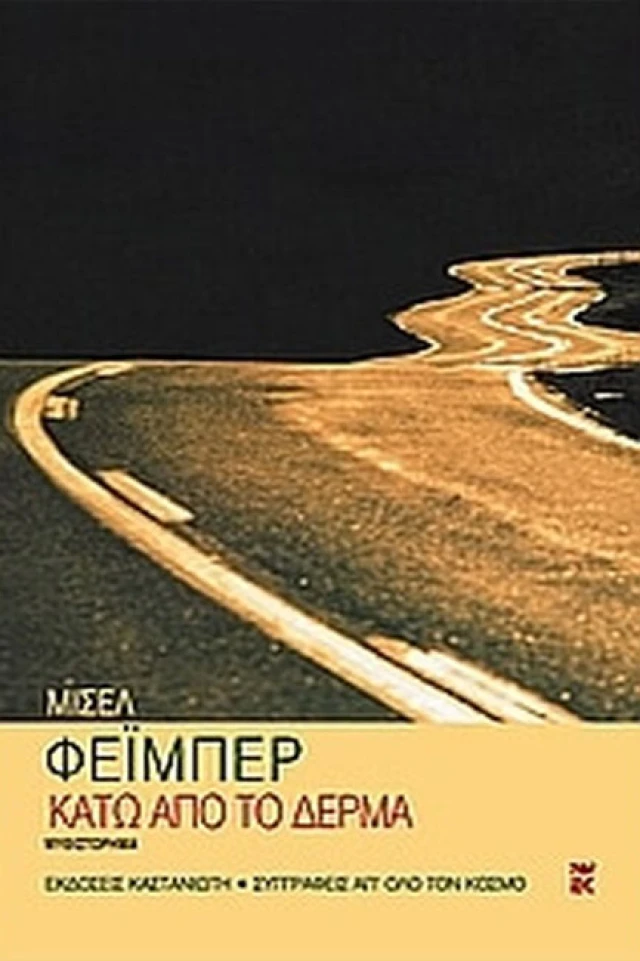
Εξώφυλλο: Μισέλ Φέιμπερ, Κάτω από το Δέρμα

'Στο πρόσωπό του ήταν ζωγραφισμένη μια έκφραση απογοητευμένου εγωισμού. Παράξενο πώς κάποιος σαν κι αυτόν, καλοφροντισμένος, υγιής, ελεύθερος να τριγυρίζει στον κόσμο κι ευλογημένος με μια τέλεια φιγούρα που σίγουρα του ’χε εξασφαλίσει το ζευγάρωμα με μεγαλύτερη ποικιλία θηλυκών απ’ όσα αναλογούν στο μέσο όρο, μπορούσε και πάλι να ’ναι τόσο δυστυχής. Αντίθετα, έβλεπες κάπου κάπου άλλους αρσενικούς, σημαδευμένους απ’ την εγκατάλειψη, γεμάτους αρρώστιες, καταφρονημένους απ’ τους υπόλοιπους, να εκπέμπουν μια ευχαρίστηση που ’μοιαζε να πηγάζει από κάτι πιο αινιγματικό απ’ την απλή ανοησία.'

Μισέλ Φέιμπερ, Κάτω από το Δέρμα, μτφρ. Μιχάλης Μακρόπουλος, εκδ. Καστανιώτη

Όλες οι 2.059 καταχωρήσεις, χρονολογικά

↑