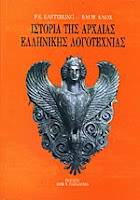
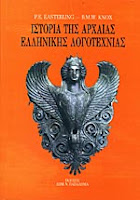
'[...] η «προφορικότητα» του Ομήρου είναι πρωταρχικής σημασίας όχι μόνο ως παράγοντας για τη μεταβίβαση και επιβίωση του έργου του, αλλά επίσης και για τον καθορισμό της αληθινής ποιότητάς του. Είναι επιτακτικό να κατανοηθεί ότι η Ιλιάδα και η Οδύσσεια συνδέθηκαν εξολοκλήρου ή ουσιαστικά χωρίς τη βοήθεια της γραφής, από έναν ποιητή ή ποιητες που ήταν ουσιαστικά αγράμματοι, και για ακροατήριο που δεν ήταν σε θέση (ή που τουλάχιστο για λογοτεχνικούς σκοπούς δε μπορούσε) να διαβάσει. Αυτό μπορεί να βρεθεί απλά από εσωτερικές μαρτυρίες από το ύφος των ποιημάτων, και ιδιαίτερα από την εξάρτησή τους από ένα μεγάλο πλήθος σταθερών φράσεων ή «λογοτύπων» που μπορούσαν να ταιριάσουν μεταξύ τους για να καλύψουν πολλές από τις κοινές πράξεις και τα γεγονότα της ηρωικής εμπειρίας. Τόσο ο ευρύς κύκλος της κάλυψης αυτής όσο και η εκπληκτική της οικονομία (γιατί υπήρχε συνήθως μια μόνο φράση για την έκφραση μιας ιδέας μέσα στα όρια ενός τμήματος του εξαμέτρου) είναι απόδειξη ότι ο Όμηρος χρησιμοποίησε ένα παραδοσιακό λεκτικό, που αναπτύχθηκε στο χρονικό διάστημα διαφόρων γενεών από ολόκληρη σειρά αοιδών. Με άλλα λόγια, το λεκτικό του ήταν ιδιαίτερου είδους και βαθμού απ’ ό,τι χρησιμοποιούν οι πιο πολλοί ποιητές, ήταν μια τεχνητή - επειδή ήταν ποιητική - γλώσσα. Οι στίχοι του τραγουδιούνταν με τη βοήθεια της λύρας, και ως ἀοιδός έπρεπε να είναι ικανός να τους παρουσιάζει άνετα - όχι ακριβώς αυθόρμητα, αλλά με ένα είδος ενστικτώδους και μαζί ελεγχόμενης απελευθέρωσης φράσεων, στίχων και ιδεών που είχε απορροφήσει από άλλους τραγουδιστές και που τις έκανε μέρος της δικής του καλλιτεχνικής προσωπικότητας. Οι όροι «απομνημόνευση» και «αυτοσχεδιασμός» είναι παραπλανητικοί, αν χρησιμοποιηθούν καταχρηστικά, για ό,τι ο ίδιος και οι άλλοι τραγουδιστές ηρωικών πράξεων έκαναν, αν και η δραστηριότητά του περιλαμβάνει στοιχεία και από τα δυο. Ο προφορικός ποιητής ακούει πολλά ποιήματα στη ζωή του∙ αφομειώνει τη μορφή και το περιεχόμενο και μεγάλο μέρος από την ακριβή τους έκφραση, προσαρμόζοντάς τα συνεχώς στο δικό του ιδιαίτερο ρεπερτόριο των ευνοούμενων θεμάτων, φράσεων και μοτίβων. Όταν απαγγέλει ένα ποίημα που έχει ακούσει, έχει πάντοτε την τάση να το παρουσιάζει ελαφρά διαφορετικό, σημαδεμένο με τον άμεσο θεματολογικό και λεξιλογικό πεδίο, περισσότερο ή λιγότερο εκτενές ή διαφοροποιημένο με άλλο τρόπο σύμφωνα με το ακροατήριο και τις περιστάσεις, όπως, φυσικά, και σύμφωνα με τις προσωπικές του ικανότητες, φιλοδοξίες και κλίσεις. Το επακόλουθο είναι ότι ο κάθε τραγουδιστής ήταν συγχρόνως και αντιπρόσωπος της παράδοσης της ηρωικής ποίησης -και γι’ αυτό ένας μεταδότης- κι ένας μοναδικός διαμορφωτής των ποιημάτων, της γλώσσας και των ιδεών που απέκτησε από την παράδοση - και επομένως ένας αναμορφωτής. Πολλοί τραγουδιστές πρέπει να μην ήταν λαμπροί, και οι καινοτομίες τους θα ήταν στην καλύτερη περίπτωση ουδέτερες· στη χειρότερη περίπτωση θα είχαν την τάση να χαλάν τα τραγούδια που έμαθαν από άλλους, είτε κολοβώνοντας και παραμορφώνοντας τα ή με μια σχετικά ακαλαίσθητη και αταίριαστη επεξεργασία. Άλλοι τραγουδιστές θα μπορούσαν να συνδυάσουν και να επεκτείνουν την ύλη που έμαθαν κατά τρόπο που ισοδυναμούσε με νέα σημαντική δημιουργία. Ο Όμηρος πρέπει να ήταν ένας απ’ αυτούς· κι όμως ο τρόπος της δημιουργίας του προφανώς έφτανε πολύ πέρα από το φυσιολογικό, ή το συνηθισμένο. Ήταν στην κυριολεξία μοναδικός.'
P. E. Easterling & B. M. W. Knox, Ιστορία της Αρχαίας Ελληνικής Λογοτεχνίας, μτφρ. Ν. Κονομή, Χρ. Γρίμπα & Μ. Κονομή, εκδ. Δημ. Ν. Παπαδήμα
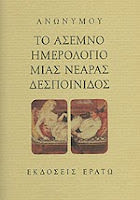
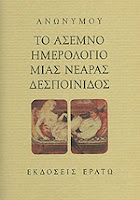
'Ανάμεσα σε δυο βογκητά ηδονής, μου φωνάζει: «Χάιδεψέ του και τ’ αρχίδια, Ανιού μου, θα χύσει καλύτερα έτσι. Σε ικετεύω, χώσε μου το μεγάλο σου δάχτυλο στην κωλοτρυπίδα, θέλω να νιώσω παραβιασμένη από παντού. Ναι, σπρώξε, κούνα το, δεν αντέχω αλλο, χύνω σαν τρελή...» Τι γρήγορα που μαθαίνει κανείς όταν έχει θέληση! Έτσι λοιπόν, η ακόλαστη φίλη μου έσκουζε από ηδονή, κι όχι από πόνο, καθώς της έμπαινε ένα πράγμα χοντρό σαν τον καρπό μου, αλλ’ αυτό δεν της ήταν αρκετό· ήθελε επιπλέον να νιώσει το δάχτυλό μου σε μια είσοδο ακόμα πιο απόκρυφη που έχασκε από προσμονή κάτω από το χάδι μου... Το αποτέλεσμα τόσης δραστηριότητας δεν άργησε να φανεί. Ο Μπονιφάς σκούζει, πληγώνοντας μου τα πισινά: «Χύνω, χύνω! Α, βρομιάρα, πάρ’ τα όλα, πάρ’ τα όλα..» Η Ματίλντ τον ακολουθεί με λυγμούς: «Χύνω πάλι, μου ξανάρχεται, αυτό το τέρας με γέμισε σπέρμα!» Εγώ συμμετέχω σ’ αυτή τη γενική τρέλα τρίβοντας τ’ αρχίδια του αντρειωμένου παλικαριού και ικετεύοντάς τον ν’ αρπάξει τον κώλο μου, που έχασκε κι αυτός από έρωτα. Μόλις νιώθω το χοντρό του δάχτυλο να μπαίνει μέσα μου, βγάζω κι εγώ μια κραυγή και σωριάζομαι στα καπούλια της Ματίλντ, δαγκώνοντάς τα μέχρι που μάτωσαν... Αν και τα διηγήθηκα όλ’ αυτά με τόσο αδέξιο τρόπο, πάλι είναι αυκολονόητο ότι χρειαστήκαμε ολόκληρο τέταρτο για να συνέλθουμε από τόσες συγκινήσεις, κι εγώ μια ολόκληρη βδομάδα για να γράψω χωρίς να τρέμει πολύ η πένα μου. Α, αν αποτολμούσα να τα ζωγραφίσω!'
Ανωνύμου, Το Άσεμνο Ημερολόγιο μιας Νεαράς Δεσποινίδος, μτφρ. Γιώργος Λίβιος, εκδ. Ερατώ
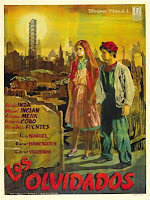
The dream sequence in Los olvidados as narrative of the film's stochastic interpretation
In a film analysis we can examine a film by segregating it in sequences. Dream sequences as narratives which take place beyond the spatiotemporal axis of the main narrative line of the film can be considered as insubstantial structural parts of it since they do not usually contribute to the progress of the occurrences, functioning only as commentary on both the locale and the subjects concerned. While Luis Buñuel through the oneiric atmosphere of his first two films, Un chien andalou (France, 1929) and L’âge d’or (France, 1930), deconstructed the conventional limits between the oneiric and the actual filmic space involving and evolving the one inside the other in an interactive way, the dream sequence in Los olvidados (Mexico, 1950) does not only seem to constitute a discrete part of the film’s narrative, but also to consist a commentary on all it’s intents and purposes. On this paper I will discuss it’s role as an interpolated narrative which precisely calls for a consistent conception of the whole. More specifically, my analysis will focus on the causality between the dream sequence’s substance as an extra, interstitial narrative and it’s function as an intra-filmic gaze of an enforced by the director variant interpretation of the film.
Unestablished signs of motives and associations preceding the dream sequence Before I go through my thorough examination of the dream sequence it is worth mentioning that before the motives and the essence of some relationships during the main narrative preceding the dream sequence we will be forced to perceive them as such only after it has been unfolded. Firstly, although Buñuel introduces us early to the treacherous character of Jaibo (Roberto Cobo) it is only after Pedro’s (Alfonso Mejía) dream that his tendetiousness in the film’s texture is being established through the connotation of him as Pedro’s evil equivalent (Polizzotti 2006, p.52). Secondly, in the end of the sequence when Don Carmelo (Miguel Inclán) is being attacked, a hen watching the wounded blind man is the first to appear, while through a match cut in the next shot we see Pedro both fondling and palpating the egg of another one. The rendering of his second act as a ‘poor substitute for the nourishment his mother denies him’ (Polizzotti 1996, p.41) and of these signs as indications of the affinity between the worlds of humans and animals which by extension suggests the ‘primitive nature of human motives’ (Edwards 1983, p.95) is being evinced as a justifiable interpretation only on the score of and after the dream’s interpolation. Thirdly, when in the following sequence his mother Marta (Estela Inda) through her refusal to dress a piece of meat for him and Pedro’s concomitant disaffection that she does not love him anymore, a possible semantic connection between her refusal to feed and love him would be far-fetched on this point of the plot. The significance, in addition, of the parental neglect in Pedro’s psyche and in the film’s plot will emerge in the dream sequence as well. Lastly, the same applies to Pedro’s guiltiness about his involuntary participation in Julian’s (Javier Amézcua) attempted murder and his fear of afterclaps according to Jaibo’s future behavior in relation to the possibility of their involvement’s revelation[1].
The dream sequence as intercalary narrative which broadens the main one Before Pedro’s apparition getting up from the bed the chickens have already started cackling. In this instance, the in question clues indicate that what comes about makes up a dream. However, their sound might pass for a give-away of the real space-time continuum of the film. So, Buñuel is giving us the first indication of his conation to combine the dream with the reality of the main narrative through the synonymity of their laws of causation. By giving forth a tinge of irony, he uses their sounds as indicant for his awakening into the dream. Then a white hen brakes in under his bed. But what Pedro sees down there is the bloodstained Julian who seems to enjoy his horrifying sight. The symbolic metamorphosis of the chicken to the gory Julian leads us to perceive the hen’s presence from now on as a metastasis of the inner phobias they arouse. Now we have to consider the appearance of chickens all over the place as ‘projections of repressed unconscious desires and anxieties’ (Evans 1995, p.88) and as ‘portens of ridicule or disaster’ (Polizzotti 2006, p.50) in general[2]. While we are watching this particular sequence feathers that Pedro does not notice begin falling between the camera and the proceedings. Their presence there does not only emphasize the atmosphere of the dread (Evans 1995, p.88), but also functions as an exhortation expressly intended for the spectators in order to feel in their turn just as Pedro feels, the same dreadfulness, in order to identify themselves not with him necessarily, but with the way Buñuel seems to perceive his hero’s pathos.
The grinning corpse of Julian under Pedro’s bed is not merely a sign of guilty conscience, but also a signification that his tragic fate will come from the loss of his innocence[3]. These two contrary feelings are engaged in a countervailing way and the unendurable feeling of dreadfulness makes way for that of innocence which is offset by the pacifying visage of his mother in her white dress, soothing him, ‘Listen, you’re not that bad. I’d like to be with you all the time’ and enquiring the reasons of his action, linking thus his obsession with their relationship (Edwards 1983, p.97), justifiably exalted with that of Madonna (Bazin 1978, p.196; Evans 1995, p.88; Babington and Evans 1985, p.10). A Madonna who will soon become a Medusa (Polizzotti 2006, p.10) that instead of snakes will proffer her hands to Pedro (and us) freezing not his shape, but the oneiric time. We can see this moment as an intersection between the two space-time continuums of the two narratives. It’s an instant when you realize that if this is a nightmare you want to wake up. The overlap or, rather, the ambiguity of this proffering where the hands on the side reveal her ‘sheer physical exhaustion’ (Babington and Evans 1985, p.10) is a linking point between the indefiniteness and the dimness (just like the one of her out of focus face for the time being) of the dream against the tangible reality of a flimsy surface structure, a reality that you can touch, but not necessarily feel. When he later asks about the piece of meat she did not offer him the other night he turns holding the putrefied flesh perhaps of a fatling and smiling accompanied by the clap and the flash of a thunder. The ‘sexual implications’ (Edwards 1983, p.97) are obvious since the piece of meat has been perceived by scholars as a symbol of her simultaneously awe and desirable ‘torn vagina’ (Evans 1995, p.86) or even of an ‘aborted foetus’ or a ‘meteonymic isplacement’ (Gutiérrez-Albilla 2008, p.31) of her body. Thereby, love is something you must be given, her purport is vital (once again a connection between an empathy and a sexual urge). In place of that flesh there could be a firm one, so we face again the symbolic metamorphosis of a flesh to a rotten carcass. The desirable maternal love is replaced from something rebarbative and bestial which, yet into the reality of the dream, Pedro would have wanted to accept. When Haibo pops up from under the bed and tries to pick up the piece of meat his sexual figurativeness is being confirmed forasmuch as what Pedro will lose is both her care and the awakening sexual drive he feels about his ‘devoid of emotions’ (Rubia Barcia 1957, p.398) mother. He is getting frustrated thinking of Haibo who will take her[4]. His mother does not react since she will voluntarily accede to his wishes. However, Haibo’s returning under the bed in lieu of the dead Julian is as well indicative of his own impending death. As regards her betrayal against Pedro, Octavio Paz and others have associated her with the figure of La Malinche (Pollizoti, p.58), the archetypical female maternal traitor of Mexico. I can also suppose that her joint liability for his death and fate is what set up Bruce Babinghton’s and Peter William Evans’ (1985, p.10) claim of her as an ambiguous Medea. In my opinion, the initial common letter “M” of the names Marta, Madre, Malinche, Madona, Medousa and Medea is something that can hardly be considered as an adventitious find.
The dream sequence as an inner reality’s reflection to the external one The film starts with a sequence which presents it as documentary and can also be seen as an extra-narrative of the main one and by extension in an adversative way of the dream sequence. It’s aim is to prompt us to a realistic perception of the film, not necessarily to identify ourselves with the heroes and their catastrophe, but to take it as a detached realistic depiction of the into the frame of society problems a community faces beyond us, having nothing common with us in relation to the subconscious passionateness. As the main narrative unreels the influence of Italian Neorealism running through the film tends to become more and more obvious. We wouldn’t exaggerate if we asserted that Buñuel through the dream sequence willed to expand the in question neorealist ‘tangible reality’ (Buñuel 2002, p.140) of the film’s narrative for to express the main character’s emotions and instincts by exploding their subconscious. Most importantly, the presence of the sequence round about the middle of the film can be considered as an evidence of transition from the alleged until then realistic logic of it to the dramatic logic it seemingly suggests[5]. Demonstrating the ‘interchangeability of the conscious and the unconscious life’ (Mellen 1978, p.24) and that morality is inextricably linked with the ‘inner world of desires and feelings’ (Durgnat 1978, p.118) he proves the semblance with the external reality (Edwards 1983, p.109). All these callings are common among people without regard to each one’s degree. Accordingly, the film deals with us all and avers our resemblance with it’s characters. What Pedro needs at last and by extension all the characters is love, as we all, this is what they lack instead of amenity[6]. On the first locale we can see poor children playing insouciant in the midst of a slum’s bumpy road, with Pedro among them. What leads to his being desolated is not merely his penury and the poor relief, but also the lack of love.
The dream sequence as intervention of Buñuel’s subconscious As I demonstrated Buñuel’s attempt to bring out the subconscious life of his main hero in order through it’s reflection onto the realistic surface of the film to suggest an additional interpretation was precise and successful. However, I would like to close my paper by bringing forward the fact that Buñuel attempted, in addition, to imbue his own subconscious obsession in the dream sequence achieving thus what Francisco Aranda (1975, p.143) successfully mentions as the ‘compromise between his personal world and the social content of the film’. In 1968 Luis Buñuel during a conversation with Max Aub[7] recounted twenty dreams he was repeatedly dreaming for almost twenty years. I noticed that all the main motives of the dream sequence may draw their inspiration from his personal experience as he is calling up his dreams. Frustration (I miss the train; I lose my suitcases[8]), deprivation (And the train always leaves without me, no one gives me anything, It’s the anguish of not having money), incompetence (I can’t do anything), the dreadful mother, the blessed Virgin[9], animals, the arms of a dead man, the storm and the rain and lighting are some of them. He says that almost all his dreams are painful and words like despair and anguish are regularly recurred in his descriptions. He concludes confessing ‘Yes, that’s everything: religion, eroticism, death’ (Aub and Buñuel 1996, p.15). The role of the dream continued to count as an essential factor for the majority of his films after Los olvidados until the later ones. Even so, nowhere else can we find all these constituent elements epitomized. Having already deliberately directed two clearly commercial films and with the little artistic freedom that after so many years of verve once again was cramping his style, Buñuel gives the impression that by assimilating all these elements in the dream sequence, he did not only attempt to illustrate the subconscious factuality of his characters for to attach importance to the social aspect of the film, but for to indirectly revert to his surrealistic origins and piece together his own subconscious with the one of his characters as well, so creating Los olvidados, a deeply idiosyncratic, sorely made film that gave vent to the ulterior motives of it’s creator.
_______________________________________
[1] The momentary passing of some chickens near to Pedro after Jaibo’s accusation and threatening is by no means as accidental. [2] Buñuel had conceded that ‘the irrational element, in the form of a chicken, circulates freely in the film’ (Duncan and Krohn 2006, p.71). [3] Peter Harcourt (1967, p.10) has claimed that innocence and vulnerability consist leading moral factors of the film. [4] It is worthy of remark the prompt note that Buñuel has asseverated that frustration is the theme of almost all his films (Pérez Turrent 1995, p.205). [5] As Raymond Durgnat (1978, p.123) mooted: ‘[d]ramatic logic is suggestive rather than exclusive, divergent rather than convergent’. [6] As André Bazin (1978, p.198) propounded: ‘Los Olvidados […] is a film of love, and it demands love’. Freddy Buache (1973, p.50) in a perhaps exaggerative way classifies the film as a ‘love poem about those deprived of love’. [7] See, Aub and Buñuel 1996. Max Aub was also an uncredited co-scriptwriter of Los olvidados (Polizzotti 2006, p.31). [8] The phases I array in italics occur identical in the text. [9] I have to mention hereat that Luis Buñuel (2003, p.95) in his autobiography My Last Breath described yet one more recurrent dream instinct with erotic overtones in which a Virgin outstretches her hands to him.
References
Aranda, Francisco (1975) Luis Buñuel: A Critical Biography. Translated from Spanish by David Robinson. London: Secker & Warburg.
Aub, Max and Buñuel, Luis (1996) ‘Religion, Eroticism, Death’. Translated from Spanish by Margaret Sayers Peden. Grand Street, 56, pp. 8-15.
Babington, Bruce and Evans, Peter William (1985) ‘The Life of the Interior: Dreams in the Films of Luis Buñuel’, Critical Quarterly, 27(4), pp. 5-20.
Bazin, André (1978) ‘Los Olvidados’, in Mellen, Joan (ed.) The World of Luis Buñuel: Essays in Criticism. New York: Oxford University Press, pp. 194-200.
Buache, Freddy (1973) The Cinema of Luis Buñuel. Translated from French by Peter Graham. London: The Tantivy Press.
Buñuel, Luis (2002) An Unspeakable Betrayal: Selected Writings of Luis Buñuel. Translated from Spanish and French by Garrett White. Berkeley, Los Angeles and London: University of California Press.
¯¯¯¯¯¯ (2003) My Last Breath. Translated from Spanish by Abigail Israel. London: Vintage.
Duncan, Paul and Krohn, Bill (2006) Luis Buñuel: The Complete Films. New York and London: Taschen.
Durgnat, Raymond (1978) ‘Style and Anti-Style’, in Mellen, Joan (ed.) The World of Luis Buñuel: Essays in Criticism. New York: Oxford University Press, pp. 116-124.
Edwards, Gwynne (1983) The Discreet Art of Luis Buñuel: A Reading of his Films. London: Marion Boyars Publishers.
Evans, Peter William (1995) The Films of Luis Buñuel: Subjectivity of Desire. Oxford: Clarendon Press.
Gutiérrez-Albilla, Julián Daniel (2008) Queering Buñuel: Sexual Dissidence and Psychoanalysis in his Mexican and Spanish Cinema. London: Tauris Academic Studies.
Harcourt, Peter (1967) ‘Luis Buñuel: Spaniard and Surrealist’, Film Quarterly, 20(3), pp. 2-19.
Mellen, Joan (1978) ‘An Overview of Buñuel’s Career’, in Mellen, Joan (ed.) The World of Luis Buñuel: Essays in Criticism. New York: Oxford University Press, pp. 3-27.
Pérez Turrent, Tomás (1995) ‘Luis Buñuel in Mexico’, in Paranaguá, Paolo Antonio (ed.) Mexican Cinema. Translated from Spanish by Ana M. López. London: British Film Institute, pp. 202-208.
Polizzotti, Mark (2006) Los Olvidados. London: British Film Institute.
Rubia Barcia, J. (1957) ‘Luis Buñuel’s “Los Olvidados”’, The Quarterly of Film Radio and Television, 7(4), pp. 392-401.
Acknowledgment Ι would like to express my sincere thanks to Christos Aggelakopoulos for his dilgent philological support and his felicitous comments on the paper’s content.
ΞΥΠΝΑΩ ΚΑΙ ΤΑ ΜΑΤΙΑ ΜΟΥ ΚΑΙΝΕ... - Πιέρ Πάολο Παζολίνι
Ξυπνάω και τα μάτια μου καίνε. Η εφηβεία πέθανε μέσα στα γένια μου Που μεγάλωσαν καθώς κοιμόμουν, Στην απίσχναση του σαρκίου μου, αποτυπώνεται Στο λιωμένο φως που καίει στα μάτια μου. Καταλήγω λοιπόν, στη βουβή πυρκαγιά μιας νεότητας που την ζάλισε η αιωνιότητα. Έτσι καίγομαι, και δεν αξίζει σκέφτομαι, Να είναι διαφορετικά τα πράγματα: Να επιβάλλω όρια στην αταξία. Με παρασύρει ολοένα και πιο αδύναμο Με ένα αποστεωμένο παιδικό προσωπείο Προς μια ήσυχη και παλαβή τάξη, Το βάρος της μέρας που έχασα Μέσα σε ώρες βουβής ευθυμίας, και στιγμές Ανείπωτου τρόμου...
*
ΗΜΕΡΟΛΟΓΙΟ - Πιερ Πάολο Παζολίνι
Ενήλικας; Ποτέ, ποτέ όπως η ύπαρξη Που δεν ηλικιώνεται - παραμενι πάντα άγουρη, Από απαστράπτον σε απαστράπτον πρωινό - Δεν μπορώ παρά να μείνω πιστός Στην υπέροχη μονοτονία αυτού του μυστηρίου. Να γιατί στην ευτυχία Ποτέ δεν παραδόθηκα - να γιατί Μέσα στην αγωνία για τις ενοχές μου Δεν έφτασα ποτέ στη μεταμέλεια. Ίσος, πάντα ίσος με το ανέκφραστο, Στην απαρχή αυτού που είμαι.
*
ΥΜΝΟΣ ΤΗΣ ΚΛΑΟΥΝΤΙΑ ΚΑΙ ΤΗΣ ΝΙΝΑ - Φάμπιο Πουστέρλα
Έλεγες ότι την ημέρα το σκοτάδι βρίσκεται στα ερμάρια ή πίσω από τα βουνά, και βγαίνει έξω μόνο προς το βράδυ, όταν μπορεί να κοιμηθεί και φοβάται. Όμως απόψε είναι αγρυπνία, πανσέληνος, και πίσω από κάθε σχισμή πάλλεται ο άερας μαγνητικός, μάντης σχεδόν κάθε πτυχής των δασών. Έτσι μετράνε οι ανάσες σε σας κορμιά εδώ δίπλα: μια μεγάλη σκιά που ανεβαίνει αργά και κατεβαίνει, και κάτω, στις αβύσσους, χορός από σμέρνες.
από την Ανθολογία Ιταλικής Ποίησης: Ταξίδι στην Όμορφη Χώρα, ανθολόγηση/μετάφραση: Σωτήρης Παστάκας & Γιάννης Η. Παππάς, εκδ. Οδός Πανός
Παγώνι(Ταώς, Ταώ, Ταών-ώνος)
Λέγεται πως ήταν ο Αλέξανδρος που έφερε από την Ινδία αυτό το πλουμιστό πουλί, ικανό να επισκιάσει με την ομορφιά του όλους τους τροφίμους του πτηνοτροφείου. Όμως η Βίβλος ήδη αναφέρει το πολύτιμο πτηνό, φερμένο από την Ασία με τα καράβια του βασιλέα Σολομώντα. Γνωστό ήδη στην αρχαία Ελλάδα, θεωρείτο ιερό πουλί της Ήρας. Ο κύκλος τον οποίο ξεδιπλώνει δεν θα μπορούσε να είναι τίποτε άλλο από τον ηλιακό δίσκο. «Κάποια παράδοση σούφι, ίσως περσικής καταγωγής, λέει πως ο Θεός δημιούργησε το πνεύμα υπό μορφή παγωνιού και του έδειξε την εικόνα του στον καθρέφτη της θείας ουσίας. Το παγώνι τότε ένιωσε τον τρόμο της αποκαλύψεως, ένα υψηλό δέος, και από πάνω του κύλησαν σταγόνες ιδρώτα από τις οποίες δημιουργήθηκαν όλα τα άλλα όντα [T. Burckard, Introduction aux doctrinesésotériques de l'Islam (Εισαγωφή στις Εσωτερικές Διδασκαλίες του Ισλάμ), 1955]. Το παγώνι ήταν πέραν τούτου ένα σύμβολο αθανασίας, καθώς επιβεβαιωνόταν πως το κρέας του δεν σάπιζε (εικόνα της γήινης ζωής σε όλη της τη δημιουργικότητα και αστείρευτη πολλαπλότητα» (Fraenger). Έτσι εμφανίζεται στα μωσαϊκά της Ραβέννα και το κοιμητήριο της Πρισίλλα (3ος αιώνας). Αναπαριστούσε όμως και την ανάσταση, καθώς τα όμορφα φτερά του χάνουν το χρώμα τους και πέφτουν σαν νεκρά φύλλα το φθινόπωρο για να ξαναγεννηθούν πάλι την άνοιξη. Στην ελληνική μυθολογία μια κόρη ωραία και αγνή, η Ερινόνα, βιάστηκε από τον Άδωνη κατόπιν προτροπής της Ήρας, και μεταμορφώθηκε αμέσως σε πάγωνι. Αλλά αν το παγώνι ήταν το ιερό πουλί της Ήρας, τούτο οφείλεται δίχως άλλο στα πολλά μάτια (γύρω στα εκατό απ' ότι λέγεται) που στολίζουν την ουρά του: πρόκειται για τα μάτια του παντεπόπτη Άργου. Για αυτά ο Μπασλάρ λέει το ωραίο: «H ίριδα του φτερού του παγωνιού, το μάτι δίχως βλέφαρα, το αιώνιο μάτι» (Το Νερό και τα Όνειρα, σελ. 35). Έτσι το παγώνι γίνεται σύμβολο επαγρύπνησης και στοχασμού. Οι Χριστιανοί το παρουσίασαν σε ζεύγη, ένα σε κάθε πλευρά του δισκοπότηρου σε μία απεικόνιση που συμβόλιζε τους πιστούς που επιθυμούν να ξεδιψάσουν στην πηγή της ζωής. Στα έργα του Ιερώνυμου Μπος φυσικά δεν θα μπορούσε να λείπει αυτό το ορφικό έμβλημα «που ανθίζει αέναα σε ένα ατέρμονο παιχνίδι χρωμάτων» (Fraenger). Στην αλχημική διάλεκτο το παγώνι αντιστοιχεί σε ένα από τα τέσσερα κύρια χρώματα που είναι: το μαύρο-κόραξ, το λευκό-κύκνος, το κόκκινο-φοίνικ και το πολύχρωμο-ουρά του παγωνιού. Αυτό το τελευταίο είναι επίσης μέρος του Ζωολογίου που συνοδεύει την παράσταση του Αθανόρ. Τέλος σημαιώνουμε κατ' εξαίρεσιν πως το παγώνι στο Βιετνάμ είναι έμβλημα ειρήνης.
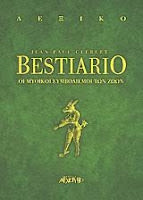
Jean Paul Clebert, από το Bestiario: Οι Μυθικοί Συμβολισμοί των Ζώων, μτφρ. Κλέων Ρέγγας, εκδ. Αρχέτυπο
'Εγώ λοιπόν νομίζω ότι αν κάποιος έπρεπε να διαλέξει ανάμεσα σε μια νύχτα που κοιμήθηκε χωρίς να δει ούτε ένα όνειρο, και τις άλλες νύχτες και μέρες της ζωής του, αν έπρεπε να τις αντιπαραβάλει με τη νύχτα εκείνη και να σκεφτεί και να πει πόσα καλύτερα και πιο ευχάριστα μερόνυχτα έχει ζήσει στη ζωή του απ’ αυτή τη νύχτα, νομίζω ότι όχι μόνο ο τυχαίος ιδιώτης αλλά κι ο μεγαλύτερος βασιλιάς θα τα έβρισκε πολύ λίγα σε σχέση με τα άλλα μερόνυχτα. Αν κάτι τέτοιο είναι ο θάνατος, εγώ τουλάχιστον νομίζω ότι είναι όφελος. Γιατί έτσι η αιωνιότητα όλη δεν φαίνεται παρά σαν μια νύχτα. Αν πάλι ο θάνατος είναι αναχώρηση από εδώ για έναν άλλον τόπο κι είναι αλήθεια τα λεγόμενα ότι εκεί βρίσκονται όλοι όσοι έχουν πεθάνει, τι μεγαλύτερο καλό θα υπήρχε από αυτό, άνδρες δικαστές;'
Πλάτων, Απολογία Σωκράτους: Η Δίκη του Σωκράτη, μτφρ. Ηλέκτρα Ανδρεάδη, εκδ. Κάκτος
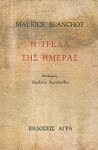
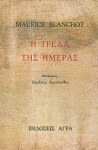
Μορίς Μπλανσό, Η Τρέλα της Ημέρας, μτφρ. Δημήτρης Δημητριάδης, εκδ. Άγρα
ΕΠΙΚΙΝΔΥΝΗ ΖΩΗ
Σήμερα είμαι ίσως ο ευτυχέστερος άνθρωπος στον κόσμο Έχω όλα όσα δεν θέλω Και το μόνο πράγμα που έχει για μένα σημασία στη ζωή κάθε γύρισμα της προπέλας με πηγαίνει κοντά του Κι ίσως θα 'χω χάσει τα πάντα φτάνοντας.
*
Η ΠΡΟΖΑ ΤΟΥ ΥΠΕΡΣΙΒΗΡΙΚΟΥ ΚΑΙ ΤΗΣ ΜΙΚΡΗΣ ΙΩΑΝΝΑΣ ΤΗΣ ΓΑΛΛΙΑΣ [απόσπασμα]
[...]
Κοιμήθηκα σε μια κουβέρτα ταξιδιωτική Πολύχρωμη Σαν τη ζωή μου Και η ζωή μου δε με ζεστένει πιότερο απ’ το σκοτσέζικο ετούτο Σάλι Κι ολάκερη η Ευρώπη κοιταγμένη απ’ το πτερύγιο μιας ταχείας Που τρέχει ολοταχώς Πλουσιότερη δεν είναι απ’ τη ζωή μου Απ’ τη φτωχή ζωή μου Αυτό το σάλι Ξεφτισμένο πάνω σε κιβώτια γεμάτα χρυσάφι Που κυλώ μαζί τους Για να ονειρεύομαι Για να καπνίζω Και η μόνη φλόγα της οικουμένης Είναι μια σκέψη φτωχική...
*
'Ο συγγραφέας δεν πρέπει ποτέ να θέτει τον εαυτό του σε πανοραμική θέα. Όσο μεγαλειώδης κι αν μπορεί αυτή να είναι. Σαν τον Άγιο Ιερεμία, ο συγγραφέας πρέπει να γράφει μέσα στο κελί του. Να γυρίζει την πλάτη του. Η γραφή είναι μια οπτική του πνεύματος. «Ο κόσμος είναι απεικόνισή μου». Η ανθρωπότητα ζει μέσα στη γραφή του. Αυτός είναι ο λόγος για τον οποίο ο πρωτοπόρος ζητά πάντοτε να μεταμορφώσει την εικόνα του κόσμου σε δική του. Σήμερα, σκεπάζω ακόμα και τους καθρέφτες.'
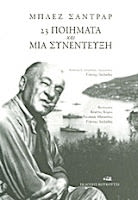
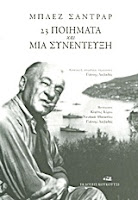
Μπλεζ Σαντράρ, 23 Ποιήματα και Μια Συνέντευξη, μτφρ. Ναυσικά Αθανασίου, Κλείτος Κύρου & Γιάννης Λειβαδάς, εκδ. Κουκούτσι
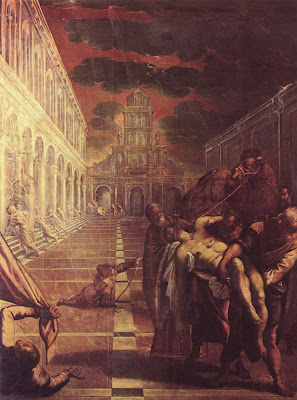
St Mark’s Body Brought to Venice (c. 1562-66) - Tintoretto