


'By itself, the middling ethos implicit to softcore feminization might seem to be an uncomplicated expression of postfeminist propriety. But since this propriety is steeped in self-consciousness and therefore tied to processes of negation, abjection, and bad faith, it is far more than that. [...] In softcore, these regressive essentialisms work in tandem with aesthetic ideology with stereotypes that center on race) to demean, diminish, and restrict popular sexual expression, including softcore itself. Defined broadly, this genre is thus typified by an under-the-radar stance that demonstrates that its producers, distributors, and consumers “know their place”; by its self-effacing models of reception, which certify that softcore sex renders even cult audiences squeamish; by its relentless evasion of the “pornography” classifier; by its structuring absences, which at the textual level include the penis, male masturbation, male same-sex contact, and male-identified rape fantasy; and by its “corporate” taste for a stylistic and intellectual weightlessness largely fabricated from cliché, superficiality, and cntradiction.'
David Andrews, Soft in the Middle: The Contemporary Softcore Feauture in its Contexts, publisher: Ohio State University Press
'[...] the fact that the moral vision apparent in Rohmer’s output should ever have been expressed is a product of the very factors it denies. Moreover if it is expressed with such intensity and coherence, this too is related to the moral climate subtended by that same postwar affluence. The consumer ethic, with its emphasis on planned obsolescence and instant gratification, with its progressive “liberalization” of long-established laws related to sexual and social codes, with its concentration on purely materialistic goals, must inevitably have seemed intolerable to any such Catholic with Jansenist leanings. It must have presented itself as a symptom of the moral decline of the notion, and of the whole Western world―a decline, also, of the sphere of influence of those same conservative Catholics, as the morale of self-discipline and delayed gratification to which they adhered became marginalized. No longer corresponding to the economic imperatives of the age, it could seem irrelevant, ridiculous, or even incomprehensible to the generation of the sixties and seventies.'
C. G. Crisp, Eric Rohmer: Realist and Moralist, publisher: Indiana University Press
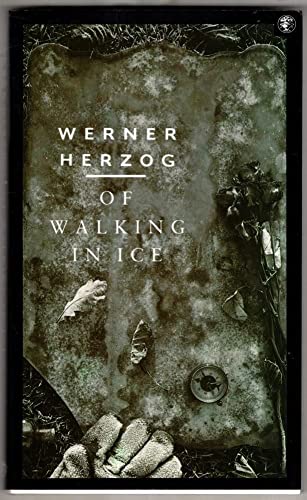
'Crossroads. Badly marked from here on. Naked woodland swatches with blue smoke all about from the woodcutters’ campfires. As fresh as before and, like this morning, dew on the grass. Practically no cars up to now, and just half of the houses are inhabited. A jetblack wolfhound glared after me with his yellow eyes unflinchingly. When a rustling came from some flying leaves behind me I knew it was the dog, even though it was chained. All day long the most perfect solitude. A clear wind makes the trees up there rustle, the gaze travels very far. This is a season which has nothing to do with this world any more. Big flying reptiles soundlessly leave their vapour trails behind above me, heading directly west, flying via Paris as my thoughts fly with them. So many dogs. from the car one doesn’t notice them that much, the smell of the fires, too, the Sighing Trees. A shaved tree trunk is sweating water, again my shadow cowers far in front of me. Bruno flees, at night he breaks into an abandoned ski-lift station, it must be in November. He pulls the main lever for the cable car.'
Werner Herzog, Of Walking in Ice: Munich - Paris: 23 November - 14 December, 1974, translators: Marje Herzog and Alan Greenberg, publisher: Jonathan Cape

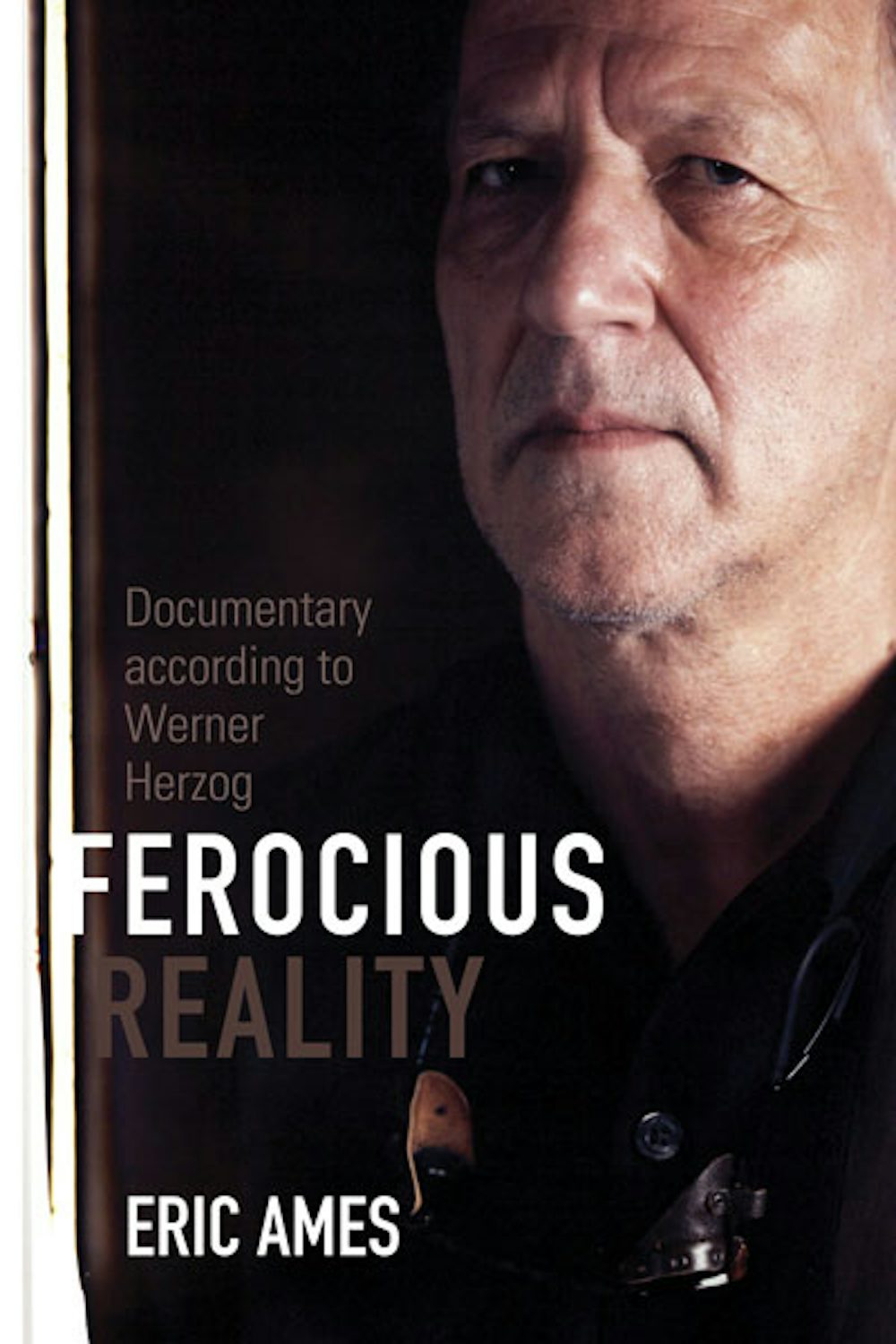
'[...] Herzog and his films have in fact contributed to the ongoing process of reimagining documentary after cinema verité. A performance lens captures this dynamic, which has been effaced by the discourse on Herzog, with encouragement from the director himself, so that the received idea about his body of work has been one of singularity and isolation, not unlike some of the figures in his movies. Clearly there is some truth to that idea, as far as it goes, which is one reason why Herzog’s films are usually discussed in terms of auterism. But a wholly appropriate emphasis on auterism cannot account for the tenacity of his engagement with documentary. His intervention is strategic in the sense that it puts documentary in the service of enacting the director’s personal style, as a way of emphasizing the alterity of his work, its difference from that of other filmmakers, its resistance to deliberately upsets documentary dogma. Herzog will never be a “good object” of documentary studies, at least not for scholars who are primarily concerned with politics, taxonomy, or purism. His work cannot be disciplined in this sense, and what would be the point of doing so? And yet, to borrow Claude Lévi-Strauss’s famous phrase concerning Australian totems, Herzog’s documentaries are “good to think with”.'
Eric Ames, Ferocious Reality: Documentary According to Werner Herzog, publisher: University of Minnesota Press
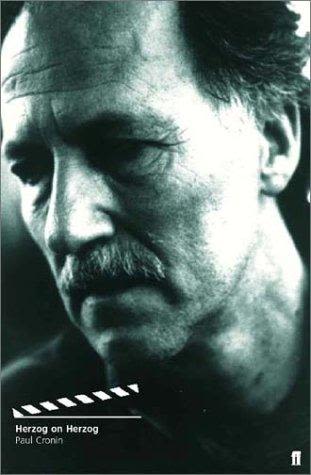
'In his autobiography, Kinski Uncut, he describes his feelings towards you.
It is a highly fictitious book, not only when he describes me and our relationship. Page after page he keeps on coming back to me, almost like an obsessive compulsion. In some passages of this book I kind of had a hand in helping him to invent particularly vile expletives. Sometimes was sat on a wooden bench, looking over the landscape, and he said, ‘Werner, nobody will read this book if i do not write bad stuff about you. If I wrote that we get along well together, nobody would buy it. the scum only want to hear about the dirt.’ I came with a dictionary and we tried to find even fouler expressions. He needed money at the time and knew - quite rightly - that by writing a semi-pornographic rant against everyone and everything it would get some attention. He describes his childhood as one of such a poverty that he had to fight with the rats over the last piece of bread. In reality he grew up in a relatively well-to-do middle-class pharmacist’s household.'
Werner Herzog, from Herzog on Herzog, edited by Paul Cronin, publisher: Faber and Faber

'Whatever its merits and defects may be, the model of an artistically intended and aesthetically experienced film as a specially constructed and experienced world is not a reductive one. It does not, in other words, whittle down narrative cinematic art to one or another partial aspect, magnified out of proportion, in the attempted application of a single, all-embracing, one-size-fits-all theoretical system or doctrine nor to an excessively narrow empirical research program. Of course theory is not the same as history or descriptions, but it must do justice, if it is to be pursued at all, to the multiplicity and complexity of the phenomena it attempts to organize and understand, which, in this case, is also naturally, historically, and culturally shaped and mediated to a profound degree. Above all, film theory (as also intersecting with the philosophy of film) must (still) seek to capture, however necessarily in a series of relatively pale abstractions, something of the full and actual sources and effects of narrative cinema’s artistic spell.'
Daniel Yacavone, Film Worlds: A Philosophical Asthetics of Cinema, publisher: Columbia University Press

'The blood relation long remained an important element in the mechanisms of power, its manifestations, and its rituals. For a society in which the systems of alliance, the political form of the sovereign, the differentiation into orders and castes, and the value of descent lines were predominant; for a society in which famine, epidemics, and violence made death imminent, blood constituted one of the fundamental values. It owed its high value at the same time to its instrumental role (the ability to shed blood), to the way it functioned in the order of signs (to have a certain blood, to be of the same blood, to be prepared to risk one’s blood), and also to its precariousness (easily spilled, subject to drying up, too readily mixed, capable of being quickly corrupted). A society of blood-I was tempted to say, of “sanguinity” -where power spoke through blood: the honor of war, the fear of famine, the triumph of death, the sovereign with his sword, executioners, and tortures; blood was a reality with a symbolic function. We, on the other hand, are in a society of “sex,” or rather a society “with a sexuality”: the mechanisms of power are addressed to the body, to life, to what causes it to proliferate, to what reinforces the species, its stamina, its ability to dominate, or its capacity for being used. Through the themes of health, progeny, race, the future of the species, the vitality of the social body, power spoke ofsexuality and to sexuality; the latter was not a mark or a symbol, it was an object and a target. Moreover, its importance was due less to its rarity or its precariousness than to its insistence, its insidious presence, the fact that it was everywhere an object of excitement and fear at the same time. Power delineated it, aroused it, and employed it as the proliferating meaning that had always to be taken control of again lest it escape; it was an effect with a meaning-value. I do not mean to say that a substitution of sex for blood was by itself responsible for all the transformations that marked the threshold of our modernity. It is not the soul of two civilizations or the organizing principle of two cultural forms that I am attempting to express; I am looking for the reasons for which sexuality, far from being repressed in the society of that period, on the contrary was constantly aroused. The new procedures of power that were devised during the classical age and employed in the nineteenth century were what caused our societies to go from a symbolics of blood to an analytics of sexuality. Clearly, nothing was more on the side of the law, death, transgression, the symbolic, and sovereignty than blood; just as sexuality was on the side of the norm, knowledge, life, meaning, the disciplines, and regulations.'
Michel Foucault, The History of Sexuality: Volume I: An Intrioduction, translator: Robert Hurley, publisher: Pantheon Books
ΤΡΑΓΟΥΔΙ ΤΟΥ ΜΙΚΡΟΥ ΘΑΝΑΤΟΥ
Θνητὸς ἀγρὸς ἀπὸ φεγγάρια
καὶ αἷμα ὑποχθόνιο.
Ἀγρὸς ἀπὸ αἷμα γέρικο.
Φῶς χτεσινὸ κι αὐριανό.
Θνητοὶ οὐρανοὶ ἀπὸ χόρτα.
Νύχτα καὶ φῶς ἀπὸ ἄμμο.
Συνάντησα τὸ θάνατο.
Θνητὸς ἀγρὸς ποὺ ’ναι ἀπὸ χῶμα.
Ἕνας μικρούλης θάνατος.
Πάνω στὴ στέγη ὁ σκύλος.
Τ’ ἀριστερό μου χέρι μοναχὸ
περνοῦσε ἀτέλειωτα βουνὰ
ἀπὸ ξερὰ λουλούδια.
Μιὰ ἐκκλησιὰ ἀπὸ στάχτη.
Νύχτα καὶ φῶς ἀπὸ ἄμμο.
Ἕνας μικρούλης θάνατος.
Ὁ θάνατος κι ἐγὼ ἕνας ἄντρας.
Ἕνας ἄντρας μονάχος του, κι αὐτὸς
ἕνας μικρούλης θάνατος.
Θνητὸς ἀγρὸς ἀπὸ φεγγάρια.
Τὸ χιόνι πάλλει καὶ στενάζει ἔξω,
μπροστὰ στὴν πόρτα.
Ἐγὼ ἕνας ἄντρας, καὶ τὶ ἄλλο; Τὸ εἶπα.
Ἐγὼ ἕνας ἄντρας μοναχὸς κι αὐτός.
Ἀγρός, ἔρωτας, φῶς καὶ ἄμμος.
* * *
ΝΕΟΤΗΤΑ ΚΑΙ ΘΑΝΑΤΟΣ
Τὰ παιδικά μου χρόνια γιὰ νὰ ψάξω, Θεέ μου!
Ἔφαγα σαπισμένα πορτοκάλια,
παλιὰ χαρτιά, ἄδειους περιστεριῶνες
καὶ βρῆκα τὸ κορμάκι μου ἀπὸ ἀρουραίους φαγωμένο
στὸν πάτο τῆς στέρνας μὲ τὰ μαλλιὰ τῶν τρελῶν.
Τὰ ναυτικά μου ροῦχα
δὲν ἦταν μουσκεμένα μὲ τῶν φαλαινῶν τὸ λάδι,
μὰ εἶχαν τὴν τρωτὴ αἰωνιότητα τῶν φωτογραφιῶν.
Πνιγμένο, ναί, καλὰ πνιγμένο,
κοιμήσου, γιόκα μου, κοιμήσου.
Ἀγόρι νικημένο στὸ κολέγιο
καὶ στὸ βὰλς τοῦ πληγωμένου ρόδου,
σκιασμένο μὲ τὸ σκοτεινὸ λυκαυγὲς
τοῦ χνουδιοῦ στοὺς μηρούς,
σκιασμένο μὲ τὸν ἴδιο του τὸν ἄντρα
ποὺ μασοῦσε ταμπάκο στὸ ἀριστερὸ πλευρό του.
Ἀκούω ἕνα ξερὸ ποτάμι γεμάτο ἀπὸ κονσερβοκούτια
ὅπου τραγουδᾶνε οἱ ὀχετοὶ
καὶ ρίχνουν τὰ πουκάμισα γεμάτα αἷμα.
Ἕνα ποτάμι ψόφιες γάτες ποὺ μιμοῦνται ἄνθη κι ἀνεμῶνες
γιὰ νὰ ἐξαπατήσουν τὴ σελήνη
ποὺ γλυκὰ πλαγιάζει πάνω τους.
Ἐδῶ μόνος μὲ τὸν πνιγμένο μου.
Ἐδῶ μόνος μὲ τὴ δροσιὰ τῶν παγωμένων βρύων
καὶ μὲ καπάκια ἀπὸ τοὺς τενεκέδες.
Ἐδῶ, μόνος, βλέπω πὼς μοῦ ἔχουν κλείσει πιὰ τὴν πόρτα.
Μοῦ ἔκλεισαν τὴν πόρτα
κι ὑπάρχει μόνο μιὰ παρέα ἀπὸ νεκροὺς
ποὺ ρίχνουν στὸ σημάδι κι ἄλλη παρέα ἀπὸ νεκροὺς
ποὺ στὴν κουζίνα ψάχνουν πεπονόφλουδες,
κι ἕνας μοναχικός, γαλάζιος, ἀνεξήγητος νεκρὸς,
ποὺ μὲ ψάχνει στὶς σκάλες,
ποὺ ἁπλώνει τὰ χέρια του στὴ στέρνα
τὴν ὥρα ποὺ τ’ ἀστέρια γεμίζουνε μὲ στάχτη
τὶς κλειδαριὲς τῶν καθεδρικῶν
κι οἱ ἄνθρωποι μένουν ξαφνικὰ μ’ ὅλα τὰ παιδικά τους ροῦχα.
Τὰ παιδικά μου χρόνια γιὰ νὰ ψάξω, Θεέ μου!
Ἔφαγα στυμμένα λεμόνια, στάβλους, ἐφημερίδες μαραμένες,
ἀλλὰ τὰ παιδικά μου χρόνια
ἦταν ὁ ἀρουραῖος ποὺ ἔφευγε ἀπὸ ’να κῆπο θεοσκότεινο
καὶ κουβαλοῦσε ἕνα φέρετρο χρυσὸ
ἀνάμεσα στὰ μικροσκοπικά του δόντια.
Φρεντερίκο Γκαρθία Λόρκα, Ποιητής στη Νέα Υόρκη, μτφρ. Βασίλης Λαλιώτης, εκδ. Σμίλη