
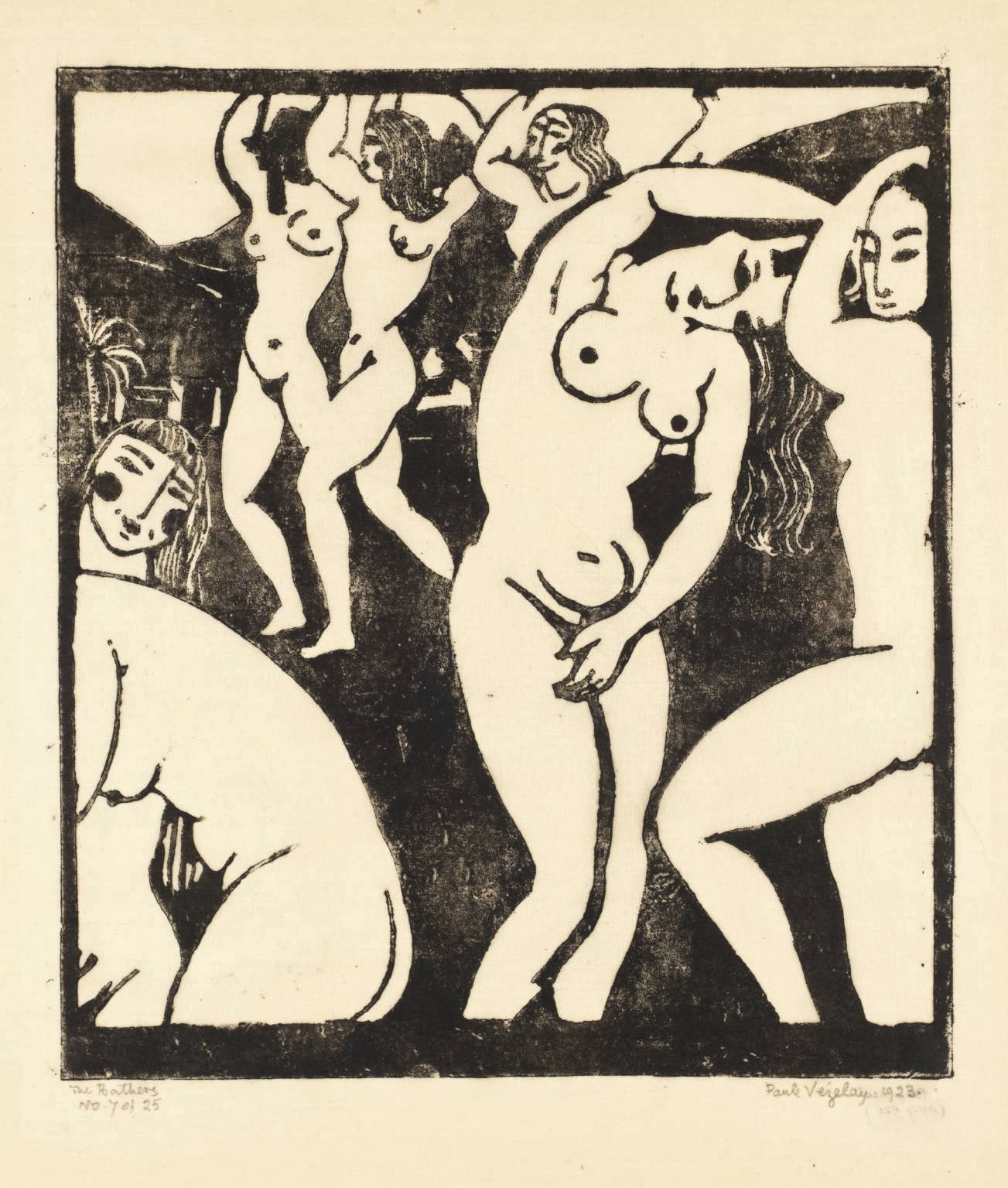


'The body internal is the body abstracted from itself and re-made as a polymorphous and mutable interality. Within this chimerical, shape-shifting stratum, “everything must be ready to penetrate, envelop and evaginate.” This is the “round phallicism” Barthes celebrates in Bataille’s dissemination of eye/sun/testicle poeisis from eye shocket to vagina. For Brophy the body internal is a “moebius spawn" of transmogrification whereby colon, sphincter, vagina spaces.” And pornography, traditionally conceived as a scopophillic act of seduction, titillation and capitulation, is the last place you will find it. To seek it out we need to adapt a form of what Rex Butler has called “non-genital thought." Butler's account of the body without organs suggests that "for every attempt to territorialise or master there is an equal or opposite deterritorialisation.”'
Darren Tofts, 'Interiors'
* * *
'Pornography (following Jean Baudrillard in Seduction is a genre that attempts to say and to show everything; it is a defined by the attempt to complete its revelations. For Baudrillard, this opposes necessary mystery. I would argue instead that the seductive remains within the pornographic; it is crucial to the pleasure of pornography that it is never quite successful. There is always more to be revealed, more that eludes our sight as well as our saying. Even in images, still or moving, the body resists; however opened, it keeps itself; however on display, it can only inadequately say its sensations. The impossibility of some final, full, absolute revelation multiplies pornography’s words and renders its images “harder,” exaggerating the flesh without ever quite fully succeeding in revealing flesh's delightful shame. We can neither say nor show enough.
But this is not simple, or simple annoying, frustration: it is part of the very nature or pleasure. Levinas, in fact, attributes failure to pleasure itself, and in this failure he finds pleasure's link to shame. Pleasure, which shatters the instant, is an attempt to escape the tedious limits of oneself, if only for the that instant. And yet pleasure “is a deceptive escape. For it is an escape that fails. If, like a process that is far from closing up on itself, pleasure appears in a constant surpassing of oneself, it breaks up just at the moment where it seems to get out absolutely.” One cannot absolutely exteriorize oneself, either in being outside oneself or in being fully revealed to that outside. And the pleasure we take in revelation, in being known, must finally fail with it. Levinas adds that "at the moment of [pleasure’s] disappointment, which should have been that of its triumph, the meaning of its failure is underscored by shame. But it is just possible, pleasure being as adaptable and determined as it is, to turn pleasure back to that very shame and failure as well.'
Karmen MacKendrick, 'Humiliated Subjects'
from Pornotopias: Image, Apocalypse, Desire, edited by Louis Armand, Jane Lewty & Andrew Mitchell, publisher: Litteraria Pragensia



'Within the shifting discourses of nationalism, the image of woman shifts accordingly and serves the image of the nation-state (in different but analogous ways to the masculine body [...]; analogous because the body serves nationalist discourses; different, because agency and power are invested in the female body). [...] However, the image of the liberated woman serves the nation-state just as much as the maternal one. In the first, the display of the woman's maternal body functions as a mise-en-scène for the nation's concern about demographic decline. In the latter, the liberated female body serves the nation's image as modern and not reactionary. The symbolic use of the female body is enough to tell us that nationalist discourses are invented in producing a national identity that is dialectically based in the principle of "lack", and that national culture in this regard has its starting (but disguised/absent) point: denial, deficiency/lacking and repression. In much the same way as nationalisms invent nations where they do not exist, rational culture does not represent what is there but asserts what is imagined to be there: a homogenised fixed common culture. National culture then participates in the practice of repression which is in itself an act or form of alienation (starting with the fact that it alienates what cannot tolerate) - it creates a common culture in which the individual is also alienated.'
Susan Hayward, 'Framing National Cinemas', Cinema & Nation, publisher: Routledge

'Janet and Corina' [album: If Dubois Only Knew (1996)] - Elton Dean / Paul Dunmall

'Deleuze and Guattari [...] offered a theoretical framework to understand the idea of mobile networks though the association of the nomad existence and the spatiogeographic aspect of the war machine. they pointed out three characteristics of spatiogeographic nomadic movement. The first is related to points and paths of the nomadic network. Although a nomad is not ignorant of points, he or she focuses on paths, on the movement that happens between these points. In a nomadic network, the points are subordinated to the paths. Nomads also go from point to point, but as a mere consequence of their trajectories. "the life of the nomad is the internezzo" [...]. Nomadic spaces are, following Deleuze and Guattari, smooth spaces, which means that the paths that determine nomadic movement are also mobile and easily "effaced and displaced with the trajectory" [...]. A nomad does not occupy predefined routes and paths: He or she constructs his or her own while moving through space. Mobile technology users take the nomadic concept one step further, because not only their paths are mobile but also the nodes. With the fixed Internet, and fixed landlines, computers and telephones were primarily connected to places. Conversely, cell phones represent movable connection points, accompanying their users' movements in physical spaces.'
Adriana de Souza e Silva, 'From Cyber to Hybrid: Mobile Technologies as Interfaces of Hybrid Spaces', Space and Culture 9(3)