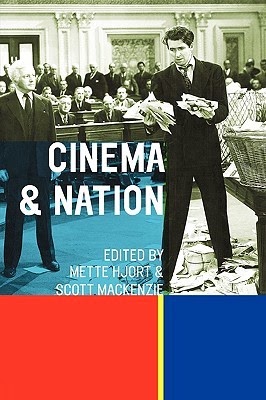
'Within the shifting discourses of nationalism, the image of woman shifts accordingly and serves the image of the nation-state (in different but analogous ways to the masculine body [...]; analogous because the body serves nationalist discourses; different, because agency and power are invested in the female body). [...] However, the image of the liberated woman serves the nation-state just as much as the maternal one. In the first, the display of the woman's maternal body functions as a mise-en-scène for the nation's concern about demographic decline. In the latter, the liberated female body serves the nation's image as modern and not reactionary. The symbolic use of the female body is enough to tell us that nationalist discourses are invented in producing a national identity that is dialectically based in the principle of "lack", and that national culture in this regard has its starting (but disguised/absent) point: denial, deficiency/lacking and repression. In much the same way as nationalisms invent nations where they do not exist, rational culture does not represent what is there but asserts what is imagined to be there: a homogenised fixed common culture. National culture then participates in the practice of repression which is in itself an act or form of alienation (starting with the fact that it alienates what cannot tolerate) - it creates a common culture in which the individual is also alienated.'
Susan Hayward, 'Framing National Cinemas', Cinema & Nation, publisher: Routledge
Film Studies · Texts
Affinities
wander → 28.03.2018Christophe Menke, The Sovereignty of Art: Aesthetic Negativity in Adorno and Derrida, translator: Neil Salomon, publisher: The MIT Press
- 05.02.2015'The human spirit is dominated by a demand that makes bliss
 15.11.2014Vivian Sobchack, Carnal Thoughts: Embodiment and Moving Image Culture, publisher: University of California Press
 06.12.2013Angus McLaren, Twentieth-Century Sexuality: A History, publisher: Wiley-Blackwell
 24.06.2013Zhang Yimou’s Hero as discourse of national identity Its imagination
 18.12.2012Graham Clarke, The Photograph, publisher: Oxford University Press