

'There is not “the” body, there is not “the” res extensa. Thee is that there is: creation of the world, techné of bodies, weighing without limits of sense, topographical corpus, geography of multiplied ectopias—and not u-topia.
No place beyond place for sense. If sense is “absent,” it’s by way of being here—hoc est enim—and not by way of being elsewhere and nowhere. Absence-here, that’s the body, the extent of psyche. No place before birth or after death. No before/after: time is spacing. Time is the rising up and absenting, the coming-and-going into presence: it’s not engendering, transmission, perpetuation. “Fathers” and “mothers” are other bodies; they aren’t the place of the Other (as they are in neurosis, which is only a very provisional, even if necessary, accident in our history, a hardship of entering into his era of the world of bodies). No place for an Other of places, no hole, no origin, no phallomedusing mystery.
No place for Death. But places are dead bodies: their spaces, their tombs, their extended masses, and our bodies coming and going among them, among ourselves.
The between-bodies reserves nothing, nothing but the extension that is the res itself, the areal reality through which it happens that bodies are exposed to each other. The between-bodies is their images' taking-place. The images are not likenesses, still less phantoms or fantasms. It’s how bodies are offered to one another, it’s being born unto the world, the setting on edge, the setting into glory of limit and radiance. A body is an image offered to other bodies, a whole corpus of images stretched from body to body, local colors and shadows, fragments, grains, areolas, lunules, nails, hairs, tendons, skulls, ribs, pelvises, bellies, meatuses, foams, tears, teeth, droolings, slits, blocks, tongues, sweat, liquors, veins, pains, and joys, and me, and you.'
Jean-Luc Nancy, Corpus, translated by Richard A. Rand, publisher: Fordham University Press

'You Stepped Out of the Dream' [album: Five Pieces (1975)] - Antony Braxton

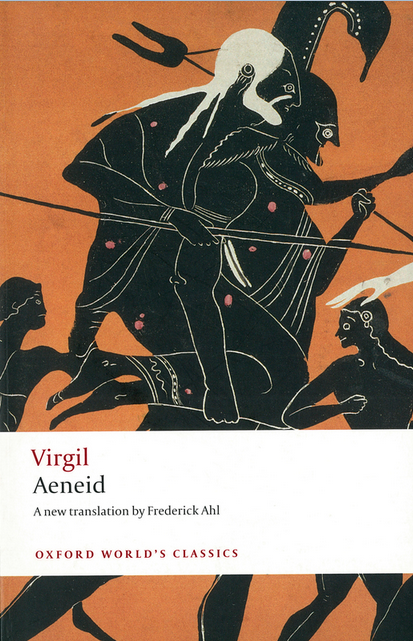
'Path of retreat, though his mind's at a furious boil with resentment.
Twice, even then, he rushed into the thicj of his cordoning foemen,
Twice sent them reeling all over walls in disorder and panic.
But reinforcements speed from the camp and the front coalesces;
Juno, the daughter of Saturn, no longer dares give him extra
Strength to resist, because Jupiter's now sent Iris from heaven,
Bringing his sister commands that allow her no subtle amendments
If Turnus fails to withdraw from the Teucrians' towered defences.
So, the youth hasn't the power in his shield and the force in his right hand
Even to stand his own ground. Spears hurled in from so many quarters
Now overwhelm him. The concave helmet encasing his temples
Constantly clangs, the bombardment of stones leaves its solid bronze gaping,
Shipped of its plumes, and its boss can't shelter his head from relentless
Pounding. The Trojans and Mnestheus himself, now lighting in action,
Double their spear-volleys. Sweat oozes out over Turnu's body,
Forms into soot-blackened rivers (he'd had no chance for a breather).
Laboured gasping for air shudders of his joints. He, at long last,
Leaps, fully armed, from the walls, thus entrusting himself to the Tiber's
Streaming flow. As he touched it, the river-god caught him and raised him
Up in his tawny swirls and he swept him away upon gentle
Currents:returned to his allies content, fully cleansed of his slaughter.'
'Slowly but surely, the words take effect. He's begun hesitating,
But when a harness catches his gaze, high on Turnus's shoulder,
Gleaming with amulet studs, those pleas have no chance of fulfilment:
Pallas's oh so familiar belt, which Turnus had shouldered
After defeating and killing the boy. It's the mark of a hated
Personal foe. As his eyes drink in these mementoes of savage
Pain, these so bitter spoils, Aeneas grows fearsome in anger,
burning with fire of the Furies. "You, dressed in the spoils of my dearest,
Think that you could escape me? Pallas gives you this death-stroke, yes Pallas
Makes you the sacrifice, spills your criminal blood in atonement!"
And, as he speaks, he buries the steel in the heart that confronts him,
Boiling with rage. Cold shivers send Turnus' limbs into spasm.
Life flutters off on a groan, under protest, down among shadows.'
Virgil, Aeneid: A New Translation by Frederick Ahl, publisher: Oxford University Press
'Second Thoughts' [album: The Vortex Tapes (1992)] - Elton Dean


'However, those girls working in bars were as stupid, as self-seeking, as base, and as self-indulgent as the women who worked in brothels. Like the prostitutes, they drank without being thirsty, laughed without being amused, went into raptures over the caresses of a common labourer maligned one another, and scrapped with one another without the slightest provocation; in spite of that, the youth of Paris had never yet observed that, as regards beauty of form, skill of technique, and desirable attire, bermaids were clearly inferior to the women cooped up in the luxurious salons of brothels. "My God,' thought Des Esseintes, 'what fools these fellows are who hang round bars! Quite part from their idiotic illusions, they even manage to forget the risks associated with damaged or dubious merchandise, to no longer take into account the money spent on a lot of drinks the landlady charges for in advance, or the time wasted in waiting for goods whose delivery is deferred so as to enhance their value, or the endless shilly-shallying used to prompt and to promote the sport of tipping!"
This inane sentimentalism, combined with a fierce practicality, epitomized the dominant thinking of the century; those same individuals who would have blinded their neighbour for the sake of ten sous lost all their rationality, all their shrewdness when confronted by those shifty tavern girls who harassed them without mercy and extorted money from them without remission. Business enterprises laboured and families swindled one another in the name of commerce, so that their money could be fliched by their sons; they in their turn let themselves be cheated by these women who, in the final analysis, were robbed of everything by their fancy men.
Throughout the whole o Paris, from east to west, from north to south, there existed an uninterrupted sequence of frauds, a pile-up of organized thefts each of which occasioned the next; and all this because, instead of customers being satisfied on the spot, they were persuaded to exercise their patience, they were kept waiting. Essentially, the sum total of human wisdom consisted in dragging things out, in saying "no" then, eventually, "yes"; for the most effective way of controlling the younger generation was by constantly putting them off!'
Joris-Karl Huysmans, Against Nature: A New Translation by Margaret Mauldon, publisher: Oxford University Press


'What one calls the obscenity of women, what they are punished for, is only the invisibility of their indecency and its inadmissible power by the demoniac seal.'
'He says, I bless the day I was born aside from you and all your species. The elastic resistance of a boy's anus doesn't tell lies on the strength of their gangue which is the inner intestine. It's the lie of women's softness which is hateful. The pernicious insignificance of their access which makes a trap of it.
The horror of the Nothing which is the imprescriptible Everything.'
'Desire doesn't come from the longing to possess, or even to be possessed, which already implies a more burning imbrication, tangling up, the fusional scattering of flesh.
No.
Desire comes from the excessive novelty which makes all hope of a possible fornication be like the promise of a new life.'
Catherine Breillat, Pornocracy, translator: Paul Buck & Catherine Petit, publisher: Semiotext(e)