Clip from Minoru Inao’s Inran kazoku:gibo no shinshitsu (1991)
'Jealousy is something hard to quell. It squeezes the heart like a hot hand. But quelled it must be. On the road to sexual liberation, the banishing of possessiveness is a decisive step; in matters of love, even more than in other domains, property leads to theft. My girlfriend attracts you, and you attract her; ergo, I’d be a shit and a fool to come between you or try to prevent you from sharing the ecstasy and fulfillment of loving each other. My beloved’s pleasure is mine as well, because I love her, and nothing is more important than her happiness. The transparency of our relationship precludes cheating, and hence precludes jealousy also. Of course, the reality isn’t always that simple, or as easy to manage. Quarrels and dramas are the lot of many a couple, and even the toughest sexual adventures are prey to fear, doubt, humiliation, and a myriad of other torments. Nonetheless, we must face our contradictions squarely, however painful or ridiculous they may be, rather than sink into the soothing comfort of obligatory fidelity. Passion is part of adventure, and there is no true adventure without risk.
It’s not a matter of making a distinction between love and sex. On the contrary, even if it is never to be repeated, a sexual encounter has meaning only if the lovers involved exchange something tender and powerful. The exchange is total and cosmic. Like Transcendental Meditation or the use of peyote, sexual pleasure is a vector of knowledge and an opening on the universe. We take a sexual trip as we do an acid trip, with the sensation of accomplishing an initiation and a festive ritual. As Jacques Rigaut wrote, “I shall be as serious as pleasure itself.” Every orgasm brings a lighting flash of fulfillment, when for an instant infinity is glimpsed as a familiar friend. Romance is no longer an affair of the heart alone; fucking is an important part of it. Try telling that to our elders, to the people over thirty who for the most part were appalled and disturbed by our escapades! In our eyes, marriage was no longer the goal of couples. Now they could separate and reunite according to their own whim and desire, for in principle each partner could offer this freedom to the other. The last champions of monogamous orthodoxy objected—in vain—that if this was the case, each partner was selfishly protecting his or her own patch of independence. Why, they said, would anyone not help themselves to carnal pleasures that were formerly forbidden, which every present circumstance encouraged them to savor to the dregs?'
Jean-Pierre Bouyxou, 'Afterworld: Let It Blow', in Sex Press: The Sexual Revolution in the Underground Press, 1963-1979 compiled by Vincent Bernière & Mariel Primois, publisher: Abrams

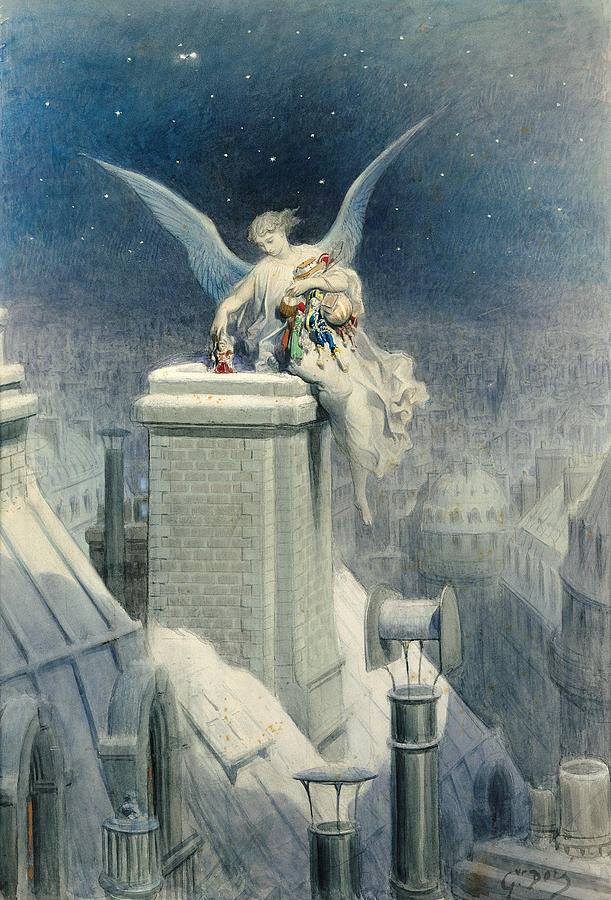
'The image of Mickey and other iconic art-historical images such as the Mona Lisa have been seen so often that they have become invisible. We have become blind to them, because they are too present in out environment. This could probably be an explanation for the borrowings, misure, reuse, quotations and tributes which have afflicted these two “images”-Mickey and the Mona Lisa-as if were necessary to remind us of their existence [...]. However, they do not belong to the same artistic and anthropological categories. To create images that are looked at but no already created, what already existed and had in a way been forgotten or become history, something virtually naturalized.
Much has been said about the critical attack launched by Pop Art when Andy Warhol in particular downgeared and serialized Mickey Mouse and Donald Duck [...]. But quite the opposite could be said, i.e. fundamentally Warhol did nothing more than pay homage to the exceptional plasticity of the Disney drawing and the infinite possibilities for metamorphosing a line which straight away appeared to be as much the result as the condition of reproducibility. Before even letting it be supposed that Disney was being criticized, Warhol suggested that he was a predecessor. Disney was already doing Warhol. Even more astonishing-and it is probably Pop artists who show it most obviously in borrowing Disney images-is the idea of their being reserves, spolia for re-use, that the images permitted. When American artists decided to plunder the immense stock of forms contained in the animated and non-animated films made by the Disney Studios, a powerful surge of representation was suddenly released. This was also the case with all the other insertion pieces of real objects on their canvases, the Italian Renaissance with its reintegration of ancient ruins in the facades of its palazzi or as painted mythological backdrops . . .
And, in effect, in the 1960s there was a kind of pillaging of the works of Disney as if they were an unlimited expanse of ruins, a kind of Monte Testaccio, drawings which had become heaps or remains, having fulfilled their function of amusing. Just as the spool of a roll of film becomes a nondescript object waiting to be destroyed after the film has been projected, Disney’s printed or filmed images were no more than ruins destined to be forgotten, but finally given over to pillage as the artists of 20th century saw fit. It needed Pop Art and Figuration Narrative, for example, to preserve the memory and reactivate the dead images, which were by now unsuitable for visual consumption or play . . . This iconographic pillage by 1960s artists of the remains of what was the first enterprise to really create and distribute images on a global scale was comparable to a gigantic “ready-made” with the suggestion of recycling built into it. I have often thought that one could consider with profit Salvatore Setti’s reflections on the re-appropriation of ruins: “taking an esthetic view, due to excellence of the ornamentation and skillfulness of the creator of yore, the antique fragment contributes to the ennoblement of the church into which it is integrated; taking an ideological view, this re-use can be justified as it emphasizes and demonstrates the victory over paganism and, at the same time, implies awareness of the pagan origin of the object and an appreciation of its quality.” In the case of Disney phenomenon, it would really be the other way round. It is the “ancient fragment” of Disney which would be ennobled by being hung in a museum . . .'
Dominique Païni, 'Reusing Disney', in Once Upon a Time: Walt Disney: The Sources of Inspiration for the Disney Studios edited by Bruno Girveau, publisher: Prestel

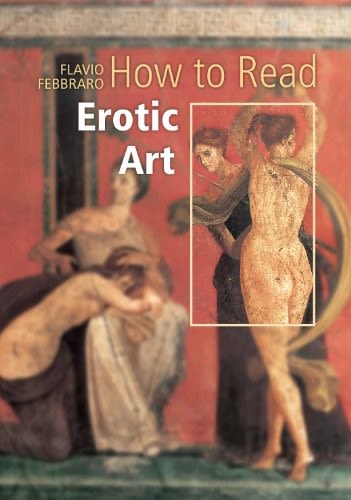
'Though it may seem self-evident, the end of antiquity marks a clear dividing line, with an overall redefinition of moral values and attitudes prompted by Christianity and a complete lack of ‘erotic’ visual material from the Early Middle Ages. This gap, which is not solely the result of early medieval reticence, is filled by the Indian Art that was then flourishing. In later Western art, references to classical mythology and biblical accounts increasingly provided artists with effective means of painting and sculpting seductive bodies and unquestionably erotic scenes without incurring the condemnation and censorship of the Church or secular authorities. Generally speaking, subjects such as the female nude became acceptable if couched in a mythological context or if they served to illustrate a morally edifying episode. Only when artists began to depict actual people did scandal erupt - as occurred with Manet’s Olympia.
Since the Middle Ages, most paintings and sculptures on erotic themes have been directed at and interpreted by the male gaze: they are meant to attract heterosexual males and stimulate their fantasies. This reflects the fact that for long time both the artists and the overwhelming majority of the patrons were men. Consequently, the female nude dominates. When sexual organ are depicted - a cause for controversy and scandal - they are appear innocent, neutral. Once images shift towards what may be perceived as pornography (illustrations for the Marquis de Sade’s novels, for example), the sexual act and male genitalia are represented, but still in situations solely in Western art after the rise of Christianity; it typifies classical and non-European erotic art - from Pre-Columbian civilizations to well-known Indian, Chinese and Japanese works - which had great influence on European culture from the 19th century onwards.'
Flavio Febbraro, How to Read Erotic Art, publisher: Ludion

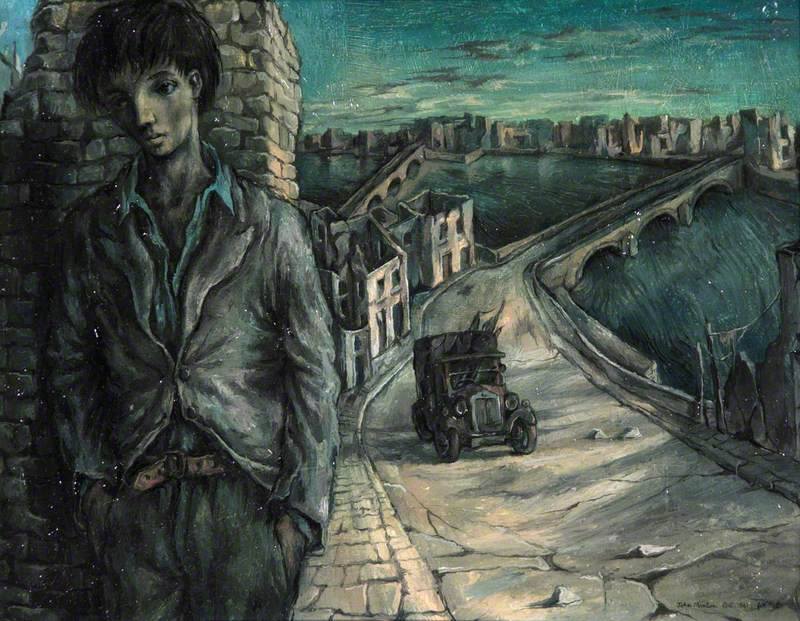

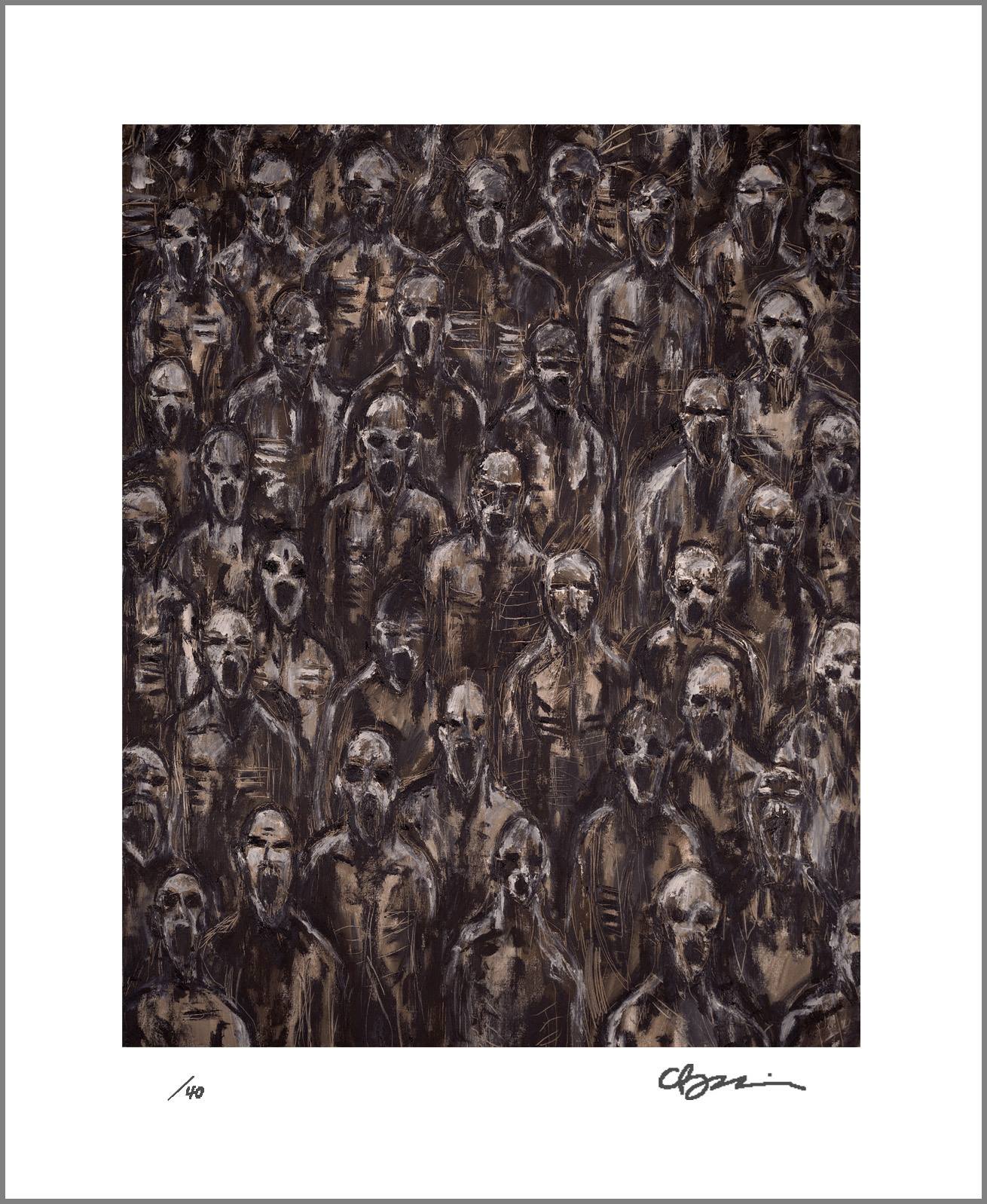




'We began with a tear. And as tear folds, so we will end with a tear. When Derrida eulogizes his friend the philosopher Jean-Marie Benoist, he tells us about a tear that nourishes. Offered in the little of the sad homage “The Taste of Tears” is a drinkable wetness, a shared experience between the thinkers, a salty exchange. As an epigraph to his text, Derrida gives way to the worlds of the now departed other: Benoist’s account in The Geometry of the Metaphysical Poets of the strangeness of its taste compared to one’s own. Derrida’s answer cannot answer these words of the dead but repeats them. His ethics of friendship is on display in The Work of Mourning, a collection of eulogies for fellow theorists and philosophers; it takes its title from Freud’s notion of the Trauerarbeit and takes the work of mourning as the practice of witnessing. In each of the pieces in that collection, Derrida writes of the other in the self and the promise of philia―the vow to go before the other and to remain and write in the wake of that going. This logic of interiorization does not, in Derrida, produce catharsis: it is in-terminable, in-complete, im-possible, and yet required.
The promise of friendship is a debt for the future payment of witnessing the other’s absence, a debt Derrida made good on his tributes. “To have a friend, to look at him, to follow him with your eyes, to admire hm in friendship,” he writes, “is to know in a more intense way, already injured, always insistent, and more and more unforgettable, that one of the two of you will inevitably see the other die.” The promise of friendship is to open up the world to the existence of the other, an opening that will not fail to confront the pains of finitude on either side of its rend. “That is the blurred and transparent testimony borne by this tear, this small, infinitely small, tear, which the mourning of friends passes though and endures even before death.” But it is not the tasting―even less the wondering as its difference―of which Benoist and Derrida write. The latter on the former, instead, suggests, “He does not teach us that we must not cry over oneself. . . . One should not develop a taste for mourning, and yet mourn we must.” Thus, one must not taste the tear and return with a newly poignant love of the self; rather, every grieving tear must remain from and for the other. The taste of the tear is a sensory displacement, a tingle of the chemosenses making gustatory Levina’s ethics of encountering visually the face of the other. One must always cry, and always cry not for the self but for the other; one must find a way to drink tears without tasting them, like a practiced ageusia.'
Eugenie Brinkema, The Forms of the Affects, publisher: Duke University Press