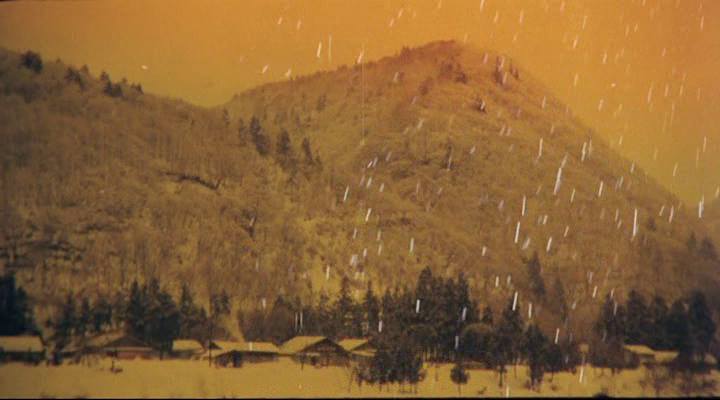
Frame grab from Shûsuke Kaneko’s Itazura Lolita: Ushirokara virgin (1986)



'Death is before me today:
like the recovery of a sick man,
like going forth into a garden after sickness.
Death is before me today:
like the odor of myrrh,
like sitting under a sail in a good wind.
Death is before me today:
like the course of a stream;
like the return of a man from the war-galley to his house.
Death is before me today:
like the home that a man longs to see,
after years spent as a captive.'
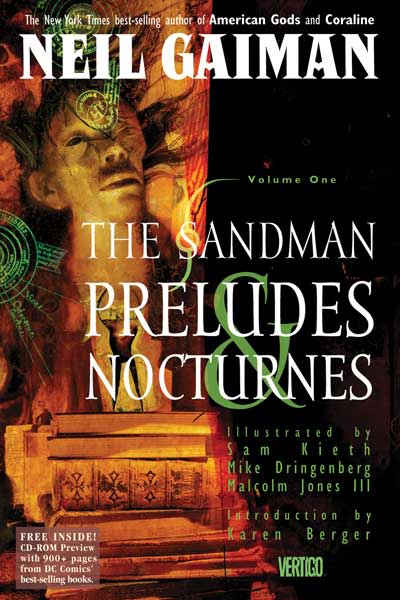
from an ancient Egyptian text, cited in Sandman, Volume 1: Preludes & Nocturnes, written by Neil Gaiman, publisher: DC Comics
'Pigling Bland' & 'Facelift' (Live) - Soft Machine


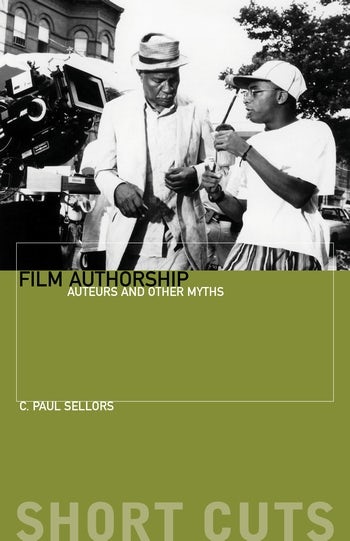
'With the institutionalisation of film studies in academia, debates about authorship shifted dramatically. The question ‘who is an author of a film?’ became in the 1970s ‘are films authored’? The seeds of this shift are rooted in literary theory. The anti-intentionalism that took hold in the mid-twentieth century started as an argument about the conditions of validity in interpretation, but spilled over into the nature of authorship, questioning whether authors even had the capacity for intention independent of the ideas already embedded and circulating in language. Meaning rests with the reader, it was argued, but even this is ephemeral. Michel Foucault endorsed this project to some degree, but contended the impression of authorial communication was not vanquished from the reception of a text. He proposed an author function, a fictional surrogate of the author that named a ‘discourse’, but which did not make any claims about the intentions of the real writer.
Film critics and theorists of the period adopted this approach as a response to the overly romanticised and politically uncritical notion of the auteur. By divesting filmmakers of authority over the meanings of their creations, theorists valorised a symptomatic approach to interpreting films as a means for evaluating their underscoring ideologies. The search for great directors shifted from the recognition of artistic aptitude to ‘excesses’ in films that betrayed and undermined a film’s determinant capitalist ideology. Not surprisingly, the most progressive films were often directed by the same directors that auteristic critics had celebrated previously. This theory, though, broke the connection back to the director. No longer was the auteur someone like John Ford, but ‘John Ford’, a critical construction emerging from the text. Despite intentions, this theory demonstrated critics’ insatiable need to attribute the source of meaning to an individual, and was therefore a self-defeating approach. What possible interest could there be in a ‘John Ford’, a textual construction, unless it could somehow become reconnected to John Ford? Peter Wollen explains that it is the trace to the director. The theory failed to achieve this aim. This ‘critic as analyst’ ultimately had critics marvelling at their own theoritically determined interpretations. Ironically, Barthes’ proclamation ‘the birth of the reader must be at the cost of the death of the Author’ always suggested this would be the case [...]. The abandonment of authorship as expression exacted a political price. Although developed with the best intentions of critiquing Western capitalism, these theories, in denying the author’s conscious voice, also denied expression to underrepresented groups struggling to make their voices heard. This generated a rift within Marxist criticism. To challenge norms of gender, race and sexuality, the capacity for individual expression was necessary.'
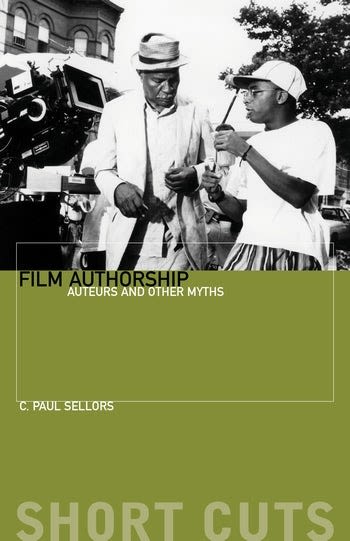
C. Paul Sellors, Film Authorship: Auteurs and Other Myths, publisher: Wallflower
'Weal' [album: Flakes (1975)] - Steve Lacy Sextet
'We can sustain the belief that a good film is necessarily an expression of one man’s vision, a communication from the director to his audience, only if we can demonstrate a difference in kind and effect between the personal film and the factory movie. The ‘stamp of one predominating creative mind’ must be visibly distinct from the stamp of several collaborating creative minds. Provided that a film has its own unity, it seems unimportant whether the unity was evolved through cooperation and compromise within the production team or conceived by one man and imposed on collaborators.
If the relationships established in a film are significant, it makes no difference to the spectator how they came, or were brought about, or to what extent their significance was intended. A movie has a meaning for the spectator when he is able to interpret its pattern of actions and images. Provided that its relationships are coherently shaped, the film embodies - and can be shown to embody - a consistent meaning which may or may not have been sought, or sincerely felt, by the director.'
V. F. Perkins, 'Direction and Authorship', in Auteurs and Authorship: A Film Reader edited by Barry Keith Grant, publisher: Blackwell Publishing