'For its part, psychoanalytic criticism assumes that authorial desire is figured in all texts, never more so than when the Other is the subject or representation. With domestic ethnography, authorial subjectivity is explicitly in question or on display. There exists a reciprocity between the subject and object, a play of mutual determination, a condition of consubstantiality. The Desire (figurable as dread or longing) of the domestic ethnographer is for the Other self.'
Michael Renov, 'Domestic Ethnography and the Construction of the “Other” Self', in Collecting Visible Evidence edited by Jane M. Gaines & Michael Renov, publisher: University of Minnesota Press
'The Holy la' [album: The Holy la (1998)] - Steve Lacy Trio
'Eulogy' [album: Angel of Retribution (2005)] - Judas Priest
Clip from Bernard Queysanne’ Un homme qui dort (1974)
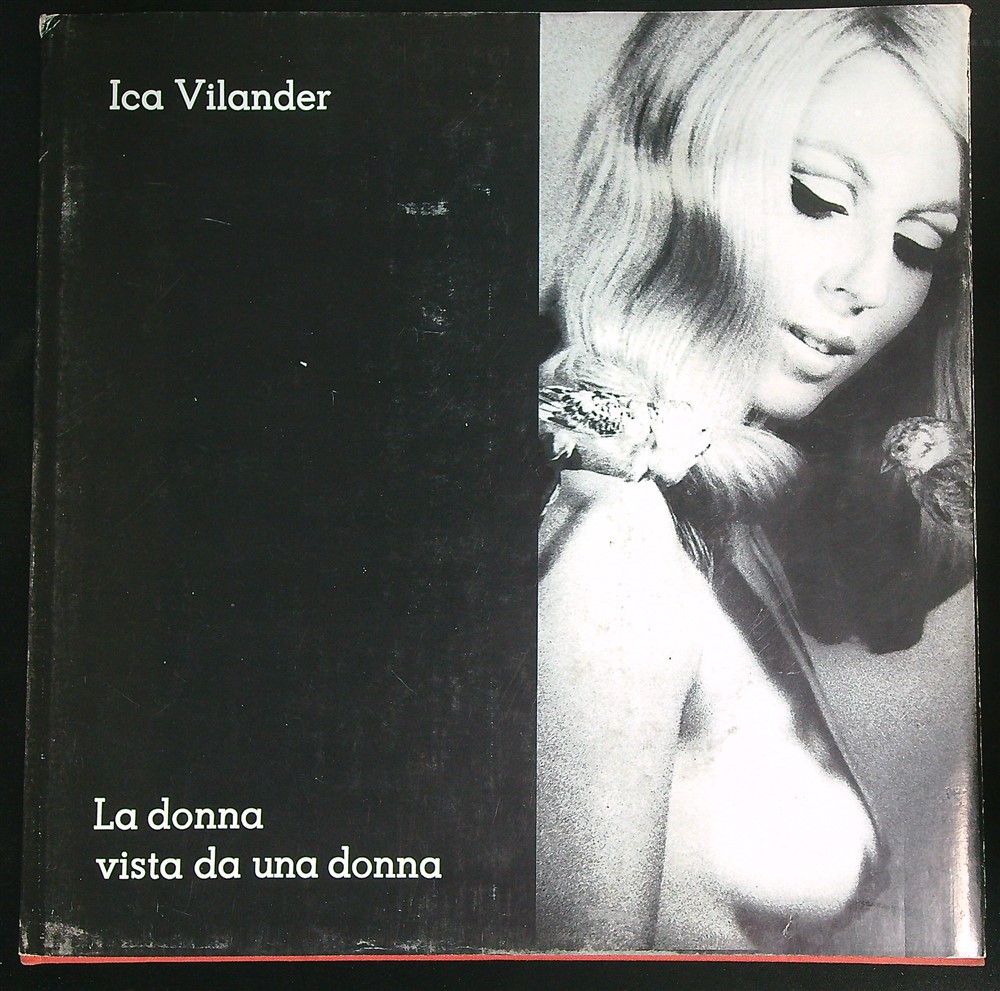
La Donna Vista da una Donna (1968) - Ica Vilander
Frame grabs from Sarah Polley’s Stories We Tell (2012)
'Heteronormative assumptions interconnect with the institutionalization of heterosexuality and also shape the doing of heterosexuality and being and becoming heterosexual – as well as shaping the doing and being of alternative sexualities. [...] we cannot regard gender, sexuality and heterosexuality as phenomena of the same order, mapping easily on to each other. In particular, we cannot afford to reduce sexuality to the heterosexuality–homosexuality axis, or any other means of classifying sexualities, or reduce heterosexuality to sexuality alone, to one form of sexuality among others. The connections between heterosexuality and gender are much tighter and much more reciprocal than the links between gender and sexuality or sexuality and heterosexuality – precisely because heterosexuality is not only sexual. This is not to say that the ‘sexual’ in heterosexual is unimportant – for it is forms of sexual practice (as well as other non-sexual practices) that help define what constitutes a heterosexual and what defines its perverse other.'
Stevi Jackson, 'Gender, Sexuality and Heterosexuality: The Complexity (and Limits) of Heteronormativity', Feminist Theory, 7(1)
'Even though heterosexuality as a term has not often been explicitly mentioned in Western mainstream discourses of media and common parlance before the 1990s, its position as the sexual norm has nevertheless been produced over centuries in countless linguistic euphemisms, in paradigmatic choices and syntagmatic combinations of gendered terms, not to mention reiterative visual representations. Both images and verbal language have represented the couplehood of man and woman, and the (modern) family formation of hetero parents and children, not only as ideals but as outright moral imperatives. Words and images still sustain the position of heterosexuality as ‘the quiet but centrally organizing signifier of social membership’ [...]. Thus heterosexuality is also signified as the crib of respectable citizenship, literally as the primary production site of new citizens [...]'
Leena-Maija Rossi, '‘Happy’ and ‘Unhappy’ Performatives: Images and Norms of Heterosexuality', Australian Feminist Studies, 26(67)
'If identity is asserted through a process of signification, if identity is always already signified, and yet continues to signify as it circulates within various interlocking discourses, then the question of agency is not to be answered through recourse to an “I” that preexists signification. In other words, the enabling conditions for an assertion of “I” are provided by the structure of signification, the rules that regulate the legitimate and illegitimate invocation of that pronoun, the practices that establish the terms of intelligibility by which that pronoun can circulate. Language is not an exterior medium or instrument into which I pour a self and from which I glean a reflection of that self. The Hegelian model of self-recognition that has been appropriated by Marx, Lukacs, and a variety of contemporary liberatory discources presupposes a potential adequation between the “I” that confronts its world, including its language, as an object, and the “I” that finds itself as an object in that world. But the subject/object dichotomy, which here belongs to the tradition of Western epistemology, conditions the very problematic of identity that it seeks to solve.'
Judith Butler, Gender Trouble: Feminism and the Subversion of Identity, publisher: Routledge
'There is no meaning if meaning is not shared, and not because there would be an ultimate or first signification that all beings have in common, but because meaning is itself sharing of Being. Meaning begins where presence is not pure presence but where presence comes apart [se disjoint] in order to be itself as such. This “as” presupposes the distancing, spacing, and division of presence. Only the concept of “presence” contains the necessity of this division. Pure unshared presence―presence to nothing, of nothing, for nothing―is neither present nor absent. It is the simple implosion of a being that could never have been―an implosion without any trace. This is why what is called “the creation of the world” is not the production of a pure something from nothing―which would not, at the same time, implode into the nothing out of which it could never have come―but is the explosion of presence in the original multiplicity of its division. It is the explosion of nothing, in fact, it is the spacing of meaning, spacing as meaning and circulation. The nihil of creation is the truth of meaning, but meaning is the originary sharing of this truth. It could be expressed in the following way: Being cannot be anything but being-with-one-another, circulating in the with and as the with of this singularly plural coexistence.' Jean-Luc Nancy, Being Singular Plural, translators: Robert D. Richardson and Anne E. O’Byrne, publisher: Stanford University Press