'Examples of Grecian Ophiolatreia might easily be multiplied to a considerable extent, but we have space for little more than a brief glance. It is known that upon the walls of Athens was a sculptured head of Medusa, whose hair was intertwined with snakes, and in the temple at Tega was a similar figure which was supposed to possess talismanic power to preserve or destroy. The print in Montfaucon represents the face of Medusa as mild and beautiful, but the serpents as threatening and terrible. There is a story current, that a priestess going into a sanctuary of Minerva in the dead of the night, saw a vision of that goddess, who held up her mantle upon which was impressed a Medusa’s head, and that the sight of this fearful object instantaneously converted the intruder into stone.
The armour of Agamemnon, king of Argos, was ornamented with a three-headed serpent; Menelaus, king of Sparta, had one on his shield, and the Spartan people, with the Athenians, affirmed they were of serpentine origin and called themselves ophiogenœ.
At Epidaurus, according to Pausanias, live serpents were kept and fed regularly by servants, who, on account of religious awe, were fearful of approaching the sacred reptiles which in themselves were of the most harmless character. The statue of Æsculapius, at this temple, represented him resting one hand upon the head of a serpent, while his sister, Hygeia, had one twisted about her. It is reported that the god Æsculapius was conveyed by a woman named Nicagora, the wife of Echetimus, to Sicyon under the form of a serpent.
Livy, Ovid, Florus, Valerius Maximus, and Aurelius Victor, relate that a pestilence of a violent and fatal character once broke out in Rome, and that the oracle of Delphi advised an embassy to Epidaurus to fetch the god Æsculapius. This advice was taken, and a company of eleven were sent with the humble supplications of the senate and people of Rome. While they were gazing at the statue of the god, a serpent, "venerable, not horrible," say these authors, which rarely appeared but when he intended to confer some extraordinary benefit, glided from his lurking place, and having passed through the city went directly to the Roman vessel and coiled himself up in the berth of Ogulnius the principal ambassador. Setting sail with the god, they duly arrived off Antium, when the serpent leaped into the sea, and swam to the nearest temple of Apollo, and after a few days returned. But when they entered the Tiber, he leaped upon an island, and disappeared. Here the Romans erected a temple to him in the shape of a ship, and the plague was stayed with wonderful celerity.
Delphi appears to have been the principal stronghold of serpent worship in Greece. Strabo says its original name was Pytho-derived from the serpent Python, slain there by Apollo. From this story Heinsius concludes that the god Apollo was first worshipped at Delphi, under the symbol of a serpent. It is known that the public assemblies at Delphi were called Pythis, these were originally intended for the adoration of the Python.'
Anonymous, Ophiolatreia, publisher: Locus 7

'Les Portes-En-Ré' [album: Avant (2005)] - Elton Dean & Sophia Domancich
'Instant Chav 7' [album: Live Aux Instants Chavires (2009)] - Joëlle Léandre & Jean-Luc Cappozzo
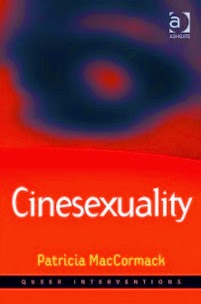
'Deleuze and Guattari define art as a composition of chaos and patterns of art which repeat signified territories are malevolent not because they are evil but because they are clichés [...]. While this may have the vague smell of a bourgeois comment, clichés, be they persons or artworks, are comfortable. Not “getting” something and refusing it as an unethical act which refuses the scary responsibility that comes from vertiginous thought. Serres states “to say disorder is to say one is both unwilling and unable to conceiveit” [...]. Serres’ use of the word “conceive” is vital, because it emphasizes the active nature of addressing chaos. Conceiving disorder either conceives potential (creativity, Venus, love) or death (signification, Mars, war). Both decisions demand an address however, so when exploring grace willingness is more important than capacity. Rather than chaos being a kind of base level beneath our regulating or ordering of it, all orders are various configurations of chaos. The one with which we are almost familiar is where we communicate with language, signifying systems and knowledge rather than incommensurable speech, asignification and asemiosis, unthought and imperceptible sensing. As ethical spectators we must remember without historicizing, see without recognizing, speak in silence, create incommensurable and illogical alliances while acknowledging all alliances are essential based not on their commensurability but urgency, and the more ruthlessly the alterity of the terms of becoming, the more is at risk and the more ruthlessly the myth of human subjectivity is interrogated. Art us philosophy in one element in an ecology of becomings which creates new territories through an encounter with chaos as forming unnatural (or unfamiliar) connections between the particles of chaos. The event of spectatorship is an act of love. Irigay defines love as “a departure which does not go counter to anything save the perception that nothing counters... the immensity discovered in the first instances of love” [...]. Serres urges love is “the spot between knowledge and ignorance” [...]. Desire is the undifferentiated flow connecting bodies, power, society and ecosophical territories, within the folds and between all relations. Grace is the impossible ethical turn, the creative and crucial sacrifice of the human when, encountered with desire, compels us toward infinitive inhuman becomings - opening up toward the becomings of others and the becomings to come. Love is the encounter between grace and desire.'
Patricia MacCormack, Cinesexuality, publisher: Ashgate
'Sax. Com' [album: QED (2000)] - Elton Dean
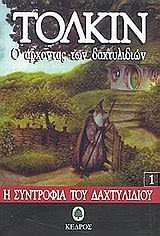
'Μπορεί να καθυστερήσετε ή να γυρίσετε πίσω ή ν' αλλάξετε δρόμο, ανάλογα με το τι θα σας τύχει. Όσο πιο πολύ απομακρυνθείτε, τόσο πιο δύσκολο θα γίνεται να αποτραβηχτείτε· αλλά κανένας όρκος ή δέσμευση δε σας υποχρεώνει να πάτε πιο πέρα απ' όσο θέλετε. Γιατί δεν ξέρετε ακόμα πόση δύναμη έχει η απόφασή σας ούτε και μπορείτε να προβλέψετε τι μπορεί να συναντήσει ο καθένας σας στο δρόμο.
- Ανάξιος εμπιστοσύνης είναι αυτός που λέει αντίο σαν δει το δρόμο να σκοτεινιάζει, είπε ο Γκίμλι.
- Ίσως, είπε ο Έλροντ, αλλά καλύτερα να μην ορκιστεί πως θα βαδίσει στο σκοτάδι αυτός που δεν έχει δει ούτε το νύχτωμα.
- Ναι, αλλά ο όρκος δίνει δύναμη στην καρδιά που τρέμει, είπε ο Γκίμλι.
- Ή την κομματιάζει [...].'
Τζ. Ρ. Ρ. Τόλκιν, Ο Άρχοντας των Δαχτυλιδιών: Η Συντροφιά του Δαχτυλιδιού, μτφρ. Ευγενία Χατζηθανάση-Κόλλια, εκδ. Κέδρος

'The sexual relation is in fact that we have no origin and no way of being the origins of ourselves. Relation is the archi-originary frenzy of self-constitution, self-engendering. This holds for all relations, and the relations of relations that together weave our existences-but the sexual is responsible for making evident and presenting the “this” itself.
This is why it divides itself in two: on the one hand, into the possibility of engendering another (which would be a “result” or a third term only in a fleeting sot of way, entering, in its turn, into sexed self-sectioning) and, on the other, the possibility of relation without relation, which is what we have been talking about since the beginning.
No result, no accounting, no reason given, and besides, no question posed: no end, in any sense of the word. No question, but an address, an appeal-sex appeal. An appeal that demands nothing but to the understood. It does not even really want a response, just to be thrown back again by the other in such a way that the relation takes place, back and forth, approach and repetition.
In Clarence Brown’s film Come Live with Me, the man has told the woman about fireflies, who light up in order to spark the sexual instinct in their fellow fireflies. Later, the woman returns to her room, which is separated from the man’s room in such a way that a ray of light can shine through the space above a partition and into where he is. She uses an flashlight-given to her earlier by the man because there was not light in her room-to send a signal to him, to signal her desire. This blinking light is not treated just as a signal. Here, between the reference to fireflies and the of the film-which comes without showing us any sexual relation-it becomes a sign with no signification beyond itself, not only the sign of a self-exposure but a sign that is itself entirely formed by its own exposition, its light, its brilliance, with a magnificent flash that sheds light on nothing and that only trembles, trembles like a spasm. Self like a luminous spasm in the night of relation.
I’ve spoken of desire: it is not a question of desire for an object. It is not relation to something: it is relation to (tension toward, at-tention to) nothing but the relation itself.'
'This is why we can add here a reflection on the language of sexual tradition, or language in sexual relation. When we speak in love (since this is also how we designate this act, a fact that surely requires more attention), also how er designate this act, a fact the surely requires more attention), it is not in order to say anything other than the relation itself (its desire, its pleasure). This tautology, which I propose to cal the erotic exclamation, has the remarkable characteristic of being one of the occasions (along with poetry and maybe also phatic utterances) where language is used in a way that carries it to the limit of significance. The formula is the exclamation repeated by the Sade: “I’m coming! [Je jouis!]. This is the linguistic redundancy of sex, or indeed a sexual redundancy of language, which moves these two major modes of relation toward one another. But it is not as if the one ever stopped approaching the another-without ever becoming confused with the other, but also never ceasing to refer to it as its condition or its most distant and most secret issue. We speak in order to come, and we come in order to speak-which is also to say that each one, both sex and language, substitutes for the other, ans also excluded the other, exhausts and excites the other;
“I’m coming!”—but also “You’re coming!” and also “Come!” (Blanchot and Derrida, the “come” of a coming without end)—says nothing, but it utters (brings out, exposes) the “there is” of the sexual relation, of this relation that there is an effect each time precisely where there is nothing to say about it, nothing to report.
And then-we say nothing, we begin again, we come again.'
Jean-Luc Nancy, Corpus II: Writings on Sexuality, translator: Anne O’Byrne, publisher: Fordham University Press