



ΣΑΝ ΤΟΝ ΣΠΟΥΡΓΙΤΗ
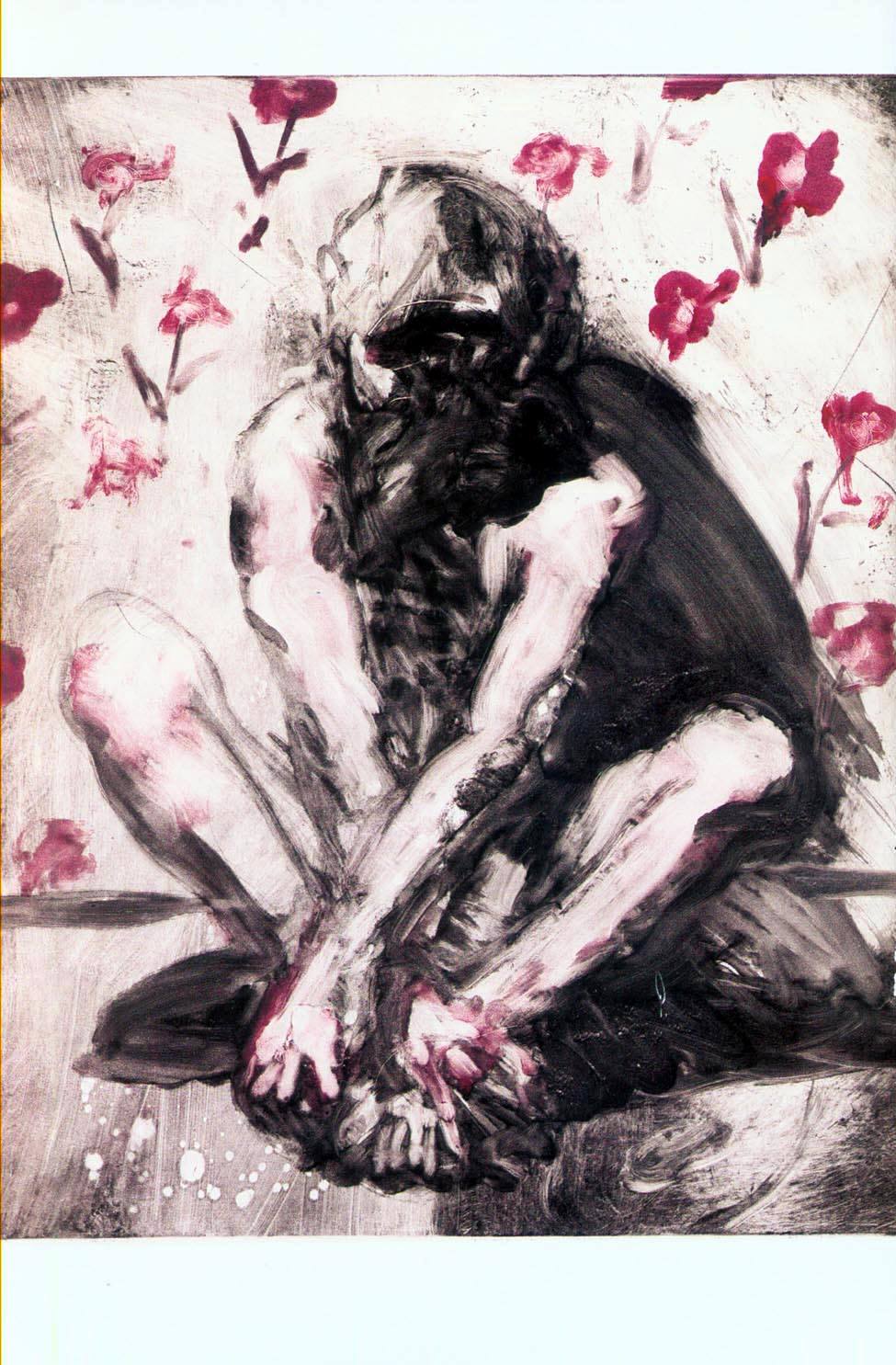
Για να δώσεις ζωή πρέπει πρώτα να πάρεις.
Καθώς η θλίψη μας σωριάζεται
στη χιλιοματωμένη θάλασσα,
προσπερνώ μυριάδες αυτοσπαραζόμενα κοπάδια
πλασμάτων με άσπρα πόδια και ξασπρισμένες κοιλιές.
Σαπίζουν ολοένα πεθαίνοντας. Ξεφωνίζουν
σε άγριους καβγάδες.
Καλό μου παιδί, σου πρόσφερα
μονάχα ό,τι κι ένας σπουργίτης.
Είμαι γέρος, όταν είναι της μόδας να ’σαι νέος.
Κλαίω, όταν είναι της μόδας να γελάς. Σε μίσησα,
όταν χρειαζόταν πολύ λιγότερο κουράγιο ν’ αγαπάς.
* * *
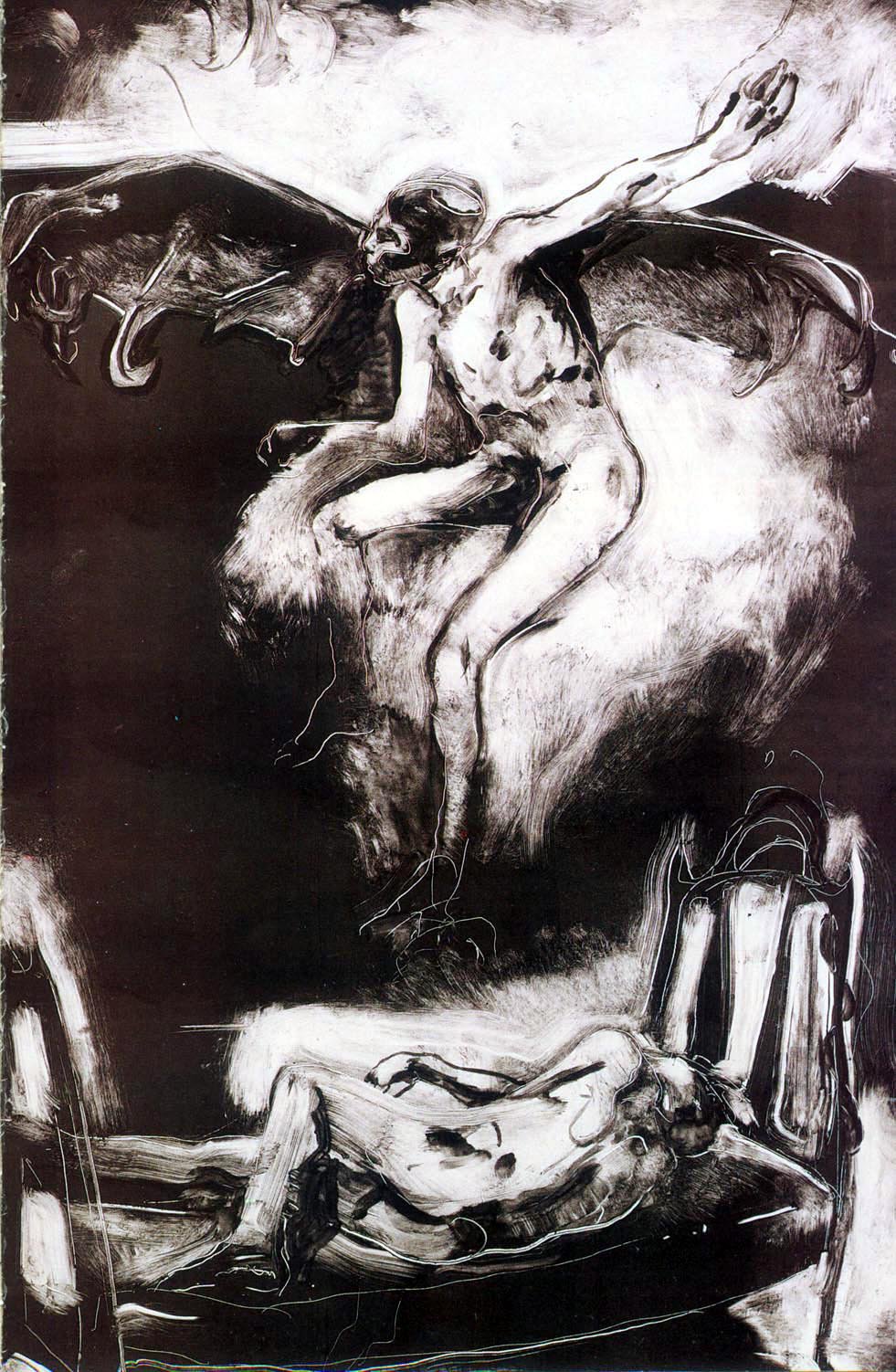
ΤΟ ΣΩΜΑ
Κρέμομαι εδώ,
ακέφαλος,
τόσον καιρό.
Το σώμα ξέχασε
γιατί,
πού, πώς συνέβη
ό,τι συνέβη
και τα δάχτυλα των ποδιών
περπατούν μέσα σε παπούτσια
που δεν έχουν πια
σημασία.
Αν και
τα δάχτυλα
κάτι κόβουν,
κάτι πιάνουν,
κάτι κινούν,
κάτι αγγίζουν,
κάτι σαν
πορτοκάλια,
μήλα,
κρεμμύδια,
βιβλία,
σώματα,
δεν μπορώ
να βεβαιώσω
πως όλα αυτά
υπάρχουν.
Είναι περισσότερο
σαν φως λάμπας
κι ομίχλη.
Κάπου κάπου, τα χέρια
κινούνται
προς το χαμένο κεφάλι
και το πιάνουν
όπως τα χέρια παιδιού
μια μπάλα,
έναν κύβο,
τον αέρα, ένα ξύλο―
ούτε δόντια,
ούτε πράγμα σκεπτόμενο.
Κι όταν παράθυρο
ανοίξει:
εκκλησία,
λόφος,
γυναίκα,
σκύλος
ή κάτι που τραγουδά.
Τα δάχτυλα του χεριού
δε νιώθουν κίνηση,
δίχως αυτιά,
δε νιώθουν χρώματα,
δίχως
μάτια,
δε μυρίζουν,
δίχως μύτη.
Εξοχικά τοπία
περνούν
ασύλληπτα,
σαν ήπειροι.
Οι μέρες, τ’ απογεύματα
αστράφτουν
στα βρώμικα
νύχια μου.
Σε κάποιον καθρέφτη,
το πρόσωπό μου
ένα σχήμα που χάνεται:
φθαρμένο μπάλωμα μιας παιδικής
μπάλας.
Ενώ παντού
κίνηση:
σκουλήκια, αεροπλάνα,
πυρκαγιές,
αγιασμένοι μενεξέδες,
τα χέρια μου φεύγουν και φεύγουν
και φεύγουν.
* * *
ΔΕΝ ΗΤΑΝ ΚΙ ΑΣΧΗΜΟ ΜΕΡΟΣ
Είχε τεράστια μπούτια
κι υπέροχο γέλιο.
Γελούσε με τα πάντα
κι οι κουρτίνες ήταν κίτρινες.
Τελείωσα
ξάπλωσα.
Πριν πάει να πλυθεί
ξέχωσε κάτω απ’ το κρεβάτι ένα κουρέλι,
μου το πρόσφερε.
Ήταν σκληρό
ποτισμένο με το σπέρμα
άλλων.
Σκουπίστηκα με το σεντόνι.
Όταν βγήκε απ’ το μπάνιο,
έσκυψε
και πήρα μάτι τον κώλο της
καθώς έβαζε τον
Μότσαρτ.
Τσαρλς Μπουκόβσκι, Τρόμου και Αγωνίας Γωνία, μτφρ. Γιώργος Μπλάνας, εκδ. Απόπειρα



ΛΑΚΩΝΙΚΟΝ
Ο καημός του θανάτου τόσο με πυρπόλησε, που η λάμψη μου επέ-
στρεψε στον ήλιο.
Κείνος με πέμπει τώρα μέσα στην τέλεια σύνταξη της πέτρας και του
αιθέρος
Λοιπόν, αυτός που γύρευα, είμαι.
Ω λινό καλοκαίρι, συνετό φθινόπωρο
Χειμώνα ελάχιστε
Η ζωή καταβάλλει τον οβολό του φύλλου της ελιάς
Και στη νύχτα μέσα των αφρόνων μ’ ένα μικρό τριζόνι κατακυρώνει
πάλι το νόμιμο του Ανέλπιστου.
*
Ο ΑΛΛΟΣ ΝΩΕ
Έριξα τους ορίζοντες μες στον ασβέστη, και με χέρι αργό αλλά σί-
γουρο πήρα να χρίσω τους τέσσερις τοίχους του μέλλοντος μου.
Η ασέλγεια, είπα, είναι καιρός ν’ αρχίσει τώρα το ιερατικό της στά-
διο, και σε μια Μονή Φωτός ν’ ασφαλίσει την υπέροχη στιγμή
που ο άνεμος έξυσε λίγο συννεφάκι πάνω από τ’ ακρότατο δέν-
τρο της γης.
Κείνα που μόνος μόχθησα να βρω, για να κρατήσω το ύφος μου μέσα
στην καταφρόνια, θα ’ρθουν -από το δυνατό του ευκαλύπτου
οξύ ως το θρόισμα της γυναίκας- να σωθούν στης ασκητείας
μου την Κιβωτό.
Και το πιο μακρινό και παραγκωνισμένο ρυάκι, κι απ’ τα πουλιά το
μόνο που μ’ αφήκαν, το σπουργίτι, κι από το πενιχρό της πίκρας
λεξιλόγιο, δύο, καν τρία, λόγια: ψωμί, καημός, αγάπη...
(Ω Καιροί που στρεβλώσατε το ουράνιο τόξο, κι απ’ το ραμφί του
σπουργιτιού αποσπάσατε το ψίχουλο, και δεν αφήσατε μήτε μια
τόση δα φωνούλα καθαρού νερού να συλλαβίσει στη χλόη την
αγάπη μου
Εγώ, που αδάκρυτος υπόμεινα την ορφάνια της λάμψης, ω Καιροί, δε
συγχωρώ.)
Κι όταν, ο ένας του άλλου τρώγοντας τα σπλάχνα, λιγοστέψει ο άν-
θρωπος, κι από τη μια στην άλλη
Γενεά, κυλώντας το Κακό, αποθηριωθεί μες στο παντερειπωτικό ου-
ράνιο
Τα λευκά της μοναξιάς μου μόρια, πάνω από τη σκουριά του χαλα-
σμένου κόσμου στροβιλίζοντας, θα παν να δικαιώσουν τη μικρή
μου σύνεση
Κι αρμοσμένα πάλι τους ορίζοντες μακριά θ’ ανοίξουν, ένα ένα στα
χείλη του νερού να τρίξουν τα λόγια τα πικρά
Το παλιό μου της απελπισίας νόημα δίνοντας
Ωσάν δάγκωμα σε φύλλο ουρανικού ευκαλύπτου, η αγία των ηδονών
ημέρα να μυρίσει
Και γυμνή ν’ ανέβει το ρεύμα του Καιρού η γυναίκα η Χλοοφόρος
Που μ’ αργότη ανοίγοντας βασιλική τα δάχτυλα, μια για πάντα θα
στείλει το πουλί
Στων ανθρώπων τον ανίερο κάματο, από κει που έσφαλε ο Θεός, να
στάξει
Τρίλια της Παράδεισος!
Οδυσσέας Ελύτης, Έξη και Μία Τύψεις για τον Ουρανό, εκδ. Ίκαρος
'Writing on what he calls “the horror of philosophy,” Eugene Thacker distinguishes between three dimensions of the world. First, there is the world-for-us, which is “the world in which we live.” Second, there is the world-in-itself, or the world as it exists apart from us. And third, there is what Thacker calls the world-without-us, a “spectral and speculative world” that exists at the limits of our thought. The first two worlds are familiar to us, as they are dialectically interrelated. The world-in-itself is independent from us; but we are always working to transform it into yet more of the world-for-us. This is what Hegel calls “the labor of the negative”; in more contemporary terms, we can say that this is the work of science and technology [...].
But the world-in-itself is never entirely subsumed by such transformations. We are continually reminded of the world’s autonomy from us; most notably, Thacker says, “in the form of natural disasters,” and in long-term processes such as climate change. These events and processes seem to elude all our efforts to grasp them and control them. Whatever their empirical status, they seem to have a more-than-empirical force. Like Kantian transcendental conditions, they cannot be experienced in themselves, but they define and delimit what we are able to experience. But where Kantian transcendentals are positive and necessary conditions, generated by our minds, these limit-conditions are entirely negative and contingent ones, and utterly alien to our own thought. The “enigmatic concept” of the world-without-us points to a reality that is actively defined by “the subtraction of the human from the world.” This reality has withdrawn from us, and dispensed with us altogether. We often attempt to grasp the world-without-us through concepts like Hegel’s “bad infinity,” Sartre’s “practico-inert,” Lacan’s impossible Real, and Žižek’s “remainder.” But such concepts are only of limited value, because they remain all-too-human ones. As Thacker says, they still “attempt to put things in human terms, in the terms of the world-for-us.” The world-without-us, however, is precisely indifferent to all such formulations [...].'
Steven Shaviro, 'Melancholia or, The Romantic Anti-Sublime', in Secuense 1.1

'Much of the discussion of film adaptation quietly reinscribes the axiomatic superiority of literary art to film, an assumption derived from a number of superimposed prejudices: seniority, the assumption that a older arts are necessarily better arts; iconophobia, the culturally rooted prejudice (traceable to the Judaic-Muslim-Protestant prohibitions on “graven images” and the Platonic and Neoplatonic depreciation of the world of phenomenal appearance) that visual arts are necessarily inferior to the verbal arts; and logophilia, the converse valorization, characteristic of the “religions of the book,” of the “sacred word” of holy texts.
Stucturalist and poststructuralist theoretical developments, meanwhile, indirectly undermine some of these prejudices in ways that have implications for our discussion of adaptation. The structuralist semiotics of the 1960s and 1970s treated all signifying practices as productive of “texts” worthy of the same close attention as literary texts. The Bakhtinian “translinguistic” conception of the author as the orchestrator of preexisting discourses, meanwhile, along with Foucault's downgrading of the author in favor of a pervasive anonymity of discourse, opened the way to a “discursive” and nonoriginary approach to all arts. With poststructuralism the figure of the author, rather like the Robin Williams character in Deconstructing Harry, loses focus and firmness. Derridean deconstruction, meanwhile, by dismantling the hierarchy of “original” and “copy,” suggests that both are caught up in the “original.” And if authors are fissured, fragmented, multidicursive, hardly “present” even to themselves, how can an adaptation communicate the “self-presence” of auhorial intention? In the same vein, Roland Barthe’s provocative leveling of the hierarchy between literary criticism and literature tends, by analogy, to rescue the film adaptation as a form of criticism or “reading” of the novel, one not necessarily subordinate to the source novel.'
Robert Stam, 'The Dialogics of Adaptation', in Film Adaptation, edited by James Neremore, publisher: Rutgers University Press
'The impetuous fury of the entering gust nearly lifted us from our feet. It was, indeed, a tempestuous yet sternly beautiful night, and one wildly singular in its terror and its beauty. A whirlwind had apparently collected its force in our vicinity; for there were frequent and violent alterations in the direction of the wind; and the exceeding density of the clouds (which hung so low as to press upon the turrets of the house) did not prevent our perceiving the lifelike velocity with which they flew careering from all points against each other, without passing away into the distance. I say that even their exceeding density did not prevent our perceiving this—yet we had no glimpse of the moon or stars—nor was there any flashing forth of the lightning. But the under surfaces of the huge masses of agitated vapor, as well as all terrestrial objects immediately around us, were glowing in the unnatural light of a faintly luminous and distinctly visible gaseous exhalation which hung about and enshrouded the mansion.'
Edgar Allan Poe, 'The Fall of House of Usher', in The Fall of House of Usher and Other Stories, publisher: Penguin Books
'Μια ορμητική μανιασμένη ριπή του ανέμου παραλίγο να μας πετάξει κάτω. Παρά τη θύελα που λυσσομανούσε, η νύχτα είχε πραγματικά μια μοναδική άγρια, μεγαλειώδη και φρικιαστική ομορφιά. Προφανώς κάπου κοντά είχε σηκωθεί ανεμοστρόβιλος· έτσι εξηγούνταν οι απότομες και βίαιες αλλαγές του ανέμου· και παρόλο που τα σύννεφα (τα οποία κρέμονταν τόσο χαμηλά που νόμιζες πως πλάκωναν τους πύργους του σπιτιού) ήταν υπερωβολικά πυκνά, μπορούσαμε να διακρίνουμε πως είχαν επιδοθεί σε αέναο κυνηγητό μεταξύ τους, σε ελιγμούς και πλαγιοσκοπήσεις, λες και ήταν ζωντανά, ξαναγυρνώντας συνέχεια, χωρίς ποτέ να φεύγουν μακιρά. Όπως είπα, όλα αυτά μπορούσαμε να τα διακρίνουμε παρά τα πυκνά σύννεφα―και ενώ δεν βλέπαμε ούτε το φεγγάρι ούτε τα άστρα, ούτε λάμψεις από αστραπές. Όμως οι κατώτερες επιφάνειες από αυτές τις θεόρατες μάζες υδρατμών που αναδεύονταν, καθώς και όλα τα αντικείμενα ολόγυρά μας, φωταύγαζαν στην αφύσικη λάμψη μιας αμυδρά φωτεινής και ξεκάθαρα ορατής αναθύμιασης που τύλιγε σαν σάβανο το αρχοντικό.'
Έντγκαρ Άλλαν Πόε, από το διήγημά του 'Η Πτώση του Οίκου του Άσερ', Η Πτώση του Οίκου του Άσερ . . . και Παραλλαγές, μτφρ. Γιώργος Γούλας, εκδ. Απόπειρα