
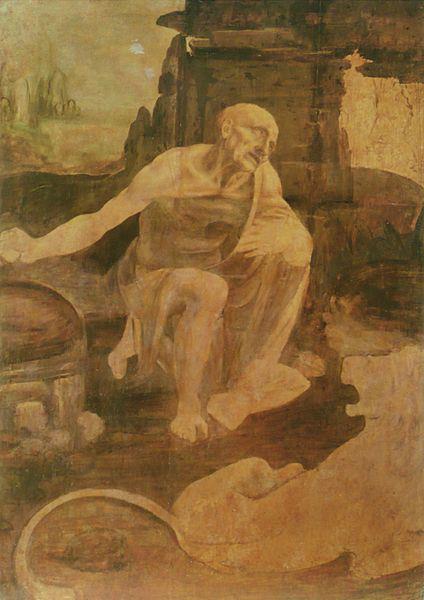


'Masochism is one way of bringing together a Christian contempt for the flesh with a pagan delight in it.'
'Religious self-mortification involves a wide array of practices... all designed to humble the flesh. Sexual mortification, on the other hand, has its rewards in this world and in erotic satisfactions that are out of bounds for religious devotees.'
Anita Phillips, A Defense of Masochism, publisher: St. Martin’s Press


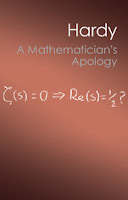
'It is a melancholy experience for a professional mathematician to find himself writing about mathematics. The function of a mathematician is to do something, to prove new theorems, to add to mathematics, and not to talk about what he or other mathematicians have done. Statesmen despise publicists, painters despite art-critics, and physiologists, physicists, or mathematicians have usually similar feelings; there is no scorn more profound, or on the whole more justifiable, than that of the men who make for the men who explain. Exposition, criticism, appreciation, is work for second-rate minds.'
'I have never done anything “useful”. No discovery of mine has made, or is likely to make, directly or indirectly, for good or ill, the least difference to the amenity of the world. I have helped to train other mathematicians, but mathematicians of the same kind as myself, and their work has been, so far at any rate as I have helped them to it, as useless as my own. Judged by all practical standards, the value of my mathematical life is nil; and outside mathematics it is trivial anyhow. I have just one chance of escaping a verdict of complete triviality, that I may be judged to have created something worth creating. And that I have created something is undeniable: the question is about its value.
The case for my life, then, or for that of any one else who has been a mathematician in the same sense in which I have been one, is this: that I have added something to knowledge, and helped others to add more; and that these somethings have a value which differs in degree only, and not in kind, from that of the creations of the great mathematicians, or of any other artists, great or small, who have left some kind of memorial behind them.'
G. H. Hardy, A Mathematician's Apology, publisher: Cambridge University Press
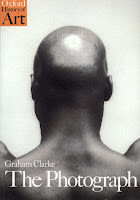
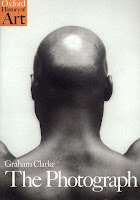
'The photograph both mirrors and creates a discourse with the world, and is never, despite its often passive way with things, a neutral representation. Indeed, we might argue that at every level the photograph involves a saturated ideological context. Full of meanings, it is a dense text in which is written the terms of reference by which an ideology both constructs meaning and reflects that meaning as a stamp of power and authority. We need to read it as the site of a series of simultaneous complexities and ambiguities, in which is situated not so much a mirror of the world as our way with that world; what Diane Arbus called ‘the endlessly seductive puzzle of sight’. The photographic image contains a ‘photographic message’ as part of a ‘practice of signification’ which reflects the codes, values, and beliefs of the culture as a whole. Its literalness, as such, reflects the representation of our way with the world-the site (and sight) of a series of other codes and texts, of values and hierarchies which engage other discourses and other frames of reference; hence, its deceptive simplicity, its obtuse thereness. Far from being a ‘mirror’, the photograph is one of the most complex and most problematic forms of representation. Its ordinariness belies its ambivalence and implicit difficulty as a means of representation.'
Graham Clarke, The Photograph, publisher: Oxford University Press