
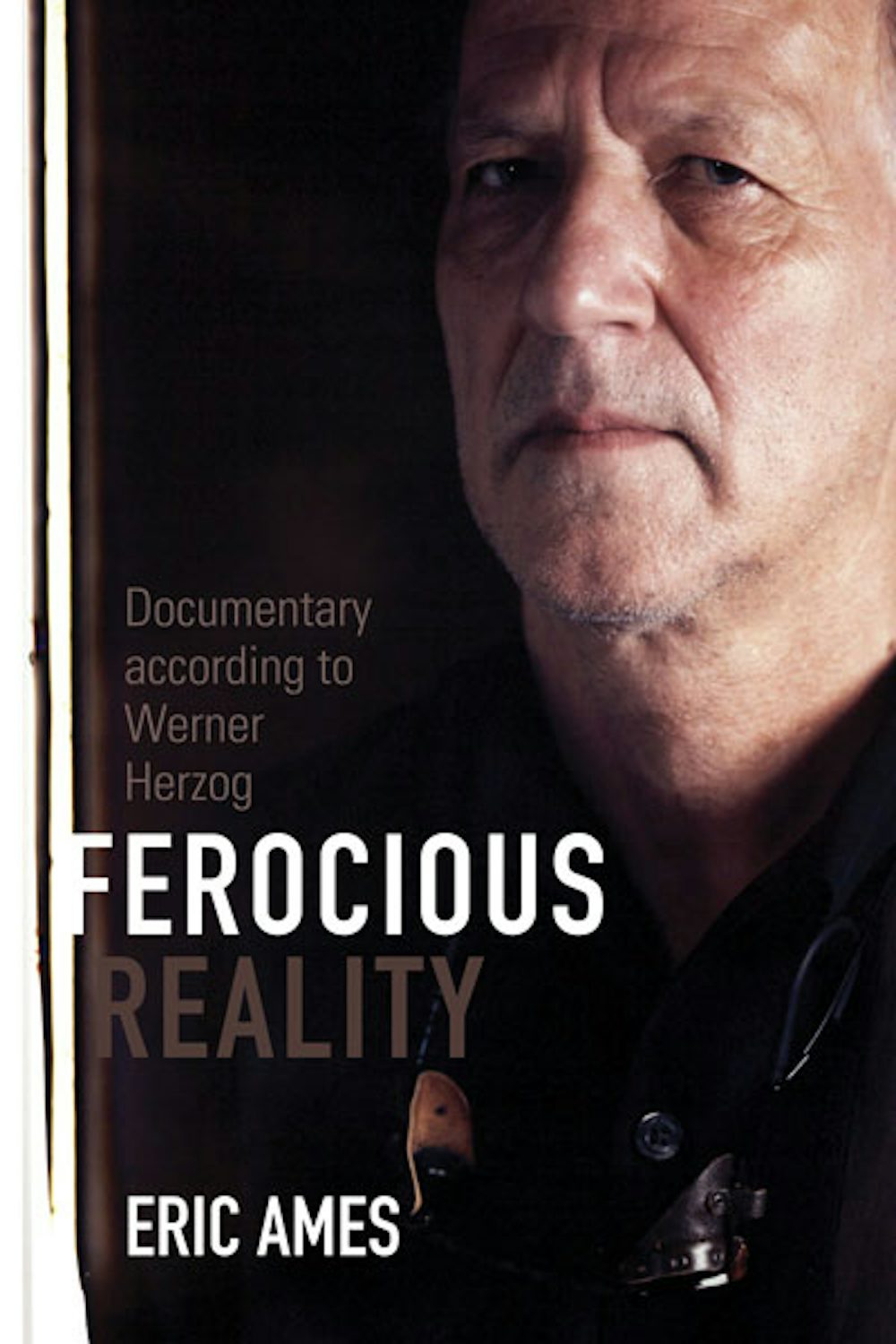
'[...] Herzog and his films have in fact contributed to the ongoing process of reimagining documentary after cinema verité. A performance lens captures this dynamic, which has been effaced by the discourse on Herzog, with encouragement from the director himself, so that the received idea about his body of work has been one of singularity and isolation, not unlike some of the figures in his movies. Clearly there is some truth to that idea, as far as it goes, which is one reason why Herzog’s films are usually discussed in terms of auterism. But a wholly appropriate emphasis on auterism cannot account for the tenacity of his engagement with documentary. His intervention is strategic in the sense that it puts documentary in the service of enacting the director’s personal style, as a way of emphasizing the alterity of his work, its difference from that of other filmmakers, its resistance to deliberately upsets documentary dogma. Herzog will never be a “good object” of documentary studies, at least not for scholars who are primarily concerned with politics, taxonomy, or purism. His work cannot be disciplined in this sense, and what would be the point of doing so? And yet, to borrow Claude Lévi-Strauss’s famous phrase concerning Australian totems, Herzog’s documentaries are “good to think with”.'
Eric Ames, Ferocious Reality: Documentary According to Werner Herzog, publisher: University of Minnesota Press
Film Studies · Texts
Affinities
wander →- 05.06.2015Although I was asked by the independent filmmaker Ben Rider to review
 11.05.2015Lacan, Jacques (2007) Écrits: The First Complete Edition in English. Translated by Bruce Fink. London: W.W. Norton & Company
 11.12.2014C. Paul Sellors, Film Authorship: Auteurs and Other Myths, publisher: Wallflower
- 10.12.2014'The image of Mickey and other iconic art-historical images such as
- 06.10.2014'Our memory includes events and experiences that took place factually,
- 25.09.2014'Much of the discussion of film adaptation quietly reinscribes the